 Semiahmoo Exterior
 Why Ferndale's Climate Is Hard on Siding
Ferndale sits close enough to the water and to Whatcom County's marine weather patterns that siding here takes a different kind of beating than siding fifty miles inland. It's not one big storm that causes problems — it's the accumulation of small, constant exposures over years. Salt-laden air, wind-driven rain that finds every gap, and a moss season that runs longer than most homeowners expect all work on a home's exterior at the same time, and cheap or poorly installed siding shows the wear within a handful of years.
Salt Air and Coastal Exposure
Proximity to Puget Sound and the Strait of Georgia means airborne salt is a real factor in Whatcom County, even a few miles inland. Salt air accelerates corrosion on fasteners, trim, and any exposed metal, and it slowly breaks down finishes that aren't engineered to resist it. Siding products that look fine in a showroom or in a drier climate can chalk, fade, or degrade faster once they're up against consistent coastal air.
Wind-Driven Rain
Pacific Northwest rain doesn't just fall straight down — winter storms push it sideways into wall assemblies, seams, and around windows and doors. Siding that isn't installed with correct water management (flashing, proper laps, sealed penetrations) will eventually let moisture behind the panels, and once water gets behind siding it can sit there for weeks before anyone notices a problem.
Moss and Algae Season
Ferndale's mild, damp stretches — especially on shaded and north-facing walls — give moss and algae a long window to establish themselves. Porous or wood-based siding gives these organisms something to grip and feed on. Left unchecked, moss and algae hold moisture against the wall surface, which is exactly the condition that leads to rot, paint failure, and eventually structural repair.
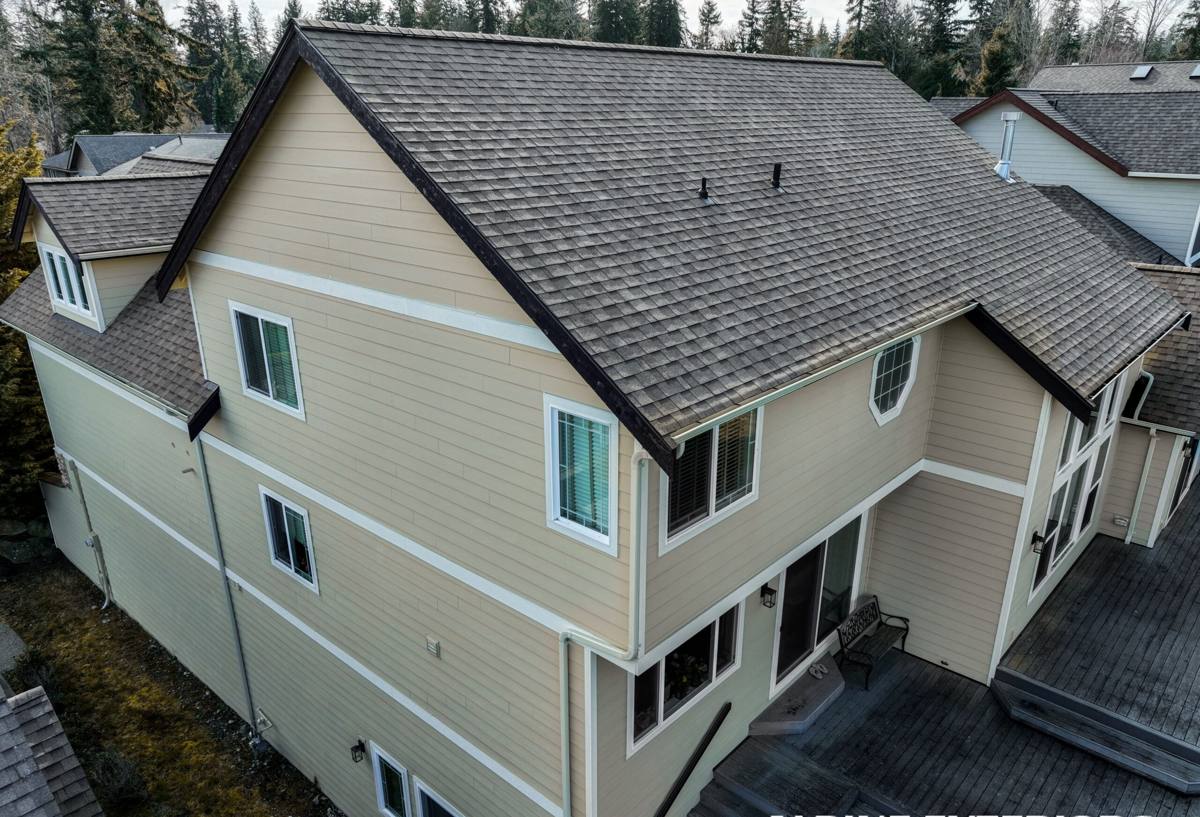
What James Hardie Siding Brings to Ferndale Homes
We install James Hardie fiber cement siding exclusively, and in a climate like this one, the reasons are practical rather than promotional. Fiber cement is dimensionally stable — it doesn't expand and contract with moisture the way wood-based products do — and it's manufactured to resist the specific pressures that this region puts on an exterior.
HZ5 Siding Engineered for This Region
James Hardie makes region-specific product formulations under its HZ (HardieZone) system, and homes in this part of Washington fall into a zone engineered for wetter, more humid climates. That means the siding is formulated to hold up against sustained moisture exposure rather than being a one-size-fits-all product shipped to every region in the country the same way.
ColorPlus Factory Finish
Most of our installs use Hardie's ColorPlus finish — a factory-applied, baked-on finish that's more consistent and more resistant to fading and chipping than field-applied paint. For a coastal-adjacent, high-moisture area, that finish durability matters: it's one less maintenance item competing against salt air and constant damp weather.
What a Correct Installation Involves
James Hardie siding is only as good as the installation behind it. The product itself is engineered well, but water management is what actually determines whether a wall assembly stays dry for the next 30 years or starts failing in five. A correct install includes:
- A weather-resistant barrier installed and lapped correctly behind the siding, with all seams sealed
- Proper flashing at windows, doors, and any wall penetrations, directing water outward and down instead of behind the siding
- Correct fastener placement and spacing, following Hardie's published installation instructions for the specific product line
- Minimum clearance gaps at grade, roof lines, decks, and other transitions so siding isn't sitting in standing water or trapped moisture
- Caulking only where Hardie specifies it — not as a substitute for proper flashing and laps
- Factory-cut or properly sealed field cuts, since an unsealed cut edge is a common entry point for moisture
Skipping any one of these steps doesn't usually cause an immediate, visible problem. It shows up two, five, or ten years later as a soft spot, a stain, or paint that's failing from the inside out — by which point the fix is far more expensive than doing it right the first time.
Our Process for Ferndale Siding Projects
We approach every Ferndale project the same methodical way, because skipping steps is where problems start.
Assessment and Removal
We start with an on-site inspection of the existing siding and the wall assembly underneath it. In a climate this wet, it's common to find moisture damage or rot hiding behind old siding, especially around windows, at wall bottoms, and near roof intersections — we identify and address that before anything new goes up, rather than covering a problem with new siding and letting it continue underneath.
Water Management and Prep
Once the wall is exposed, we install or verify the weather-resistant barrier and get flashing details right at every window, door, and penetration. This step is invisible once the siding goes on, but it's the single biggest factor in how the wall performs over the next few decades.
Installation and Finish
We install the James Hardie panels, trim, and accessories to manufacturer spec, with attention to fastener pattern, clearances, and joint treatment. We finish with a final walk-through so you understand what was done and what to expect from the finished product.
Choosing the Right Hardie Product for Your Home
James Hardie makes several siding profiles, and the right one depends on your home's architecture, your budget, and how much of the existing exterior needs to be addressed. Lap siding is the most common choice for traditional Ferndale homes and offers a clean, classic look with strong wind and rain performance. Board and batten works well for homes wanting a more vertical, modern, or farmhouse look, and Hardie's shingle-style panels are an option for homes with a more traditional or coastal aesthetic. We'll walk through the options that fit your home specifically rather than pushing one default profile on every project.
What Affects the Cost of a Hardie Siding Project
Every home is different, and we won't quote a number without seeing the property, but the factors below are what typically drive cost up or down on a Ferndale project.
| Factor | Why It Matters |
|---|---|
| Home size and wall complexity | More square footage and more corners, gables, and dormers mean more material and labor |
| Condition of the existing wall assembly | Hidden moisture damage or rot found during tear-off adds repair scope before new siding goes on |
| Siding profile and finish selection | Lap, board and batten, and shingle-style panels differ in material and labor cost, as do trim and color choices |
| Trim, fascia, and accessory work | Full exterior refreshes that include trim, soffit, or fascia work add scope beyond the field siding itself |
| Access and site conditions | Multi-story walls, tight lot lines, or difficult staging areas can affect labor time |
Maintenance Through a Long Moss Season
James Hardie siding is low-maintenance compared to wood-based alternatives, but "low-maintenance" isn't "no-maintenance," especially in a climate that stays damp and shaded for long stretches of the year. A few habits go a long way toward protecting your investment:
- Rinse siding periodically with a garden hose, focusing on shaded, north-facing, and tree-covered walls where moss and algae take hold first
- Keep gutters clear so overflow doesn't run down the siding face or pool at the base of walls
- Trim back vegetation and tree limbs that keep sections of the wall shaded and damp
- Inspect caulking at trim and penetrations annually and have any gaps addressed before winter rains arrive
- Address any soft spots, discoloration, or bubbling paint promptly rather than waiting — early issues are inexpensive to fix, delayed ones aren't
Why a Crew That Already Works Ferndale Makes a Difference
Siding installation is detail work, and the details that matter most are the ones specific to this region: how deep to set clearances given local rain patterns, which walls in a given lot orientation are most exposed to moss, and how to sequence a tear-off so a home isn't left open to a Whatcom County storm system overnight. A crew that regularly works Ferndale and the surrounding Semiahmoo area already knows these things going in, instead of learning them on your home.
We also only install one product system, which means our crews aren't switching between installation methods for five different manufacturers. Every job follows the same James Hardie specifications, the same water-management standards, and the same attention to the details that actually determine how a home's exterior performs over the next few decades.
If you're considering new siding for your Ferndale home, we're happy to take a look and give you a straightforward assessment — no pressure, no inflated estimate. Use the form below to request a free, no-obligation estimate and we'll walk the property with you.