 Semiahmoo Exterior
 Ferndale's Roofs Work Harder Than Most
Ferndale sits in a stretch of Whatcom County where the weather off Semiahmoo Bay and the Strait of Georgia doesn't ease up for long. Homes here deal with a mix that's tough on roofing: salt-laden air moving in off the water, driving rain that comes in sideways during winter fronts, and a moss season that can run eight months or longer in shaded, north-facing sections of a roof. None of that is dramatic on its own, but stacked together year after year, it wears through the weak points in a roofing system faster than it would in a drier, calmer climate.
Storm damage rarely shows up as one dramatic event. More often it's a windstorm that lifts a run of shingles just enough to break the seal, followed by weeks of rain finding that opening before anyone notices a stain on a ceiling. By the time the damage is visible from inside the house, it's usually been building for a while. That's the pattern we see over and over on Ferndale roofs, and it's why storm damage repair here is as much about catching what wind and rain already loosened as it is about fixing something obviously broken.
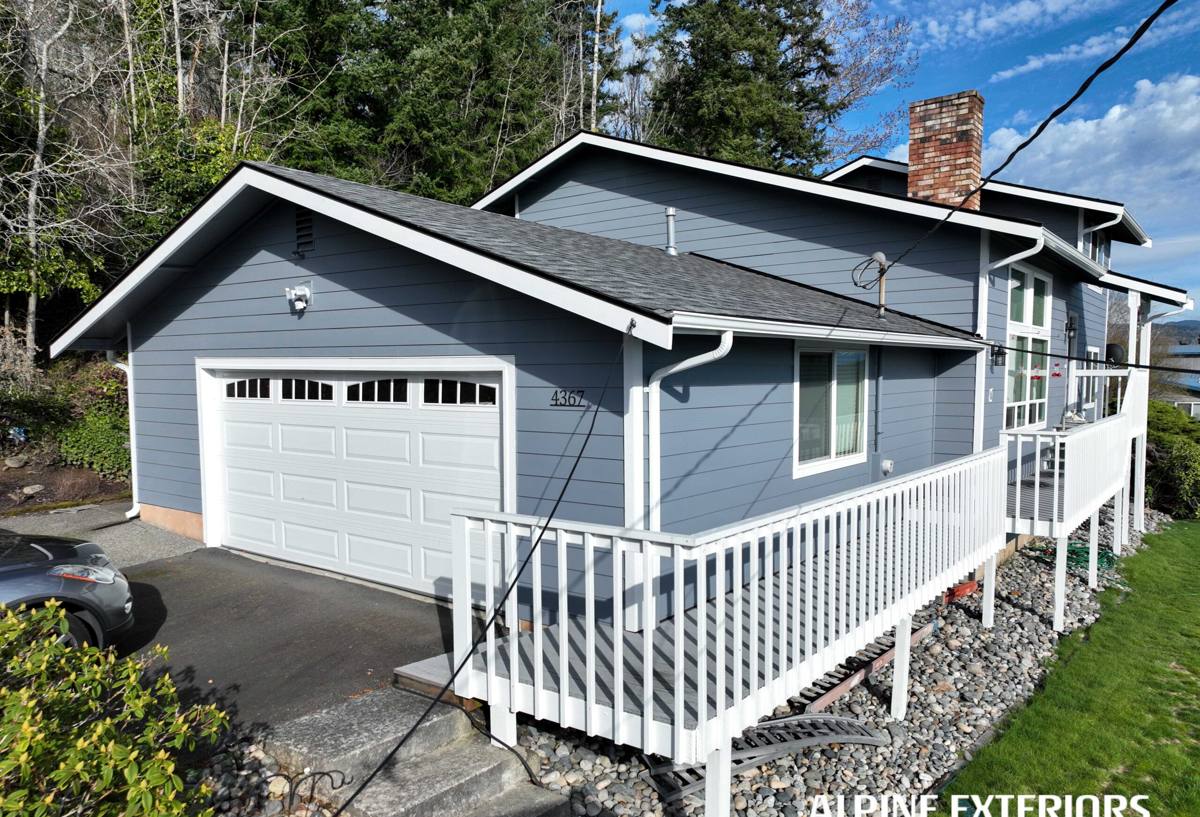
What Actually Counts as Storm Damage
Storm damage covers more than missing shingles. On the roofs we inspect around Ferndale after a windstorm or a hard rain event, the damage usually falls into a few categories:
Wind Damage
Gusts don't need to be extreme to do damage — they need to be sustained and directional. Wind that repeatedly hits a roof from the same angle can work shingle tabs loose, crease them, or tear them off outright, especially on older roofing where the adhesive seal has already weakened from years of UV and temperature swings.
Wind-Driven Rain Intrusion
Even without any shingles going missing, sideways rain can push water up and under shingle edges, around flashing, and into any gap that a normal vertical rainfall would never reach. This is one of the most common ways Ferndale homes end up with hidden leaks after a storm that, on paper, didn't look severe.
Impact Damage
Falling branches and wind-thrown debris are a real factor for properties with mature trees nearby, which describes a lot of Whatcom County. Impact damage can crack shingles, dent metal flashing, or puncture underlayment in ways that aren't always obvious from the ground.
Flashing and Seal Failures
Flashing around chimneys, vents, skylights, and roof-to-wall transitions is where most leaks actually start. Storms stress these points by flexing the roof deck and rattling loose fasteners that were already marginal.
Signs It's Time to Have Your Roof Looked At
Most storm damage isn't visible from the driveway. A few signs are worth acting on before the next round of rain finds the weak spot:
- Granules collecting in gutters or at downspout outlets after a storm
- Shingles that look curled, cupped, or creased compared to the surrounding roof
- Any shingle tabs missing outright, even just one or two
- Soft spots or slight sagging when walking the attic or crawling the roof deck
- Water stains on ceilings or in the attic that appear after a windy, rainy stretch
- Daylight visible through the roof deck from inside the attic
- Metal flashing that looks bent, lifted, or separated from the surface it seals
- Heavier-than-usual moss growth concentrated around a specific area, which can signal water sitting where it shouldn't
If you notice more than one of these after a storm, it's worth having it looked at before the next system moves through. A roof that's holding on by a thread can go from "minor repair" to "replace the deck" in one more heavy rain.
What a Correct Storm Repair Actually Involves
A storm repair that's done right isn't just swapping out the shingles that are obviously missing. It starts with figuring out how far the damage actually spread, because wind and water rarely stay contained to the spot where the damage is visible.
Full Inspection, Not a Spot Check
We look at the whole roof plane the damage occurred on, not just the immediate area, since wind damage tends to run in a pattern rather than sit in one isolated spot. We also check the attic side for moisture staining, which tells us whether water already got past the surface layer.
Deck and Underlayment Check
If water made it past the shingles, the underlayment and the roof deck underneath need to be checked for saturation or soft spots. Replacing shingles over a compromised deck just hides the problem — it doesn't fix it.
Matching Materials, Not Guessing
Where a repair is limited to a section rather than a full replacement, we match the existing shingle profile and, as closely as the manufacturer's current lineup allows, the color and weight of what's already on the roof. A mismatched patch is a cosmetic problem today and a maintenance headache later, since different shingle batches age and weather at different rates.
Flashing Done Properly
Any flashing in the repair area gets reset or replaced rather than caulked over. Caulk is a temporary fix at best around flashing — it dries out, cracks, and fails again, usually right when the next storm rolls through.
Our Process for Ferndale Storm Repairs
- Inspection and documentation. We assess the damage, photograph it, and identify whether it's a targeted repair or something that points to a bigger underlying issue.
- Honest scope. We tell you plainly whether you're looking at a repair or whether the roof's age and condition mean a repair is just delaying a replacement you'll need soon anyway.
- Written estimate. No pressure, no scare tactics — a clear breakdown of what needs to happen and roughly what it involves.
- The repair. Deck and underlayment addressed first if compromised, then flashing, then matched shingles or roofing material.
- Final check. We walk the repair area and the surrounding roof plane again before calling it done, since storm damage has a way of showing a second problem once the first one's fixed.
If you're filing an insurance claim, our documentation from the inspection step is written to support that process — clear photos, a plain description of the damage, and a scope that lines up with what an adjuster will be looking for.
Repair vs. Replace: What Actually Drives the Decision
Storm damage doesn't automatically mean a full roof replacement, but it's a fair question to ask, especially on a roof that was already getting up in years. A few factors tend to decide it:
| Factor | Leans Toward Repair | Leans Toward Replacement |
|---|---|---|
| Roof age | Under 10-12 years, otherwise sound | Nearing or past the material's expected service life |
| Extent of damage | Isolated to one section or plane | Spread across multiple sections or the whole roof |
| Deck condition | Dry, solid underneath the damaged area | Soft, stained, or saturated decking found on inspection |
| Shingle availability | Existing shingle line still in production for a close match | Discontinued shingle style with no reasonable match |
| History of repairs | First significant repair on this roof | Repeated patch jobs already on record |
We'll walk you through where your roof lands on these factors rather than defaulting to "replace it" as the easy recommendation. A roof with a lot of life left in it deserves a real repair, not an upsell.
Insurance Claims: What We Can and Can't Do
Wind and storm damage is often covered under standard homeowners policies, but coverage details, deductibles, and what qualifies as "storm damage" versus "wear and tear" vary by policy and by insurer. We're not adjusters and we don't speak for your insurance company, but we can give you a straightforward, documented assessment of the damage that you can bring to your claim — photos, a description of what happened and where, and an honest scope of what repair actually requires. What you do with that documentation, and how your specific policy handles it, is between you and your carrier.
Why a Crew That Already Works Ferndale Roofs Matters
Storm damage repair isn't the kind of job where general roofing knowledge is enough on its own. A crew that regularly works roofs in this part of Whatcom County has already seen how salt air corrodes fasteners and flashing faster than it does further inland, how moss takes hold in the shaded, north-facing sections that get less sun exposure through the wetter months, and how wind-driven rain finds its way in through spots a drier-climate roof would never have a problem with. That's not something you pick up from a manual — it's something you learn from doing the work here, on these roofs, through these storms.
There's also a practical side to it: after a regional storm, response time matters. A local crew isn't driving in from three counties away, and that means a damaged roof gets a tarp or a real repair sooner rather than sitting exposed through another rain event while you wait on a scheduling slot.
Keeping the Next Storm From Doing the Same Damage Twice
Once a storm repair is done, a few habits go a long way toward keeping it from happening again:
- Keep gutters and downspouts clear so wind-driven rain has somewhere to go instead of backing up under the roof edge
- Have moss addressed before it builds up enough to hold moisture against the shingles through the wet season
- Trim back branches that overhang the roof, since those are what turn a windstorm into an impact event
- Have the roof looked at after any storm strong enough to cause damage elsewhere in the neighborhood, even if nothing looks wrong from the ground
None of this requires a major investment — it's mostly about not letting small, cheap-to-fix issues sit through another storm season until they turn into expensive ones.
If a recent storm has you wondering whether your roof took damage, we're happy to take a look. The estimate is free, there's no pressure attached to it, and you'll get a straight answer about what — if anything — actually needs to be done. Use the form below to get started.