 Semiahmoo Exterior
 Why Bellingham Siding Installation Isn't a One-Size-Fits-All Job
Bellingham sits in one of the wetter, greener corners of Washington, and that has real consequences for the outside of a house. Homes here deal with salt-laden air rolling in off the water, long stretches of driving rain that push moisture sideways into wall assemblies, and a moss and mildew season that can run nearly year-round on shaded north- and west-facing walls. Siding that's installed correctly shrugs all of that off for decades. Siding that's installed with shortcuts — even with a good product — starts showing problems within a few wet seasons: swelling at the bottom courses, black streaking, soft trim, and paint that won't hold.
That's the core issue with siding installation in this part of Whatcom County: the product matters, but the installation matters just as much, if not more. A premium siding material installed with poor flashing detail will fail faster than a modest one installed correctly. We focus this page on one job — installing new siding on Bellingham-area homes — because the climate here creates specific requirements that a generic siding page won't cover.
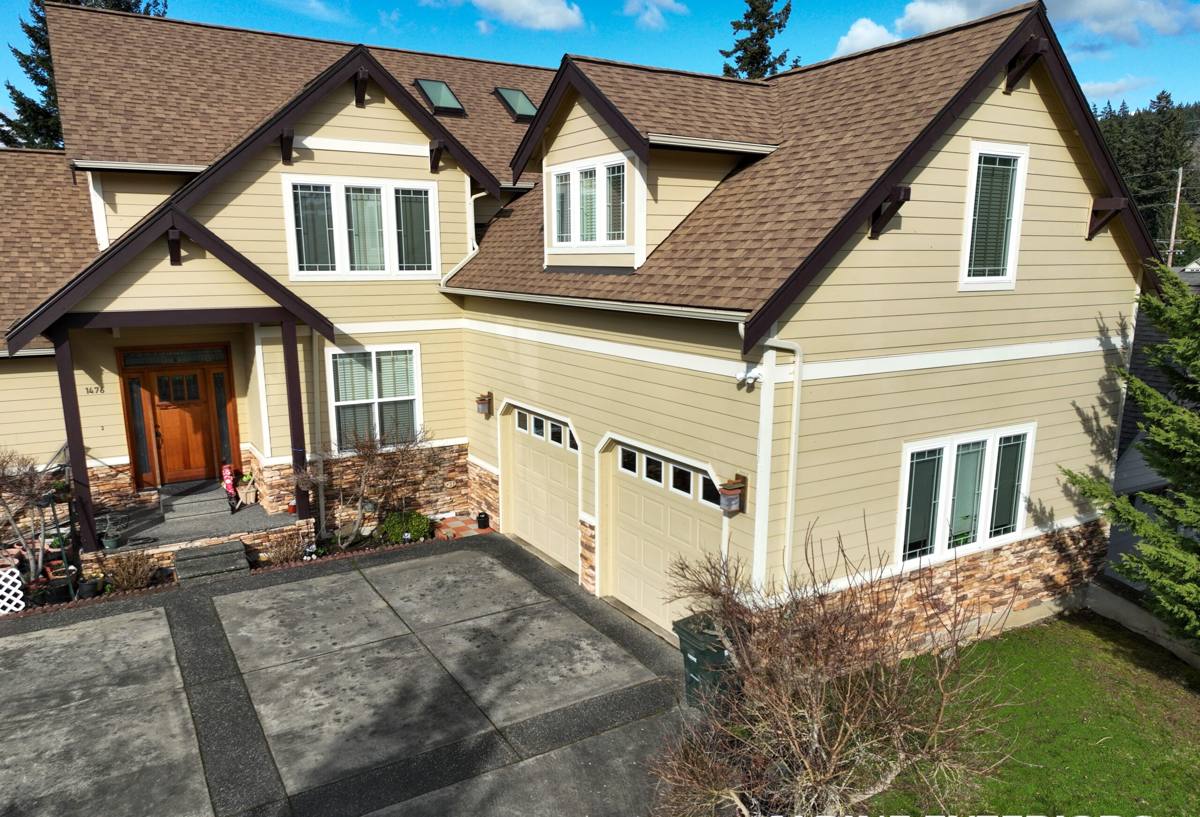
What Bellingham's Climate Actually Does to a Wall Assembly
It helps to understand the mechanism, not just the symptom. Three things are working against your siding here:
- Wind-driven rain: Storms coming off the Strait of Georgia and Puget Sound don't just fall straight down — they get pushed sideways into wall surfaces, seams, and butt joints. Any gap or under-lapped joint becomes an entry point.
- Salt air exposure: Proximity to saltwater accelerates corrosion on fasteners, flashing, and any metal trim that isn't rated for it. Cheap fasteners rust, streak the siding, and eventually lose their grip.
- Persistent moisture and shade: Long overcast stretches and heavy tree cover mean walls dry out slowly. Any water that gets behind the siding stays there longer, which is exactly the condition mold, rot, and moss growth need.
None of this is unique to Bellingham, but the combination and duration of it is more aggressive here than in drier parts of the state. Installation details that are "good enough" in a dry climate are not good enough here.
What a Correct Siding Installation Actually Involves
The Weather-Resistive Barrier and Flashing Come First
Before a single piece of siding goes up, the wall needs a properly lapped weather-resistive barrier, correctly integrated flashing at every window, door, and penetration, and kick-out flashing wherever a roofline meets a wall. This layer is what actually keeps water out of the wall cavity — the siding is the second line of defense, not the first. Rushed installers skip or shortcut this stage because it's invisible once the siding goes up, and it's the single biggest reason "good" siding fails early in wet climates like ours.
Fastening and Joint Detailing
Fiber cement siding has specific fastening requirements — nail placement, spacing, and depth all affect how the panel performs over time. Butt joints need to be flashed or caulked with the right product, not just butted tight and painted over. In a region with this much wind-driven rain, joint detailing is where a lot of amateur installs fail first.
Starter Strips, Clearances, and Ground Contact
Siding installed too close to grade, decks, or roof lines wicks up moisture and stays wet. Correct clearance at the bottom of the wall, around foundation lines, and near any horizontal surface is a small detail that has an outsized effect on how long the siding lasts in a wet climate like Bellingham's.
Why We Install Only James Hardie Fiber Cement
We made a deliberate decision to install James Hardie fiber cement siding exclusively, and it comes down to how the product behaves in exactly the conditions Bellingham throws at it.
Fiber cement doesn't absorb water the way wood-based products do, so it doesn't swell, rot, or delaminate when it stays damp for extended periods — which happens routinely on shaded, north-facing walls here. It's also non-combustible, which matters as wildfire smoke and dry-season fire risk become a bigger part of the conversation in Washington even in traditionally wet regions. Hardie's ColorPlus factory finish is baked on under controlled conditions, so it resists the fading, chalking, and peel that field-applied paint struggles with under our long wet-to-dry cycling. And Hardie's HZ product lines are engineered specifically for climate zones like ours, with moisture and impact performance suited to marine and high-rainfall exposure.
We don't install vinyl, LP SmartSide, Cemplank, Allura, primed spruce, or cedar. Each of those has legitimate uses elsewhere, but we've seen how they perform — and don't perform — in Whatcom County's specific combination of salt air, rain, and shade, and we'd rather put our name behind one product we can install and warranty with full confidence.
Our Bellingham Siding Installation Process
- On-site assessment: We walk the exterior, check for existing moisture damage, note shaded and exposed elevations separately, and identify problem details like poor flashing or ground clearance.
- Tear-off and sheathing inspection: Old siding comes off and we inspect the sheathing underneath for rot or soft spots before anything new goes on — covering up hidden damage is how small problems become expensive ones.
- Weather barrier and flashing installation: A new weather-resistive barrier goes on with correct laps, and flashing is integrated at every window, door, and penetration.
- James Hardie panel or lap installation: Panels are fastened to manufacturer spec, with joints flashed or sealed and clearances maintained at grade and all horizontal intersections.
- Trim, caulking, and final detail work: Corners, trim boards, and transitions are finished with materials rated for this climate, not general-purpose substitutes.
- Final walkthrough: We review the finished work with you before calling the job done.
Cost Factors for a Bellingham Siding Installation
Every home is different, but these are the variables that actually move the price on a siding installation in this area:
| Factor | Why It Matters Here |
|---|---|
| Existing sheathing condition | Rot found under old siding (more common on shaded, damp walls) adds repair scope before new siding can go on |
| Home elevation exposure | Walls facing prevailing wind-driven rain need more careful flashing and joint work than sheltered elevations |
| Siding profile chosen | Lap, shingle, and panel styles from the Hardie lineup differ in material and labor cost |
| Trim and detail complexity | Homes with more corners, dormers, and roof-wall intersections require more flashing and labor |
| Access and site conditions | Mature landscaping, slopes, and tight lot lines common in established Bellingham neighborhoods affect setup and staging |
We provide a detailed, itemized estimate after the on-site assessment rather than a ballpark number over the phone — too much of the cost depends on what we find once the old siding comes off.
Signs Your Current Siding Is Already Failing
If you're not sure whether it's time to replace your siding, these are the signs we see most often on homes in this climate:
- Persistent black or green streaking that returns shortly after cleaning
- Soft or spongy spots when you press on the siding, especially near the bottom courses
- Paint that's peeling, bubbling, or chalking heavily on shaded walls
- Visible gaps at joints, corners, or trim where daylight or moisture can get through
- Warping, buckling, or panels that have separated from the wall
- A musty smell or visible mold on interior walls that back onto exterior siding
Choosing a Siding Contractor Who Already Works This Area
A crew that's used to installing in drier climates, or that mostly works production-home tracts, doesn't always carry the habits this region demands. When you're vetting a contractor for a Bellingham siding project, it's worth asking:
- Do they walk you through their flashing and weather barrier details, not just the siding brand?
- Do they inspect and address sheathing condition before installing, rather than covering it up?
- Do they specify fastener and trim materials rated for coastal, high-moisture exposure?
- Can they explain why they use the specific siding product they install, beyond "it's a good brand"?
- Do they offer a written, transferable warranty on both material and workmanship?
A contractor who can answer those clearly, without hedging, is one who's actually thought about how siding needs to perform here — not just how it needs to look on install day.
Maintenance After Installation
A correctly installed James Hardie system is low-maintenance, not no-maintenance. In this climate, that means an annual rinse to keep moss and mildew from taking hold on shaded elevations, a periodic check of caulking at trim and joints, and prompt attention to anything that gets damaged by a fallen branch or impact. None of this is heavy lifting, but skipping it entirely for years at a time is how small issues turn into bigger ones, even with a durable product.
If your Bellingham home's siding is showing its age, or you're planning ahead for a project, we're happy to walk the exterior with you and give you a straight, no-pressure assessment of what it needs. Use the form below to request a free estimate.