 Semiahmoo Exterior
 Bellingham Roofs Take a Different Kind of Beating
Bellingham sits where the Salish Sea meets the foothills, and that location is exactly why roofs here wear out differently than roofs almost anywhere else in the country. You've got salt-laden air drifting in off the water, long stretches of driving rain that come sideways off winter storms, and a moss season that can run eight or nine months out of the year in shaded, north-facing sections of a roof. None of these things destroy a roof overnight. They work slowly, and that's what makes them dangerous — a small problem in October can be a plywood replacement job by March if nobody catches it.
A roof repair in Bellingham has to account for all three of these factors at once, not just patch the obvious leak. We've built our repair process around that reality, and it's the reason a repair done right here looks different from a repair done in a dry inland climate.
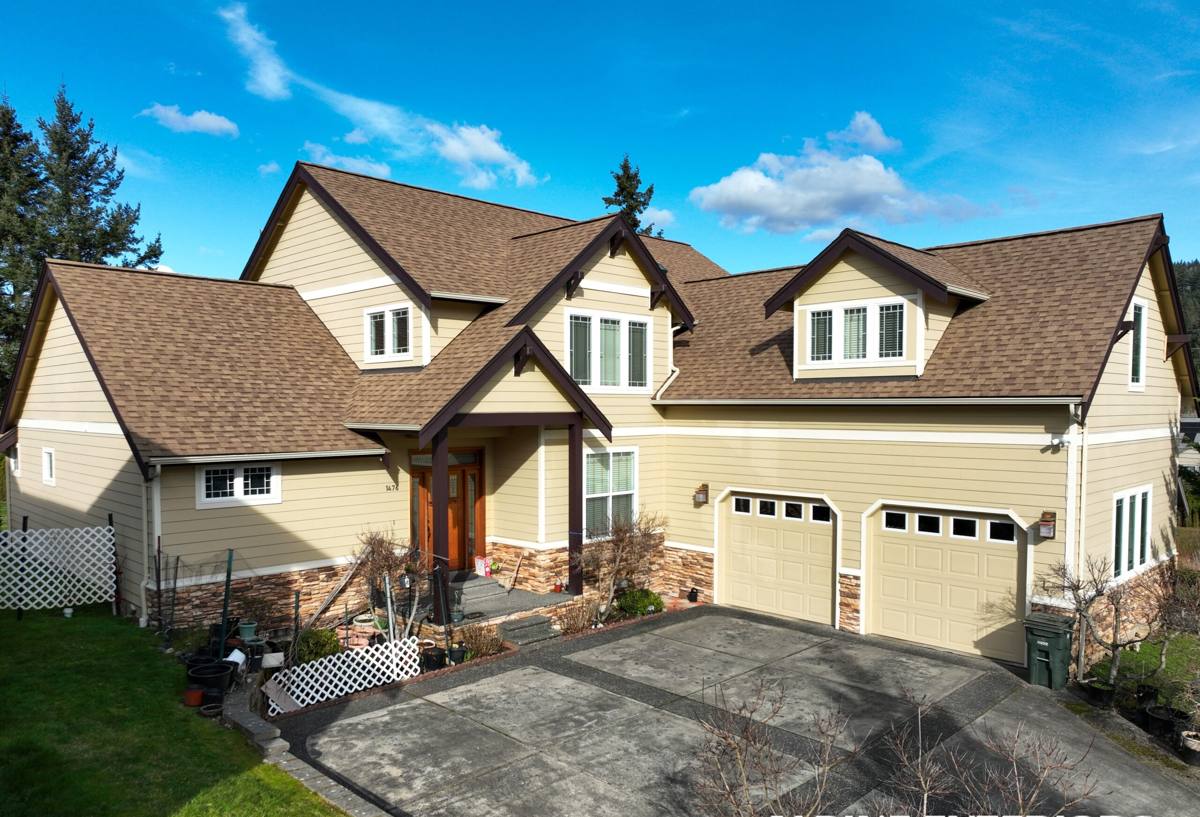
Signs Your Bellingham Roof Needs Repair, Not Replacement
Most homeowners call us after they've already seen a stain on a ceiling, but by the time water shows up inside, it's usually been getting in for a while. Here's what we tell people to watch for between now and their next roof inspection:
- Dark streaking or thick moss growth concentrated on the north or shaded side of the roof
- Granules collecting in gutters or at the base of downspouts after a hard rain
- Shingles that look cupped, curled at the edges, or visibly lifted along a ridge or valley
- Soft or spongy spots when walked on, especially near chimneys, skylights, or vent pipes
- Rust staining on metal flashing or discoloration around any roof penetration
- Daylight visible through the roof deck from inside an unfinished attic
- Interior ceiling stains that grow after a windy, wet storm but not after a light rain
If you're only seeing one or two of these, and the roof is otherwise in reasonable shape for its age, a targeted repair is usually the right call. Widespread granule loss combined with soft decking in multiple spots is a different conversation, and we'll tell you honestly when that's the case instead of selling a patch that won't hold.
What a Correct Repair Actually Involves
A roof repair that's done properly is rarely just "replace the bad shingles." Water finds the path of least resistance, which means the visible damage and the actual entry point are often several feet apart. Here's what we check and address on every repair call:
Flashing First
Most leaks in this region trace back to flashing, not the shingle field itself — the metal or rubber transitions around chimneys, skylights, sidewalls, and roof valleys. Constant moisture and temperature swings work fasteners loose and degrade sealant over a few seasons. We re-flash or reseal these areas as part of any repair that's within reach of the failure point, because patching shingles over bad flashing just delays the same leak.
Decking Condition
Once we pull the damaged shingles, we check the plywood or OSB decking underneath for soft spots, delamination, or rot. Bellingham's damp climate means decking that's been wet for a long stretch doesn't dry out on its own — it needs to be cut out and replaced, or the new roofing above it will fail again from the inside out.
Underlayment and Ice/Water Barrier
In valleys, around penetrations, and along eaves, we install self-adhering waterproof underlayment beneath the shingles. This is the layer that actually stops water when wind-driven rain gets pushed backward under a shingle edge, which happens often enough here that we treat it as standard practice rather than an upgrade.
Ventilation
A repair is also a chance to check attic ventilation. Poor airflow traps moisture against the underside of the deck, which accelerates rot and encourages the kind of mold and mildew growth that shortens a roof's life regardless of how good the shingles are.
Moss, Moisture, and Bellingham's Long Wet Season
Moss is the most visible symptom of a bigger issue: a roof surface that stays damp for days at a time. Whatcom County's rain doesn't just fall and stop — it lingers, and shaded roof sections under trees or on north-facing slopes can stay wet for most of the winter and well into spring. Moss roots work into shingle granules and lift tab edges, which lets water underneath the shingle rather than off of it.
When we repair a roof with moss damage, removal has to be done carefully. Scraping moss off aggressively strips granules and shortens the life of shingles that were otherwise fine, so we use gentler methods and treat the area to slow regrowth rather than just clearing what's visible. Trimming back overhanging branches to let more sun and airflow reach the roof is one of the simplest things a homeowner can do to buy years of life out of a repair.
Salt Air and Its Effect Near Semiahmoo Bay
Homes closer to the water deal with an added variable: salt-laden air that accelerates corrosion on exposed metal. Nails, flashing, gutter fasteners, and any exposed metal roof components corrode faster near the coast than they would further inland. A repair that uses standard fasteners in a coastal exposure can develop rust streaks and loosen within a few years, even if the shingles themselves are fine.
Our standard for coastal and near-coastal repairs is to use corrosion-resistant fasteners and flashing wherever the roof is exposed to open air or facing the water. It costs a little more up front, and it's a standard we hold ourselves to because we've seen what happens when it's skipped — not a claim about any particular product being unsafe, just an honest trade-off between upfront cost and how long the repair actually lasts in this specific environment.
Repair vs. Replacement: What Actually Drives the Decision
Homeowners often ask us to just tell them a number before we've looked at the roof, but the honest answer depends on a handful of factors that matter more than age alone.
| Factor | Points Toward Repair | Points Toward Replacement |
|---|---|---|
| Roof age | Under 15 years, or recently replaced with remaining warranty | Approaching or past the material's expected lifespan |
| Damage location | Isolated to one slope, valley, or penetration | Spread across multiple slopes or the whole roof |
| Decking condition | Solid, dry decking under the damaged area | Widespread soft spots or rot found in multiple areas |
| Granule loss | Light, localized loss | Heavy, uniform loss across most of the roof |
| Moss/moisture history | First occurrence, caught early | Repeated moss problems with visible mat buildup |
| Prior repairs | First repair on this roof | Multiple past patches in the same area |
We walk every roof and give you a straight answer based on what we actually find, not a sales pitch built around the most expensive option.
Materials We Use for Bellingham Repairs
Matching the right material to the climate matters as much as the workmanship. Here's how the common options hold up in this region's conditions:
| Material | Moss/Moisture Resistance | Coastal Fastener Consideration | Typical Maintenance |
|---|---|---|---|
| Standard asphalt shingle | Moderate; needs periodic moss treatment | Standard fasteners acceptable further inland | Inspect annually, clear debris from valleys |
| Algae/moss-resistant shingle | Better long-term resistance via copper or ceramic granules | Same as standard | Lower moss maintenance over the roof's life |
| Metal flashing components | Not applicable directly, but affects surrounding shingle life | Corrosion-resistant fasteners recommended near the water | Check sealant and fastener condition each inspection |
| Self-adhering underlayment | High; primary defense in valleys and eaves | Not fastener-dependent | No routine maintenance once installed correctly |
We'll walk you through which combination makes sense for your specific roof rather than defaulting to whatever's easiest to install.
How Our Bellingham Repair Process Works
- Inspection and honest assessment. We walk the roof (or use a camera where walking isn't safe) and check the attic from inside where accessible, looking at decking, insulation, and signs of moisture.
- Clear explanation of findings. We show you what we found and explain whether it's a repair, a larger repair, or something that's genuinely closer to a replacement decision — with our reasoning, not just a recommendation.
- Written scope and estimate. You get a clear description of the work, the materials involved, and the price before anything starts.
- The repair itself. Damaged shingles, flashing, and decking are removed; underlying wood is inspected and replaced as needed; new underlayment, flashing, and shingles are installed to match the surrounding roof as closely as possible.
- Cleanup and final check. Debris and old materials are cleared from the property and gutters, and we do a final walk-through with you.
Why Hiring a Crew That Already Works in Bellingham Matters
A roofer who splits time between dry inland regions and the coast doesn't always build the same habits a crew working Whatcom County year-round does. Knowing which slopes in this area tend to hold moss, which flashing details fail first in driving coastal rain, and which fastener choices actually last near open water isn't something you get from a general roofing background — it comes from repeatedly seeing how roofs in this specific climate age. That local pattern recognition is what separates a repair that lasts from one that needs revisiting in two years.
It also means faster response when weather causes sudden damage. A crew based in the area can get to an active leak during storm season without the lag of traveling in from farther away, which matters when water is actively getting into your home.
Get a Straightforward, No-Pressure Estimate
If you're seeing moss buildup, granule loss, or a leak that shows up after wind-driven rain, it's worth having someone take an honest look before it turns into a bigger repair. We offer free estimates for Bellingham homeowners — no pressure, no upsell, just a clear look at what your roof actually needs. Fill out the form below and we'll get you scheduled.