 Semiahmoo Exterior
 Roof Replacement in Lynden: What Local Homes Are Up Against
Lynden sits in a part of Whatcom County where the roof over your head works harder than it does in drier parts of the state. Marine air off the Salish Sea carries a fine load of salt inland, driving rain rolls through in long soaking bands rather than quick storms, and the shade from mature trees and overcast winters gives moss months at a time to get established. None of that means a roof fails overnight. It means small weaknesses — a worn flashing detail, a shingle that's lost its granules, a deck that's picked up moisture under old underlayment — get exploited slowly, season after season, until a repair isn't enough anymore.
A roof replacement done for this climate isn't just "new shingles on the old deck." It's a system: deck, underlayment, flashing, ventilation, and the surface material all working together to shed water fast and dry out fully between storms. Get one piece wrong and the rest of the system fights an uphill battle for the next twenty years.
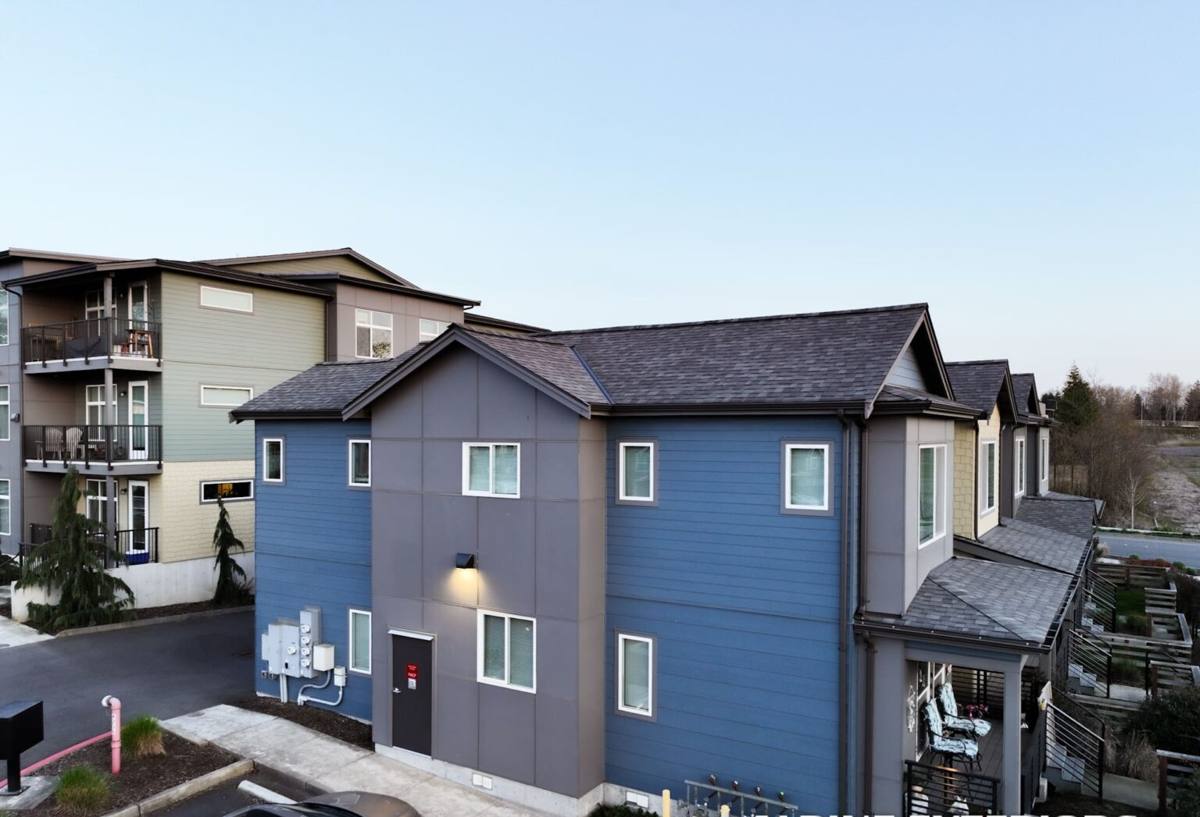
Signs a Lynden Roof Needs Full Replacement, Not Another Patch
Most homeowners call us after a leak, but the leak is usually the last symptom, not the first. These are the signs that tell us a roof has moved past the point where patching makes sense:
- Shingles that are cupping, curling at the edges, or shedding granules into the gutters
- Moss or algae established thickly enough that it's lifting shingle tabs rather than just staining the surface
- Soft or spongy spots underfoot on the deck, especially near valleys or chimneys
- Repeated leaks in different spots each winter, rather than one recurring trouble area
- Roof age at or past the manufacturer's expected service life for the original material
- Daylight visible through the attic deck, or insulation that's damp or matted
If you're only seeing one or two of these and the roof is otherwise mid-life, a targeted repair is often the honest answer. We'll tell you that. Replacement makes sense when the underlying materials — deck, underlayment, or the shingles themselves — have aged out as a system.
What a Correct Roof Replacement Actually Involves
Tear-Off and Deck Inspection
We remove the old roofing down to the deck rather than layering over it. That's the only way to actually see what's underneath — soft plywood, rusted fasteners, or old water staining that tells you where a leak has been traveling. Any damaged decking gets replaced before anything new goes down. Skipping this step is the single most common shortcut in the trade, and it's the one that causes new roofs to fail early.
Underlayment and Ice-and-Water Protection
With the amount of driving rain this region sees, underlayment isn't a formality — it's the roof's backup plan for the moments when wind pushes water up under the shingle line. We use synthetic underlayment across the field for its tear resistance and water shedding, with self-adhering ice-and-water membrane at the vulnerable points: eaves, valleys, and around any roof penetration.
Flashing Details
Flashing around chimneys, skylights, sidewalls, and valleys is where the vast majority of roof leaks actually originate — not the open field of shingles. Correct flashing means new metal, properly stepped and lapped with the underlayment and shingles in the right order, not caulk covering a shortcut.
Ventilation
A balanced intake-and-exhaust system at the soffits and ridge keeps the attic close to outside temperature and lets moisture escape instead of condensing on the underside of the deck. We cover this in more detail below because it's the piece most often overlooked entirely.
Choosing a Roofing System for Whatcom County Weather
Material choice matters more here than in drier climates, because the roof spends more of the year wet, shaded, or both. Here's how the common options stack up against the conditions Lynden roofs actually face:
| Material | Moss & moisture resistance | Wind/rain performance | Maintenance burden |
|---|---|---|---|
| Architectural asphalt shingle | Good with zinc/copper strips or granule treatments; still needs periodic moss removal on shaded slopes | Strong when properly nailed and sealed; rated for regional wind exposure | Moderate — periodic gutter and moss checks |
| Standing seam metal | Excellent — sheds moss habitat, minimal organic growth surface | Excellent shedding of driving rain; fewer seams for wind-driven water to exploit | Low — mainly fastener and sealant checks over time |
| Synthetic/composite shingle | Good; varies by product line and how it handles sustained moisture exposure | Good, generally comparable to architectural asphalt | Moderate |
We don't push one material as universally "best" — it depends on the roof's pitch, shading, budget, and how long you plan to own the home. What we do insist on is installing whatever material is chosen correctly, with fastening patterns and flashing details matched to the manufacturer's specification for this wind and rain exposure. A premium shingle installed loosely underperforms a mid-grade shingle installed right.
Our Roof Replacement Process, Start to Finish
- On-site inspection of the deck, attic ventilation, flashing points, and existing material condition
- A written estimate that explains what we found and why we're recommending replacement over repair
- Material selection, walking through the trade-offs above based on your roof's actual exposure
- Scheduling timed around the weather window — we don't tear off a roof ahead of a system we can't beat with dry-in
- Full tear-off, deck inspection, and repair of any compromised sheathing
- Installation of underlayment, ice-and-water membrane, new flashing, and ventilation components
- Shingle or panel installation to manufacturer specification
- Full site cleanup, including a magnetic sweep for stray fasteners
- Final walkthrough with you and delivery of warranty paperwork
Ventilation and Moisture: The Part Homeowners Don't See
An attic that can't breathe traps moisture from everyday household activity — showers, cooking, laundry — against the underside of the roof deck. In a climate with as much sustained damp weather as Whatcom County sees, that trapped moisture doesn't get much chance to dry out between storms. Over years, it can rot decking from the inside, even under a roof surface that looks fine.
Correct ventilation balances intake at the soffits with exhaust at the ridge or through properly sized roof vents, so air actually moves through the attic space rather than stagnating. We check this on every replacement, because installing a new roof surface over an unbalanced or blocked ventilation system just resets the clock on the same underlying problem.
What Drives the Cost of a Roof Replacement
Every roof is a little different, and the honest answer to "what will this cost" depends on the roof itself, not a flat per-square rate. These are the factors that move the number most:
| Factor | Why it matters |
|---|---|
| Roof size and pitch | Steeper roofs take longer to work safely and use more material per square foot of house |
| Layers to remove | Tearing off two or three old layers takes more labor and disposal than a single-layer tear-off |
| Deck condition | Rotted or soft sheathing found during tear-off needs replacement before anything new goes down |
| Material chosen | Asphalt, metal, and synthetic products carry different material and labor costs |
| Roof complexity | Valleys, dormers, skylights, and chimneys all add flashing work and time |
| Access | Steep lots, tight setbacks, or limited staging space can add time for material handling |
We walk through these factors on-site so the estimate reflects your actual roof, not a generic average.
Why Hiring a Crew That Already Works in Lynden Matters
A roof replacement is only as good as the judgment calls made on the job — when to hold off tear-off ahead of a rain system, how much ice-and-water protection a north-facing valley actually needs, whether a fastener and flashing metal combination will hold up against salt-tinged coastal air over the long haul. Crews who work this area regularly make those calls from experience with this specific climate, not a generalized playbook written for a drier region.
Local experience also means fewer surprises around permitting, disposal logistics, and scheduling around the wetter months. It's the difference between a roof that's built for the conditions it will actually face and one that's built to a generic standard and hopes for the best.
After the Install: Keeping a New Roof Performing in This Climate
A correctly installed roof still benefits from basic upkeep, especially given how long the moss season runs here. A simple annual routine goes a long way:
- Clean gutters at least twice a year, more often under overhanging trees
- Remove moss buildup gently before it lifts shingle edges — avoid aggressive pressure washing
- Trim back branches that keep a section of roof shaded and damp longer than the rest
- Have flashing points checked after any major windstorm
- Confirm attic ventilation stays unblocked by insulation or storage
- Schedule a periodic visual inspection rather than waiting for a visible leak
None of this requires a major service call — it's the kind of maintenance that keeps a well-installed roof reaching its full service life instead of falling short of it.
If you're weighing repair versus replacement, or just want an honest read on where your roof actually stands, we're glad to take a look. The estimate is free, there's no pressure attached to it, and you can use the form below to get started.