 Semiahmoo Exterior
 Roofing in Lynden Means Building for Whatcom County Weather
Lynden sits inland from the water, but that doesn't mean the roof over your head gets a break. Whatcom County's weather pattern doesn't care much about distance from the coast — moisture-laden air moves inland off the Salish Sea and settles into the valleys, bringing long stretches of driving rain, heavy dew, and the kind of overcast, damp conditions that let moss and algae take hold on a roof and never really let go. Add wind-driven rain during winter storms and the freeze-thaw cycles that show up most winters, and you've got a climate that is genuinely hard on roofing material, fasteners, and flashing.
A roof that's "good enough" for a drier climate often isn't good enough here. The difference shows up in details most homeowners never think about until something fails: how the underlayment is lapped, how much ventilation the attic actually has, whether valleys and eaves get extra protection, and whether the crew doing the work understands how water and moisture move on a low-slope or shaded roof in this part of the state.
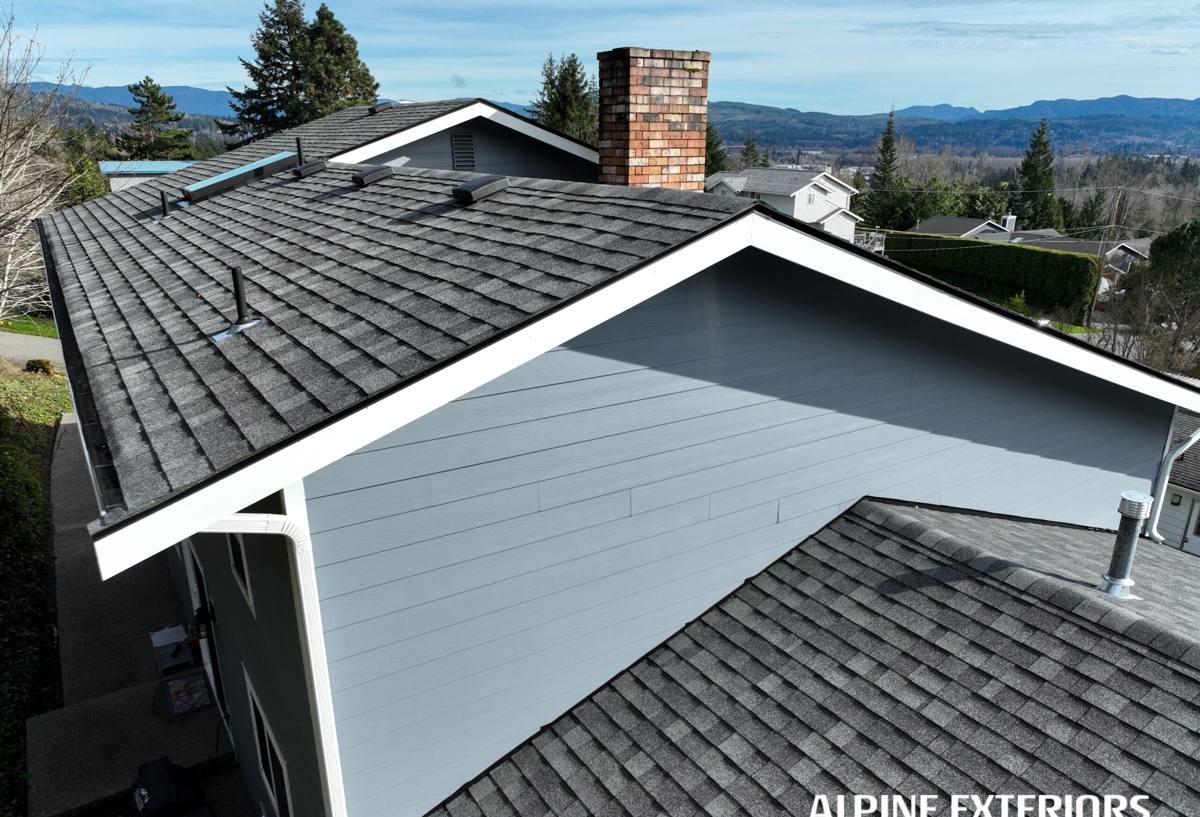
Signs a Lynden Home Needs a New Roof, Not Another Repair
Roofs rarely fail all at once. In this climate, they usually show a pattern of smaller issues before a full replacement becomes necessary. Some of the most common signs we see on homes around Lynden and the surrounding Whatcom County area:
- Shingles that are curling, cupping, or losing granules faster than expected for their age
- Moss buildup that keeps coming back within a season or two of cleaning, even after treatment
- Dark streaking or algae staining across large sections of the roof
- Soft spots in the decking, visible sagging, or daylight showing through the attic sheathing
- Repeated leaks in the same area despite prior patch repairs
- Flashing around chimneys, skylights, or roof-to-wall transitions that's rusted, lifted, or improperly sealed
- An attic that feels noticeably humid, or insulation that's damp or discolored
- A roof approaching or past the manufacturer's expected service life for the material installed
One or two of these on their own might mean a repair is enough. Several at once, or a roof already past the 18-20 year mark for standard asphalt shingles, usually means it's time to talk about full replacement instead of continuing to chase leaks.
Roofing Materials That Actually Hold Up Here
Not every roofing product performs the same way under sustained Pacific Northwest moisture. We install several material options for Lynden homeowners, and we're upfront about the tradeoffs of each rather than pushing whatever's easiest to sell.
| Material | Typical Lifespan | Moss/Moisture Resistance | Maintenance Needs |
|---|---|---|---|
| Standard 3-tab asphalt shingle | 15-20 years | Fair — prone to moss without upkeep | Periodic cleaning, moss treatment |
| Architectural (dimensional) asphalt shingle | 25-30 years | Good, especially with algae-resistant granules | Occasional cleaning |
| Metal roofing (standing seam or panel) | 40-50+ years | Excellent — sheds water and resists moss growth | Low; periodic inspection |
| Cedar shake | 20-30 years with upkeep | Requires diligent maintenance in wet climates | High — treatment, cleaning, moisture monitoring |
| Synthetic/composite shingle | 30-50 years | Good to excellent depending on product | Low to moderate |
Architectural asphalt shingles remain the most common choice we install because they balance upfront cost, appearance, and performance well for this climate — especially when specified with algae-resistant granules. Metal roofing has become more popular with homeowners who want to minimize moss issues and long-term maintenance, even with a higher upfront investment. We'll walk through the honest tradeoffs for your specific roof, budget, and how long you plan to stay in the home.
A Note on Cedar Shake
Cedar shake has a place in this region and can look great, but it demands real commitment to upkeep in a climate this wet — regular cleaning, moisture monitoring, and periodic treatment to keep moss and rot at bay. We'll install it if that's what a homeowner wants, but we make sure the maintenance expectations are clear upfront rather than glossed over.
What a Correct Roof Installation Actually Involves
A roof is a system, not just a layer of shingles. Skipping steps in the system is exactly where premature failures come from in a climate like ours. Here's what a properly done tear-off and replacement includes:
Tear-Off and Deck Inspection
We remove the old roofing down to the deck rather than layering over it. This lets us actually see the plywood or OSB sheathing underneath — soft, rotted, or delaminated sections get identified and replaced before anything new goes down. Installing over hidden deck damage is one of the most common causes of early roof failure we see on older Whatcom County homes.
Underlayment and Ice/Water Protection
A synthetic underlayment goes down as the roof's secondary moisture barrier. In vulnerable areas — eaves, valleys, around penetrations — we add self-adhering ice-and-water shield membrane for an extra layer of protection where wind-driven rain and ice damming are most likely to cause problems.
Flashing
New flashing at chimneys, skylights, sidewalls, and roof-to-wall transitions. Reused or corroded flashing is a frequent source of "mystery leaks" on otherwise sound roofs, so we replace it as standard practice rather than an upsell.
Ventilation
Proper intake and exhaust ventilation keeps the attic space at a stable temperature and moisture level, which reduces condensation, extends shingle life, and helps prevent the trapped moisture that feeds moss and rot from the underside of the deck.
Final Layer and Detail Work
Shingles, panels, or shakes go down to manufacturer specification, with proper nailing patterns and exposure. Ridge caps, starter strips, and drip edge are installed correctly rather than skipped to save time.
Our Process, Start to Finish
- Inspection and estimate — we assess the current roof, attic ventilation, and any deck damage, and give you a clear, written scope and price.
- Material selection — we go over options suited to your home, budget, and how much long-term maintenance you want to take on.
- Scheduling around weather — roofing in this climate means watching forecasts closely; we plan tear-off and dry-in around dry weather windows whenever possible.
- Tear-off and deck repair — old roofing removed, deck inspected, and any damaged sheathing replaced.
- Installation — underlayment, flashing, ventilation components, and final roofing material installed to spec.
- Cleanup and walkthrough — job site cleared of debris and nails, and we walk the finished roof with you before we consider the job done.
Ventilation and Moisture: The Part That Gets Overlooked
Homeowners understandably focus on what the roof looks like from the street, but the attic underneath matters just as much for long-term performance. Poor ventilation traps warm, moist air against the underside of the roof deck, which accelerates rot, encourages mold, and can shorten the life of even a high-quality shingle. In a climate with as much sustained moisture as Whatcom County sees, we treat ventilation as a required part of a roof replacement, not an optional add-on. If your current attic has minimal or blocked ventilation, we'll flag it and explain what correcting it involves.
What Affects the Cost of a New Roof
Every roof is different, and we won't quote a number without seeing the actual job, but the main factors that drive cost are consistent:
| Factor | Why It Matters |
|---|---|
| Roof size and pitch | More surface area and steeper pitches mean more material and labor time |
| Number of layers to remove | Tearing off multiple existing layers adds disposal and labor cost |
| Deck condition | Rotted or damaged sheathing needs replacement before new roofing goes down |
| Material choice | Asphalt, metal, cedar, and composite products carry different material and install costs |
| Roof complexity | Valleys, dormers, skylights, and multiple penetrations add labor and flashing work |
| Ventilation upgrades | Adding or correcting intake/exhaust venting adds a modest cost but pays off long-term |
We give straightforward written estimates that break out these factors so you know what you're paying for and why — not a vague lump sum.
Why a Crew That Already Works Lynden Makes a Difference
Roofing crews familiar with this specific area understand the local permitting process, know how to read the weather patterns that affect scheduling, and have already worked through the practical realities of local building conditions — older homes with original decking, newer builds with different code requirements, and the moss and moisture issues that come with the territory. That familiarity translates into fewer surprises, more accurate scheduling, and a crew that isn't guessing at what this climate does to a roof over time. We work throughout Whatcom County, and Lynden is part of our regular service area — not a one-off trip.
Protecting Your Investment After Installation
A new roof holds up best with a little basic upkeep. We give every customer the same simple guidance after installation:
- Have gutters cleaned at least twice a year to prevent water backing up under roof edges
- Keep overhanging tree limbs trimmed back to reduce debris buildup and shade that encourages moss
- Address moss growth early with proper treatment rather than letting it establish and spread
- Schedule a visual roof inspection every few years, especially after major storms
- Watch for any signs of attic moisture or unusual odors, which can indicate a ventilation issue
- Keep a copy of your installation paperwork and material warranty information on file
If you're weighing whether it's time to replace your roof or want a straight answer on what shape yours is really in, we're happy to take a look. Reach out for a free, no-pressure estimate using the form below.