 Semiahmoo Exterior
 Why Decks in Lynden Wear Out on Their Own Schedule
Lynden sits inland from the coast in the Nooksack River valley, so it doesn't take the same direct salt spray that homes closer to Semiahmoo and Blaine deal with. What it does get is a long, damp season — heavy fall and winter rain, low winter sun that leaves shaded decks wet for days at a stretch, and colder overnight temperatures than you'll find right on the water. That combination is hard on wood and hardware in its own way: moisture sits in end grain and fastener holes longer than homeowners expect, moss and algae take hold on north-facing boards and under rail caps, and repeated freeze-thaw cycles in December and January work at any joint that wasn't sealed or flashed correctly the first time.
None of that means Lynden decks fail faster than coastal ones — it means they fail differently. We see rot start at ledger boards and post bases before it ever shows on the surface decking, and we see hardware corrode from trapped moisture rather than airborne salt. A deck built for a drier climate, or built without local conditions in mind, tends to look fine for a few years and then go downhill fast once water finds a way into the structure.
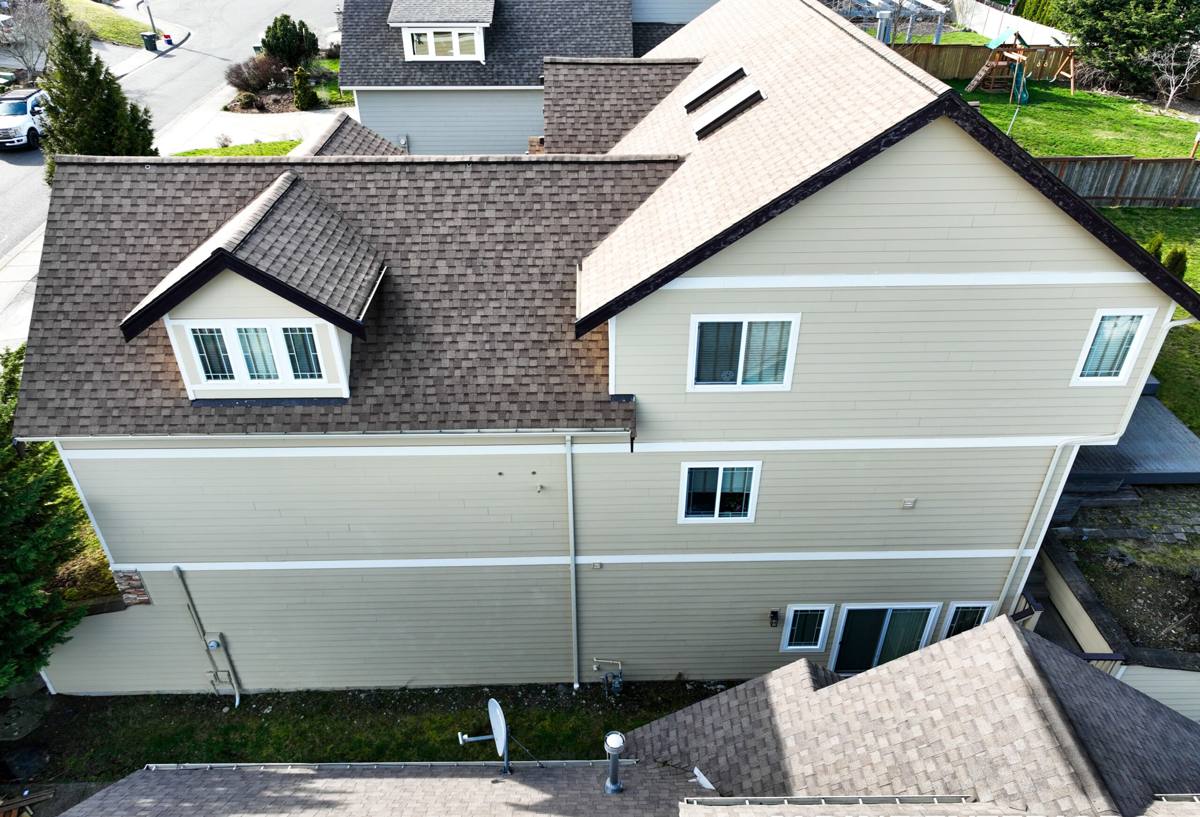
Signs a Deck Needs Replacing, Not Just Repairing
Homeowners often call us for a repair and end up needing a full rebuild once we're actually under the deck. A few boards can usually be swapped without touching the frame. But once the framing itself is compromised, patchwork stops making sense — you're paying labor twice instead of once.
- Joists or beams that are soft, spongy, or dark and swollen when probed with a screwdriver
- Ledger board separating from the house, or visible gaps behind the flashing (if there is any flashing at all)
- Post bases sitting in standing water or buried in soil, dirt, or mulch that traps moisture against the wood
- Persistent green or black staining that comes back within weeks of cleaning
- Railings that flex or wobble under normal weight — this is a safety issue, not a cosmetic one
- Fasteners that are rusted, backing out, or leaving black streaks down the decking
- A deck built more than 20-25 years ago to an older code, especially with undersized footings or no engineered ledger connection
If you're only seeing surface graying or minor moss on the boards themselves, that's often a cleaning and maintenance issue, not a replacement issue. We'll tell you honestly which category your deck falls into — a straight answer costs us nothing and saves you from either overpaying or ignoring a real problem.
Repair vs. Replace, Quickly
| Situation | Usually Repairable | Usually Needs Replacement |
|---|---|---|
| Surface boards only | Yes — spot replace | — |
| Ledger board or rim joist rot | Sometimes, if caught early | Often, once it's spread |
| Post/footing movement | Rarely | Yes |
| Railing looseness | Sometimes | Yes, if posts are rotted |
| Deck older than 20 years, no permit history | No | Yes, recommended |
What a Correct Deck Replacement Actually Involves
A deck is only as good as the parts nobody sees once it's finished. Replacing a deck properly in a wet climate like ours means paying more attention to the structure than to the surface material.
Ledger Attachment and Flashing
Where the deck meets the house is the single most common failure point we find in this region. It needs proper flashing that directs water away from the house sheathing, not caulk alone, and lag bolts or through-bolts sized and spaced for the actual load — not just whatever was on hand. This is also the point where a lot of older decks were built wrong from day one, which is why we inspect it closely before quoting anything as a "simple" replacement.
Footings and Post Bases
Footings need to sit below frost depth and posts need to be held up off the concrete with a proper post base connector, not set directly into wet soil or a puddle-prone low spot in the yard. In a valley climate with poor-draining clay soil in places, footing depth and drainage around the post matters more than people assume.
Joist Spacing and Framing Grade
Joist spacing depends on the decking material you choose — composite and PVC boards often call for tighter spacing than solid wood to avoid flex over time. We frame to the material, not the other way around, so the deck doesn't develop a bounce or soft spots a few years in.
Fasteners and Hardware
Everything below the decking — joist hangers, structural screws, post bases — should be corrosion-resistant hardware rated for exterior and ground-contact use. This is a small line item on a quote and one of the easiest places for a rebuild to go wrong if it's skipped to save money.
Choosing a Decking Material for a Lynden Home
There's no single right answer here — it depends on your budget, how much upkeep you want to do, and how the deck is oriented on your lot. We'll walk you through the real trade-offs rather than pushing whatever has the best margin.
| Material | Upfront Cost | Maintenance | How It Handles Our Climate |
|---|---|---|---|
| Pressure-treated wood | Lowest | Annual cleaning, periodic sealing | Reliable if sealed and maintained; moss and graying show fastest without upkeep |
| Cedar | Moderate | Regular sealing to hold color and resist moisture | Naturally rot-resistant but still needs upkeep in a wet, shaded yard |
| Composite decking | Higher | Occasional washing, no sealing/staining | Very good moisture resistance; some boards can still host surface algae if never cleaned |
| PVC/capped polymer | Highest | Lowest — washing only | Best moisture performance of the group; more expensive and installation is less forgiving |
We don't push composite or PVC on every job — plenty of wood decks in this area last decades when they're built right and maintained on a normal schedule. Where we do steer people toward composite or PVC is on decks with heavy shade, low airflow underneath, or a north-facing exposure, since those are exactly the conditions where moss and moisture problems come back no matter how often you clean solid wood.
How We Handle a Deck Replacement
- On-site assessment. We get under the deck and check the ledger, framing, and post bases before quoting anything — not just a walk-around of the surface.
- Honest scope. You get a clear answer on whether this is a repair, a partial rebuild, or a full tear-out, with the reasoning behind it.
- Demo and disposal. Old decking, framing, and hardware are removed and hauled off; we protect the surrounding landscaping and siding during teardown.
- Structural rebuild. New footings or post base connectors as needed, corrected ledger flashing, and framing sized to your chosen decking material.
- Decking and railing install. Installed to the manufacturer's spacing and fastening specs, not shortcuts to save a day of labor.
- Final walkthrough. We go over the finished deck with you, including what maintenance (if any) it needs going forward.
Permits and Whatcom County Code
Most deck replacements that involve new footings, structural framing, or railings above a certain height require a permit in Whatcom County, even when the original deck was built without one. We handle the permit process as part of the job rather than leaving it on the homeowner, and we build to current code — proper guard rail height and baluster spacing, correctly rated ledger fasteners, and footings sized for the load. Skipping this step is one of the more common corners cut on cheap deck jobs, and it's the kind of thing that surfaces later at resale or during a home inspection.
Keeping a New Deck Ahead of Moss and Moisture
A correctly built deck still needs some seasonal attention in a climate like ours — the goal is to make that upkeep minimal, not eliminate it entirely.
- Sweep debris out of gaps between boards before it composts into a moss-friendly layer
- Keep gutters and downspouts clear so runoff doesn't dump directly onto or under the deck
- Trim back vegetation that's shading the deck and keeping it damp longer than the rest of the yard
- Rinse off algae and moss growth before it stains, rather than after it's set in
- For wood decks, plan on resealing every 1-3 years depending on sun exposure
- Check under the deck once a year for standing water or debris buildup around post bases
Why a Crew That Works This Area Regularly Matters
We're based in the Semiahmoo area and work throughout Whatcom County, including Lynden on a regular basis. That matters for a few concrete reasons, not just as a sales pitch: we know which decking products actually hold up through a wet Whatcom County winter versus what looks good in a showroom, we're familiar with the county's permitting process so it doesn't stall your project, and we're not driving in from out of the area for a warranty callback if something needs attention after the fact. A deck replacement is a structural project sitting on the outside of your house through the wettest months of the year — the crew building it should understand exactly what that means locally, not be applying a one-size-fits-all approach from a drier region.
Get a Straight Answer on Your Deck
If your Lynden deck is showing soft spots, moss that won't quit, or you're just not sure whether it needs a repair or a full replacement, we're glad to take a look. The estimate is free, there's no pressure attached to it, and you'll get a plain explanation of what we find and why. Use the form below to get started.