 Semiahmoo Exterior
 Decks in Lynden Face a Different Kind of Wear
Lynden sits inland from the water, but it doesn't escape the same weather pattern that shapes the rest of Whatcom County: long stretches of driving rain from fall through spring, humid air that carries salt off the Strait, and short, low-angle winter sun that leaves shaded corners of a yard damp for days at a time. A deck built here doesn't fail because the homeowner picked an ugly color or the wrong railing style. It fails because water sat somewhere it shouldn't have, or because a fastener corroded quietly for two years before anyone noticed the stain around it.
That's the lens we build through. A custom deck for a Lynden home has to look right for the property and hold up to a climate that never really dries out for more than a few weeks at a stretch. Everything below is how we approach that — not a generic deck-building overview, but what actually matters for a deck that's going to sit outside in this specific corner of Washington for the next twenty-plus years.
What Lynden Homeowners Actually Need From a Deck
Most of the requests we get in this area fall into a few categories: a larger entertaining space off the back of the house, a low-maintenance replacement for an aging wood deck, or a new deck built alongside a home addition. Lot sizes and home styles vary from in-town lots to larger rural and agricultural properties on the outskirts, so we don't push a single template. A deck for a tighter in-town yard usually needs to do more with less space — built-in seating, a defined grilling zone, maybe a step down to a patio. A deck on a larger rural property often has more freedom for size and multiple levels, but also more exposure to wind and weather with fewer structures around it for a windbreak.
What stays constant is this: the deck has to handle standing water without holding it, resist the moss and algae that grow on any shaded, damp surface in this county, and use hardware that won't rust out from underneath a good-looking board. Style comes second to that. A beautiful deck that traps water under the boards is a problem waiting to surface — usually around year three or four, right when the homeowner has stopped thinking about it.
Common Deck Types We Build in the Area
- Ground-level and low-rise decks for backyard entertaining and outdoor kitchens
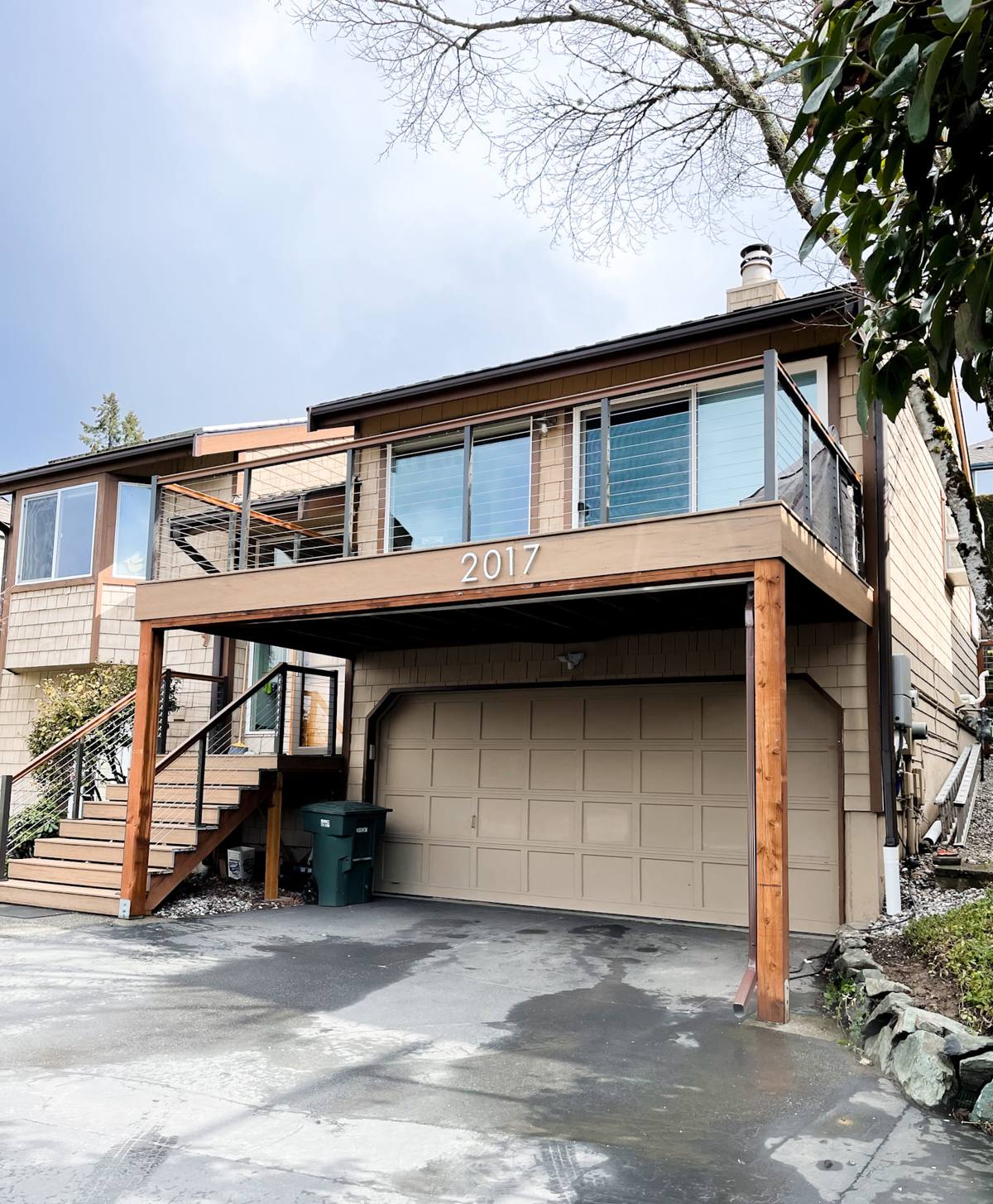
- Elevated decks off a second story or daylight basement, with covered space underneath
- Multi-level decks that step down toward a yard or garden
- Covered or partially covered decks for year-round use during the wet months
- Deck replacements that reuse a sound footing layout but rebuild the structure and surface
Choosing a Decking Material That Handles This Climate
There's no single "best" decking material — there's a best material for a given budget, use case, and tolerance for maintenance. In Lynden's climate, the trade-offs below tend to matter more than they would in a drier region, because everything is exposed to more consistent moisture over more months of the year.
| Material | How It Handles This Climate | Maintenance | Typical Lifespan |
|---|---|---|---|
| Pressure-treated wood | Affordable, needs consistent sealing to resist rot and moss staining | Annual cleaning, re-sealing every 1–2 years | 10–15 years with upkeep |
| Cedar | Naturally rot-resistant, ages to gray if left unsealed, still needs care in shaded areas | Cleaning and oiling every 1–2 years | 15–20 years with upkeep |
| Composite decking | Resists moisture absorption and moss staining far better than wood; surface texture matters for slip resistance when wet | Periodic washing, no sealing or staining | 25–30 years, manufacturer-backed |
| PVC / capped polymer | Fully sealed surface, best moisture and mold resistance of the common options | Occasional washing | 25–30+ years, manufacturer-backed |
We install all of these and won't steer a homeowner toward the most expensive option if it isn't the right fit for how they'll use the deck. Where we do push back is on bare wood decks in heavily shaded, north-facing yards — not because wood is a bad product, but because the maintenance schedule needed to keep it from staining and going soft in a shaded, damp corner of a Lynden lot is more than most owners realistically keep up with. If a spot on the property barely sees direct sun for six months of the year, we'll say so up front and talk through composite or PVC as the lower-maintenance path.
What Correct Construction Looks Like Underneath the Surface
The decking boards are the part everyone sees. The part that determines whether the deck is still solid in fifteen years is everything underneath — and it's also the part that's easiest for a rushed crew to shortcut.
Framing and Structure
Footings need to be sized and set to the depth required for this frost and soil condition, not just poured to whatever a crew had on the truck. Ledger boards attached to the house get proper flashing so water is directed away from the wall framing, not into it — this is one of the most common failure points we find on older decks, and it's invisible until there's already rot behind the siding. Joists get spaced to match the decking manufacturer's requirements, which is stricter for composite and PVC boards than for solid wood.
Fasteners and Hardware
Everything below the boards — joist hangers, structural screws, post bases — needs to be corrosion-resistant hardware rated for treated lumber and outdoor exposure. This matters more here than in a dry climate, because the combination of near-constant humidity and treated-lumber chemicals accelerates corrosion in cheaper or mismatched fasteners. We use hidden fastener systems on composite and PVC decking where the product supports it, which also helps eliminate the small gaps around screw heads where moss and algae like to start.
Drainage and Airflow
Standing water under a deck is where rot, mold, and moss get their start. We grade and, where needed, add drainage beneath the structure so water moves away instead of pooling against posts and beams. Skirting, if the homeowner wants it, still needs enough airflow behind it to let the space underneath dry out between storms — a fully sealed skirt on a low deck in this climate just creates a damp, dark cavity.
Moss, Algae, and the Long Wet Season
Moss doesn't need much to get established — shade, moisture, and a surface it can grip. Whatcom County's long wet season gives it plenty of time to do that on any deck that isn't built and finished with that in mind. A few things reduce how much of a problem it becomes:
- Decking with a texture and finish that doesn't hold a film of standing moisture
- Gaps between boards sized correctly for drainage and airflow, not tightened up purely for looks
- Railing and post caps that shed water instead of collecting it
- Trimming back overhanging branches where possible to let more light and air reach shaded sections
- A finish or sealer on wood decking that includes mildewcide, reapplied on schedule
None of this makes a deck moss-proof — nothing outdoors in this county truly is — but it's the difference between an occasional wash-down and a deck that's green and slick by the second winter.
Our Process, Start to Finish
- On-site consultation. We walk the property, look at sun exposure, drainage, and how the space connects to the house, and talk through how the family actually plans to use the deck.
- Design and material selection. We put together a layout and give an honest comparison of material options for the budget, including the maintenance trade-offs above.
- Permitting. We handle the permit application and coordinate required inspections so the homeowner isn't stuck navigating that process alone.
- Construction. Footings, framing, flashing, and decking installed in sequence, with structural work inspected before it's covered up.
- Final walkthrough. We go over the finished deck together, including care instructions specific to the material installed.
Permits and Code Requirements
Most deck projects above a certain height or size require a building permit, and guardrail height, baluster spacing, and stair requirements are set by code rather than preference. Footing depth also has to account for local frost conditions. We handle this as a standard part of the job rather than something the homeowner has to chase down separately — skipping the permit process on a deck project is a common way homeowners end up with problems at resale, when a missing permit or an unpermitted structure gets flagged during a home inspection.
A Practical Maintenance Checklist
Whatever material is installed, a little seasonal attention goes a long way in this climate:
- Sweep debris out of board gaps before it decomposes and feeds moss growth
- Wash the surface at least once a year with a deck-safe cleaner, more often in shaded areas
- Check fasteners and railing connections annually for movement or corrosion staining
- Reseal or re-stain wood decking on the schedule the product actually requires, not just when it looks faded
- Confirm gutters and downspouts near the deck are directing water away from footings and framing
- Clear leaves and organic debris from underneath low decks each fall
Why Local Experience on This Kind of Project Matters
A deck built to a generic national spec sheet can still fail early in a climate like this one if the crew building it hasn't dealt firsthand with how moss, moisture, and salt-laden air actually behave here. We've built and repaired decks throughout Lynden and the surrounding Whatcom County area, and the patterns repeat: rot starting at ledger flashing, moss taking over shaded north sides, fasteners corroding faster than the boards around them. Building with that experience up front costs the same as building without it — the difference shows up years later, in whether the deck needs a rebuild or just a wash.
If you're planning a new deck or replacing one that's past its prime, we're happy to take a look and put together a straightforward, no-pressure estimate — just fill out the form below and we'll get in touch.