 Semiahmoo Exterior
 Lynden's Climate Is Harder on Siding Than It Looks
Lynden sits inland from the coast, but "inland" in Whatcom County doesn't mean sheltered. Weather systems moving through the Nooksack valley still carry salt-laden marine air off the Georgia Strait and Puget Sound, and that moisture doesn't stop at the water's edge — it rides the wind into farm country and settles on every north-facing wall in town. Add driving rain that comes in sideways during winter storms, persistent valley fog off the surrounding farmland, and a moss season that can run eight months out of the year in shaded, low-airflow spots, and you get a climate that quietly wears down siding that wasn't built for it.
Most homeowners don't notice the damage until it's already done — a soft spot under a window, a stain that won't wash off, a board that's swelling at the butt joint. By the time it's visible, moisture has usually been working behind the surface for years. That's the pattern we see repeatedly on Lynden homes, and it's the reason siding material and installation quality matter more here than in a drier inland climate.
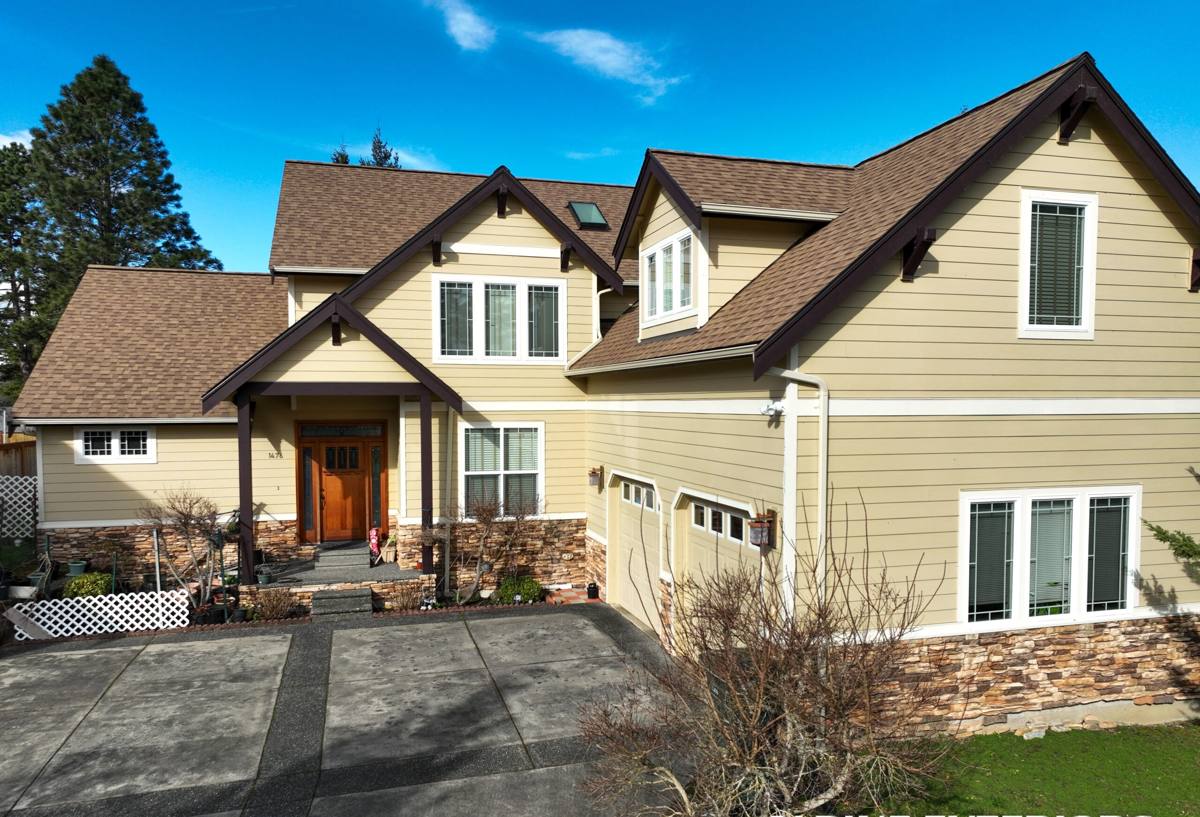
Why We Only Install James Hardie in This Area
We standardized on James Hardie fiber cement for every home we side, including here in Lynden, and we don't install vinyl, LP SmartSide, primed wood, or cedar. That's not a marketing position — it's a response to what this climate does to siding over a 20-30 year ownership window.
Fiber cement doesn't rot, doesn't feed mold or moss the way wood-based products can, and it doesn't warp or buckle the way vinyl does when it absorbs heat and cold cycles repeatedly. James Hardie's ColorPlus factory finish is baked on under controlled conditions rather than field-painted, which matters a great deal in a region where paint failure from trapped moisture is one of the most common siding complaints we hear. It's also non-combustible, which is a real consideration given the wildfire smoke and dry-spell risk that even wet counties like Whatcom have seen more of in recent summers.
None of that means fiber cement is magic. It still has to be installed correctly, with the right clearances, flashing, and fastening, or it will fail just like anything else. The product buys you a much wider margin for error and a much longer service life — but installation quality is still what determines whether a Lynden home actually gets that life out of it.
What Homes Around Lynden Actually Need
- Rain-screen gapping or proper drainage plane behind the siding, not just a house wrap and nails
- Correct fastener penetration into framing — not just into sheathing — so panels don't work loose in wind-driven rain
- Factory-primed cut edges sealed in the field, since every field cut is a potential moisture entry point
- Flashing details at windows, doors, and roof-to-wall transitions that shed water instead of trapping it
- Clearance from grade, decks, and roof lines so siding never sits in standing water or leaf litter
- A finish and color chosen for how it will actually weather in low, filtered light and persistent damp shade
The HZ5 Climate Zone and What It Means Locally
James Hardie engineers its products by climate zone, and the Pacific Northwest — including Whatcom County — falls into the HZ5 zone, engineered specifically for regions with high moisture exposure and freeze-thaw cycling. That's a meaningful distinction from siding sold nationally with no regional engineering behind it at all.
In practice, HZ5-engineered Hardie products are formulated to resist the moisture absorption and swelling that cause bigger problems in wetter climates. That matters in Lynden specifically because of how much of the year the siding stays wet or damp rather than fully drying out between rain events. A product engineered for a dry Southwest climate and shipped everywhere will not perform the same way here, even if it looks identical off the truck.
What Correct Installation Actually Involves
Most siding failures we're called out to inspect in this area aren't material failures — they're installation failures. James Hardie publishes detailed installation specifications, and following them isn't optional if you want the warranty to mean anything or the siding to perform the way it's designed to.
| Step | What It Involves | Why It Matters Here |
|---|---|---|
| Tear-off and inspection | Remove old siding, inspect sheathing for rot or hidden moisture damage | Trapped moisture behind old siding is common in this climate and must be addressed before re-siding |
| Weather-resistive barrier | Install or repair the moisture barrier and drainage plane | Creates the drainage path that keeps driving rain from reaching sheathing |
| Flashing | Window, door, and penetration flashing installed to shed water outward and down | Prevents the concealed leaks that cause the most expensive repairs |
| Fastening | Proper fastener type, spacing, and penetration depth into framing | Keeps panels secure through winter wind events without working loose over time |
| Joints and caulking | Correct gapping at butt joints, sealed field cuts, quality caulk at trim | Reduces the entry points where moss and moisture take hold first |
| Final inspection | Walk the full exterior checking clearances, alignment, and sealant lines | Catches small defects before they become multi-year problems |
Where We See Moss and Moisture Take Hold
Moss doesn't grow on siding because the siding is bad — it grows where moisture sits too long without drying, usually because of a design or installation shortcut. The spots we see most often around Lynden are north- and west-facing walls under mature tree cover, areas close to grade where splashback keeps the lower courses wet, and anywhere siding was installed tight against trim or roofing without a drainage gap.
Fiber cement resists moss far better than wood-based sidings because it doesn't provide the organic material moss needs to root into, but it isn't immune to buildup on the surface if a wall never gets sun or airflow. Where we can, we'll flag those conditions during the estimate — sometimes a small change in trim detailing or clearance solves a problem that would otherwise show up again in a few years regardless of what siding is on the wall.
How Our Process Works for a Lynden Job
We walk every home in person before quoting anything. That means checking the current siding and sheathing condition, looking at grade and drainage around the foundation, noting sun exposure and shade patterns on each elevation, and identifying any trim, flashing, or roofline details that need attention as part of the job rather than after it.
From there, the job itself follows the same sequence on every home: protect the property and landscaping, tear off and dispose of the old siding, inspect and repair sheathing as needed, install the weather barrier and flashing package, install Hardie panels or lap siding to spec, seal and caulk, and do a final walkthrough with the homeowner before cleanup. We don't skip the sheathing inspection step to save time — in this climate, siding is frequently the second problem on a home, and the first one is usually water damage underneath that's been building for years.
Cost Factors Specific to This Area
Every home is different, but a few factors consistently affect the cost of a proper James Hardie install around Lynden:
| Factor | Why It Affects Cost |
|---|---|
| Sheathing condition | Older farmhouses and homes with a history of moisture intrusion often need sheathing repair before siding goes on |
| Home age and trim style | Older trim profiles and window details take more time to flash and integrate correctly |
| Elevation exposure | Walls facing prevailing wind and rain need more attention to flashing and joint sealing |
| Siding profile | Lap siding, shingle-style panels, and board-and-batten each have different labor requirements |
| Access and site conditions | Outbuildings, fencing, and rural lot layouts can affect staging and material handling |
We don't quote from photos or a phone call for exactly this reason — the honest number depends on what's actually happening behind the existing siding, and that only shows up on site.
Why a Crew That Already Works Lynden Matters
Siding crews that mostly work in drier or more sheltered markets tend to under-detail the things that matter most here: drainage gaps, flashing laps, and clearance from grade. A crew that works Whatcom County regularly has already seen what happens when those details get skipped, because they've been called back to fix it — or they've seen a neighboring job go wrong. That local pattern recognition is worth more than a lower bid from a crew unfamiliar with how this climate actually behaves over a decade or two, not just the first year after installation.
It also means faster, more accurate estimates. We already know the kinds of moisture and sheathing issues to look for on homes in this area, and we're not learning the local climate on your project.
If you're planning a siding replacement in Lynden or want an honest read on whether your current siding is holding up, we offer free, no-pressure estimates — just fill out the form below and we'll take a look.