 Semiahmoo Exterior
 Salt Air, Driving Rain, and Moss — What Ferndale Siding Is Up Against
Ferndale sits close enough to Semiahmoo Bay and the Strait of Georgia that salt-laden air is a daily fact of life for anything on the outside of a house. That air corrodes exposed fasteners, breaks down cheap paint films, and works its way into any gap in a siding system faster than it would twenty miles inland. Add Whatcom County's driving winter rain — the kind that comes in sideways during a real storm — and you get water forced into laps, seams, and trim joints that were never built to handle sustained pressure from the side rather than straight down.
Then there's moss. Ferndale's moss season isn't a few weeks in spring; it's most of the fall, winter, and early spring, and it keeps north-facing and shaded siding damp for months at a stretch. Damp siding that never gets a real chance to dry out is exactly how small problems — a hairline crack, a gap in caulk, a nail that's backed out — turn into rot, delamination, or a soft spot you can push your thumb into. Siding repair here isn't cosmetic work. It's about catching moisture problems before they reach the sheathing and framing behind the siding.
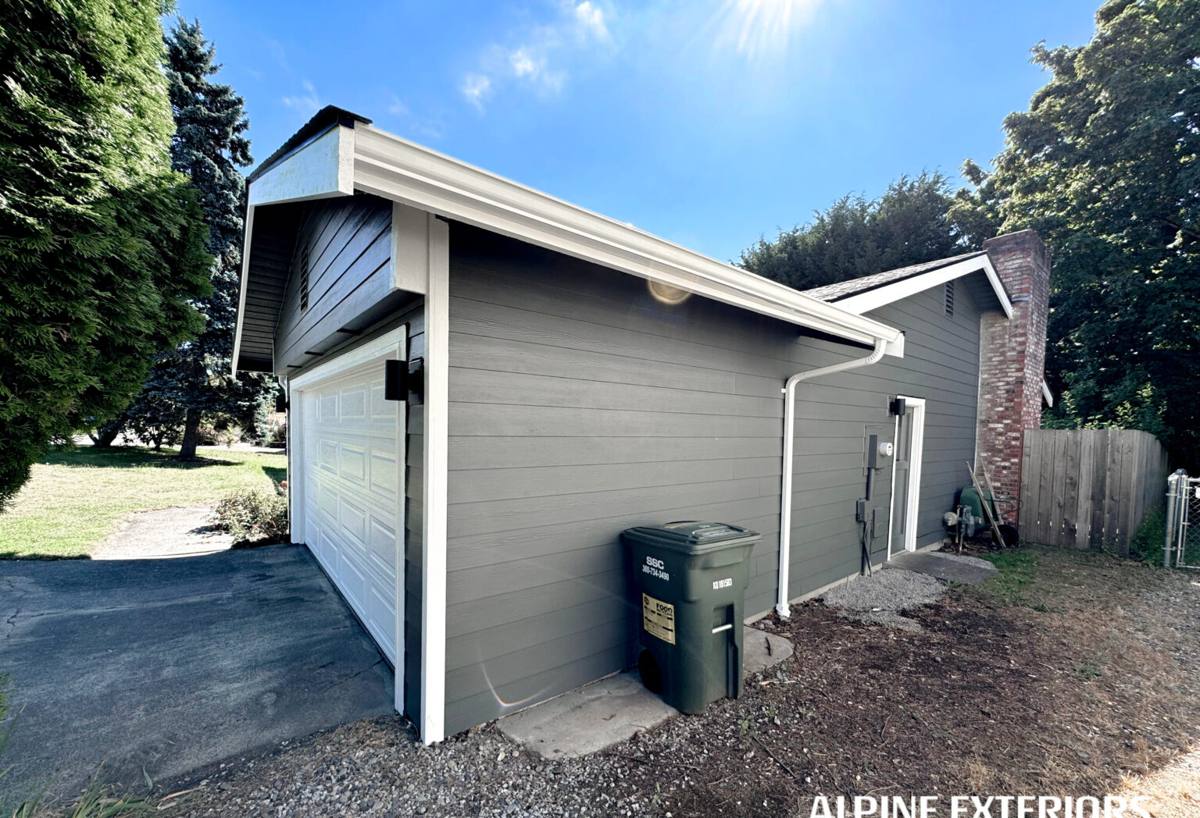
Common Siding Repair Calls We Get in Ferndale
Moisture Intrusion at Trim and Butt Joints
Wherever two pieces of siding meet, or siding meets window and door trim, is where water finds its way in first. Failed caulking, gaps that opened up as material aged, or trim that was never flashed correctly all show up as staining, soft wood, or bubbling paint right at those joints.
Rot at the Bottom Courses and Near Grade
The lowest courses of siding take the brunt of splash-back from rain, irrigation, and standing water near foundations. Combined with our long wet season, this is consistently the first place we find soft, punky wood or crumbling fiber cement on older homes.
Impact Damage
Storm debris, wind-driven branches, ladders, and landscaping equipment crack panels, dent surfaces, or knock trim loose. A cracked panel isn't just an eyesore — it's an open door for water once the factory finish is breached.
Failed Caulk and Flashing Around Penetrations
Hose bibs, vents, light fixtures, and any place something passes through the siding are common failure points. Caulk has a service life, and once it shrinks, cracks, or pulls away, water gets behind the siding with nowhere to go.
Moss, Algae, and Mildew Staining
Shaded, north-facing walls that stay damp through our moss season often develop staining that won't wash off and, in some cases, signals that moisture is being held against the surface longer than it should be.
Repair or Replace? How We Make That Call
Not every damaged section needs to become a full re-side, and not every homeowner needs to be talked into more work than the house requires. We look at a handful of concrete factors before recommending one path over the other.
| Factor | Repair Usually Makes Sense | Replacement Usually Makes Sense |
|---|---|---|
| Extent of damage | Isolated to one or two sections or elevations | Widespread rot, cracking, or staining across multiple walls |
| Sheathing/framing condition | Solid wood behind the damaged siding | Soft or rotted sheathing found once siding is opened up |
| Age and material of existing siding | Newer material still under warranty or in generally good shape | Original siding is decades old, discontinued, or a product known for moisture issues |
| Ability to match existing material | Compatible replacement panels or boards are available | Product is discontinued or color/texture can't be reasonably matched |
| Underlying moisture barrier | Housewrap or building paper intact behind the repair area | Moisture barrier missing, torn, or improperly lapped |
The honest answer, most of the time in Ferndale, is that a targeted repair on a well-maintained home is the right call — but only after we've actually opened up the damaged area to check what's happening behind the surface, not just patched over what's visible.
What a Correct Siding Repair Actually Involves
A repair that's done right is more than caulk and a paintbrush. It involves several steps that get skipped when a job is rushed or bid too cheap:
- Carefully removing the damaged section without tearing the housewrap or moisture barrier underneath.
- Inspecting the sheathing and framing behind the damage for rot, soft spots, or prior water staining.
- Repairing or replacing any compromised housewrap, flashing, or building paper before new siding goes back on.
- Installing new material with correct fastening, clearances, and overlap so water sheds the way it's supposed to.
- Sealing and finishing edges to match the surrounding siding as closely as the material allows.
- Cleaning up debris and confirming with the homeowner what was found and what was done.
Skip step two — the inspection behind the siding — and you're just putting a new face on a problem that's still growing underneath. That's the part of the job that separates a real repair from a cosmetic patch.
Why We Repair and Rebuild With James Hardie Fiber Cement
A lot of the repair calls we get in Ferndale involve siding that wasn't built for this climate to begin with — older wood siding, LP SmartSide, vinyl, or cedar that's failing at the exact joints and low courses where our driving rain and moss season do the most damage. When a repair area is small, we'll match what's already on the wall where that's the sensible option. But when a section is large enough to warrant new material, or a homeowner is ready to stop patching the same trouble spots year after year, we install James Hardie fiber cement — and it's the only siding product we install, full stop.
That's a standard we hold to on purpose. Fiber cement is non-combustible, doesn't absorb water the way wood-based products can, and Hardie's ColorPlus factory finish is engineered to hold up against sun and salt air fading without needing repainting on the schedule that field-painted wood siding demands. Hardie's HZ5 product line in particular is engineered for the wetter, more humid climate zones the Pacific Northwest falls into — which matters directly here, where salt air off Semiahmoo Bay and a long damp season are exactly the conditions that wear out lesser materials at the seams and low courses first. We won't patch a chronic moisture problem with the same category of material that caused it; if a section is coming out, it's going back on with something built to actually hold up to what this coastline throws at it.
Our Ferndale Siding Repair Process
Our process is straightforward because it doesn't need to be complicated:
- Inspection. We look at the damaged area and the surrounding siding, and we open up enough of the problem area to see what's actually happening behind it.
- Written estimate. You get a clear recommendation — repair or replace — with the reasoning behind it, not just a number.
- Scheduling. We work around Whatcom County's weather windows so repairs aren't done in conditions that trap moisture behind new material.
- The repair itself. Damaged material comes off, the moisture barrier gets checked and corrected if needed, and new material goes on properly fastened and sealed.
- Cleanup and walkthrough. We clear debris and walk the work with you before we consider the job done.
Why a Crew That Already Works Ferndale Matters
Siding repair is very site-specific work. A crew that's already worked this stretch of Whatcom County knows which elevations take the worst of the driving rain, how aggressively moss builds up on shaded walls here compared to more inland neighborhoods, and what kind of moisture damage tends to hide behind an otherwise decent-looking wall near the water. That local pattern recognition shortens the diagnosis phase and means fewer surprises once a wall is opened up.
It also matters for accountability. A crew based in the area is the one you can call next spring if something needs a second look, not a storm-season outfit that's moved on to the next county by the time a repair needs a follow-up.
Signs Your Ferndale Home Needs a Siding Inspection Now
- Soft or spongy siding when you press on it, especially near the bottom courses
- Paint that's peeling or bubbling, particularly at seams and trim joints
- Visible gaps or cracked caulk where siding meets windows, doors, or trim
- Dark staining or moss growth that doesn't clear up after cleaning
- A musty smell in a room on an exterior wall
- Panels that look warped, bowed, or separated from the wall
- Missing, cracked, or dented sections after a storm
If any of that sounds familiar, it's worth having someone look before the next wet season adds to the problem. We're happy to come take a look, tell you honestly whether it's a repair or something bigger, and put it in writing — no pressure, no obligation. Reach out for a free estimate and we'll get a crew that already knows this coastline out to your home.