 Semiahmoo Exterior
 Roofing in Ferndale Comes With Its Own Set of Problems
Ferndale sits close enough to Semiahmoo Bay and the Strait of Georgia that homes here deal with a specific combination of punishment: salt-laden air off the water, long stretches of driving rain from fall through spring, and a moss season that can run eight or nine months out of the year. None of these things alone is unusual for a Pacific Northwest roof. Together, on the same roof, year after year, they wear materials down faster than most homeowners expect based on a shingle's rated lifespan.
A roof replacement in this area isn't just about swapping old shingles for new ones. It's about choosing materials and details that account for moisture sitting on a roof deck for days at a time, metal fasteners exposed to salt air, and moss that will come back unless the roof is set up to resist it. We've replaced enough roofs around Ferndale to know which shortcuts show up as leaks and rot within five years, and which details actually hold up.
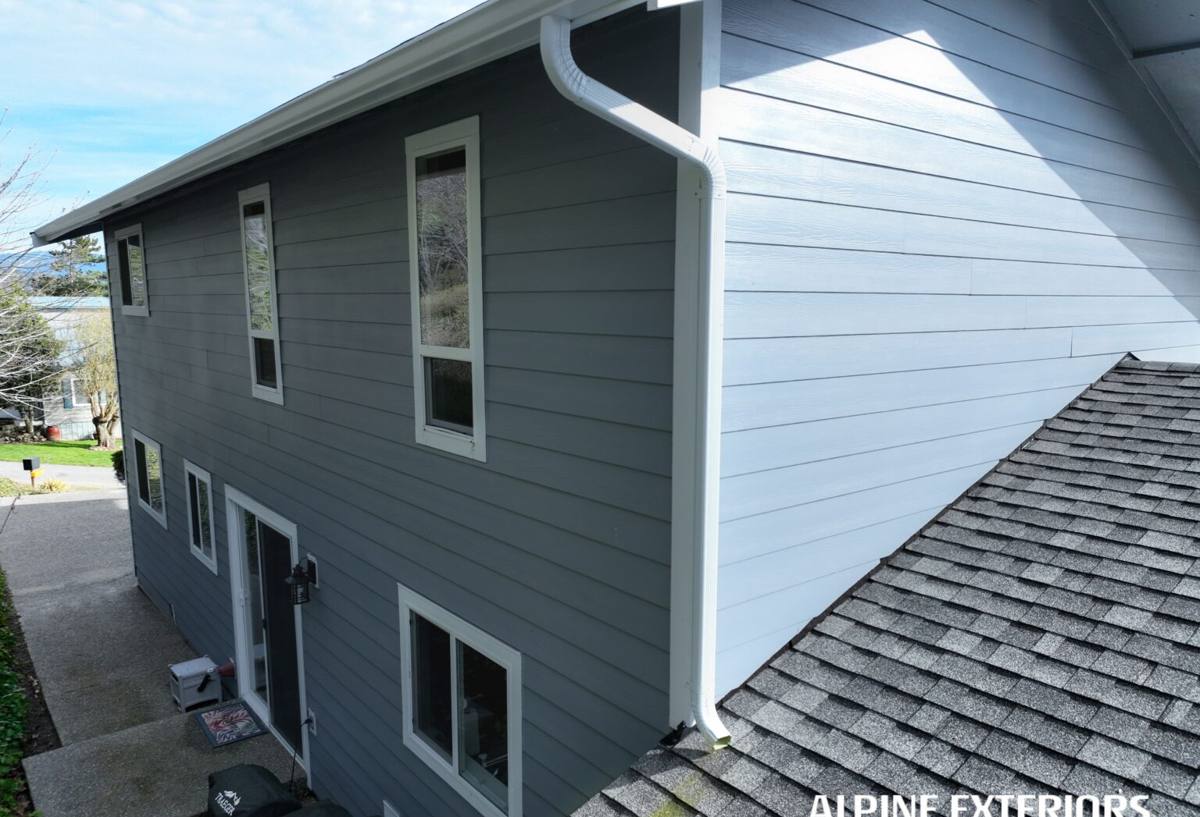
Why Ferndale Roofs Wear Differently Than Roofs Inland
Salt Air and Metal Components
Proximity to the bay means airborne salt settles on everything, including your roof's flashing, fasteners, and any metal roofing components. Standard galvanized fasteners and lower-grade flashing corrode faster here than they would twenty or thirty miles inland. Over time, corroded fasteners lose their grip, and pitted flashing stops shedding water the way it's supposed to. This is a slow process, which is exactly why it goes unnoticed until a leak shows up somewhere seemingly unrelated to the actual failure point.
Driving Rain and Wind-Driven Moisture
Rain in this part of Whatcom County doesn't always fall straight down. Wind off the water pushes it sideways, which means water finds its way under shingles, around vents, and into valleys that would stay dry in a calmer climate. Underlayment quality and installation detail matter more here than in drier regions, because the underlayment is often the only thing standing between wind-driven rain and your roof deck.
Moss and Constant Moisture
Moss needs shade, moisture, and time to establish itself, and Ferndale roofs offer all three for most of the year. Once moss takes hold, it holds water against the roofing material, works its way under shingle edges, and lifts them just enough to let water in. A roof replacement is the best opportunity to break that cycle, because you can address the conditions that let moss grow instead of just cleaning it off the old roof one more time.
Signs a Ferndale Home Needs a Roof Replacement (Not Another Repair)
- Granules collecting in gutters or at downspouts, especially after wind or heavy rain
- Shingles that are cupping, curling, or missing entirely in a way that spreads across multiple areas rather than one isolated spot
- Persistent moss or moss stains that come back within a season or two of cleaning
- Soft spots or sagging in the roof deck when walked on or viewed from the attic
- Daylight visible through the roof deck from inside the attic
- Rusted or deteriorating flashing around chimneys, vents, and valleys
- An age of 20+ years on asphalt shingles, or earlier if the roof has poor ventilation
- Recurring leaks in the same general area despite prior repairs
If you're seeing two or more of these, a repair is usually a temporary patch rather than a real fix. We'll tell you honestly when a repair still makes sense and when it's just delaying a replacement you'll need anyway.
What a Correct Roof Replacement Involves Here
Full Tear-Off and Deck Inspection
We don't install new roofing over old material. A full tear-off lets us inspect the roof deck for rot, soft spots, or moisture damage that's invisible from above — common in Ferndale where moisture sits under moss and shingles longer than it should. Any damaged decking gets replaced before new roofing goes down, not covered up.
Underlayment Built for Wind-Driven Rain
Given how much of this region's rain arrives at an angle, we use synthetic or ice-and-water underlayment in the areas most exposed to wind-driven moisture — valleys, eaves, and around penetrations — rather than the bare minimum required by code. This is one of the details that separates a roof that leaks in year six from one that doesn't.
Ventilation That Actually Works With Your Attic
Proper intake and exhaust ventilation keeps the underside of your roof deck dry and temperature-stable, which slows moss growth from the inside out and extends shingle life. A lot of older Ferndale homes have ventilation that was adequate decades ago but doesn't match current insulation levels or roof design. We check this as part of every replacement, not as an upsell.
Flashing and Fasteners Rated for Coastal Exposure
Given the salt air, we use corrosion-resistant flashing and fastener materials rather than the cheapest standard-grade components. It costs a little more upfront and saves you from flashing failures that show up as leaks five or ten years down the road.
Moss Prevention Built Into the Install
Where it makes sense for the roof's design, we install zinc or copper strips near the ridge, which release trace amounts of metal ions in the rain that inhibit moss growth over the life of the roof. It's not a guarantee against moss forever, but it meaningfully slows regrowth compared to a roof with no prevention measures at all.
Material Options for Ferndale Homes
| Material | How It Handles This Climate | Maintenance Considerations |
|---|---|---|
| Architectural Asphalt Shingles | Good performance when paired with proper underlayment and ventilation; widely used and well-understood locally | Needs periodic moss removal and gutter clearing; most cost-effective option |
| Synthetic/Composite Shingles | Strong resistance to moisture absorption and moss compared to standard asphalt | Higher upfront cost; fewer long-term maintenance surprises |
| Standing Seam Metal | Sheds wind-driven rain well and resists moss due to a smooth, non-porous surface | Requires corrosion-resistant fasteners and coatings near the coast; installation sensitivity is higher |
| Cedar Shake | Traditional look, but absorbs and holds moisture longer in this climate, which accelerates moss and rot without diligent upkeep | Highest maintenance burden here; we're upfront that this is a real trade-off, not a knock on the material itself |
We'll walk through which of these fits your home's design, your budget, and how much maintenance you actually want to take on, rather than pushing one option across every job.
Our Roof Replacement Process
- On-site inspection: We assess the existing roof, attic ventilation, and any visible moisture or moss issues, and explain what we find in plain terms.
- Written estimate: You get a clear scope of work and pricing before anything is scheduled — no vague allowances that turn into surprise charges.
- Tear-off and deck inspection: Old roofing comes off, the deck is checked, and any necessary repairs are done before new materials go down.
- Underlayment and flashing installation: Installed with the wind and moisture exposure specific to your home's orientation in mind.
- Roofing material installation: Installed to manufacturer specifications, with attention to the details — valleys, penetrations, ridge — that determine whether a roof performs long-term.
- Ventilation check and correction: We confirm intake and exhaust are balanced for your attic space.
- Final walkthrough and cleanup: We review the finished work with you and make sure the site is left clean.
What Roof Replacement Typically Costs
Cost depends on roof size, pitch, material choice, how many layers are being removed, deck condition, and access. As a broad range, most asphalt shingle replacements on a typical single-family home in this area fall somewhere between the low and mid five figures, with metal roofing running higher and cedar shake varying widely depending on the specific product. We won't give you a firm number without seeing the roof, but we will give you a written estimate with no vague line items before any work starts.
Why a Crew That Already Works in Ferndale Matters
A roofing crew that mostly works inland doesn't always think about salt-air corrosion on fasteners or how wind-driven rain off the bay behaves differently in valleys and around penetrations. Those aren't dramatic differences on paper, but they're exactly the kind of detail that determines whether a roof is still tight in year eight or already showing problems. We work in Semiahmoo, Ferndale, and the surrounding Whatcom County area regularly, which means we're not guessing at what this climate does to a roof — we're accounting for it in every estimate and every install.
If your roof is showing its age, or you just want an honest read on whether repair or replacement makes more sense for your home, we're happy to take a look. Reach out for a free, no-pressure estimate using the form below.