 Semiahmoo Exterior
 Roofing in Ferndale Isn't the Same as Roofing Somewhere Dry
Ferndale sits close enough to the water that salt air is a constant factor, and Whatcom County's weather pattern means long stretches of driving rain followed by an even longer stretch of damp, low-sun months where moss gets a real foothold. An asphalt shingle roof that's specified and installed for a drier, more sheltered climate will not perform the same way here. It's not that asphalt shingles are the wrong material for this area — they're one of the most practical choices available when they're installed correctly for the conditions. The problem is that "correctly" means something different in Ferndale than it does inland.
This page is about one thing: asphalt shingle roofing done right for Ferndale homes, from what the climate demands to what a proper installation actually involves.
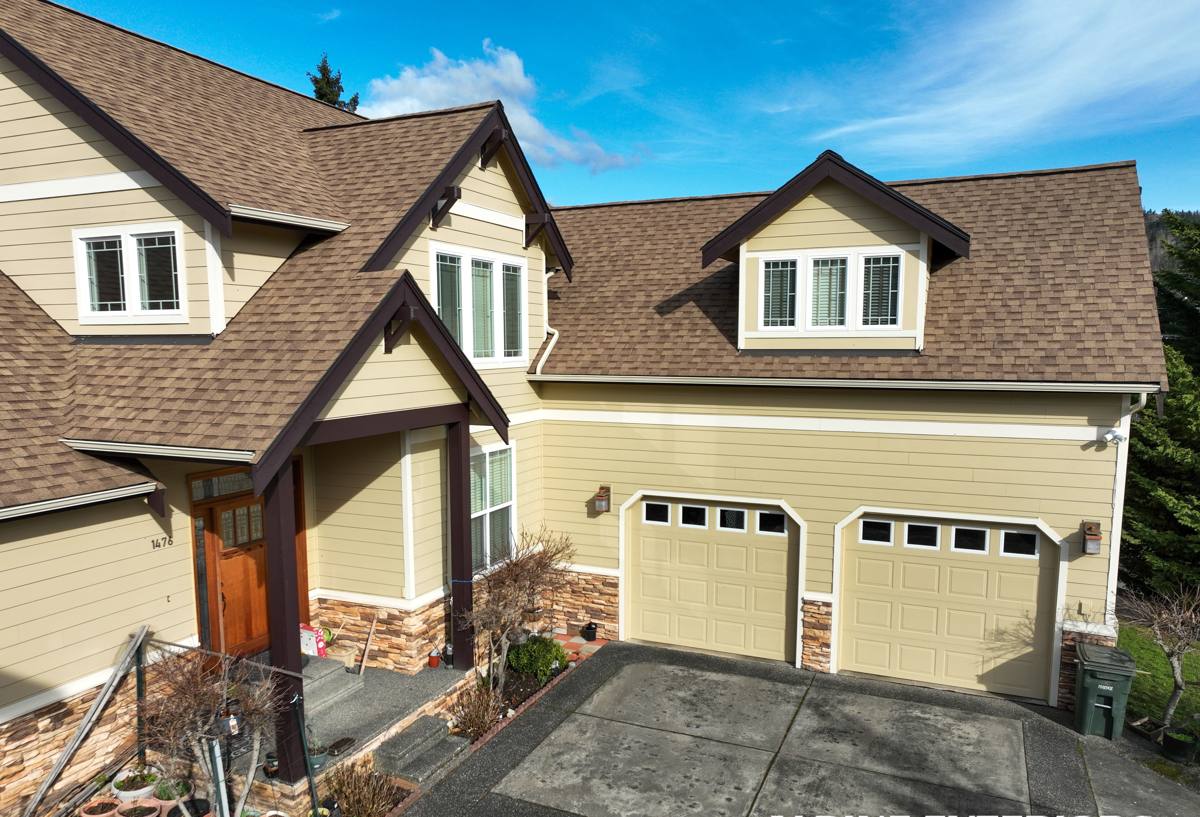
What Local Roofs Are Actually Up Against
Salt Air and Metal Components
Shingles themselves handle salt exposure reasonably well, but the metal parts of a roof system — flashing, fasteners, drip edge, vent housings — are where salt air does its damage over time. Lower-grade or mismatched metal corrodes faster near the coast, and once flashing starts to degrade, water finds its way in around chimneys, skylights, and valleys long before the shingles themselves show any wear.
Driving Rain and Wind-Driven Water
Rain that comes in sideways doesn't behave like rain that falls straight down. It gets pushed up under shingle tabs, into exposed nail heads, and along any seam where the underlayment or flashing wasn't lapped correctly. A roof can look fine from the ground and still be taking on water at the edges, valleys, and any penetration point, simply because it wasn't detailed for wind-driven conditions.
Moss and Prolonged Moisture
Whatcom County's long damp season gives moss and algae plenty of time to establish, especially on north-facing slopes and anywhere shade keeps a roof from drying out between rain events. Moss isn't just cosmetic — it holds moisture against the shingle surface, lifts tabs as it grows under the edges, and accelerates granule loss. A roof with poor airflow or heavy tree cover will grow moss faster than one with good ventilation and sun exposure, regardless of shingle quality.
Signs a Ferndale Roof Needs Attention
Homeowners often wait for an active leak before calling anyone, but by that point the underlayment and decking may already be compromised. Worth checking for:
- Moss or dark streaking concentrated on shaded or north-facing sections of the roof
- Granules collecting in gutters or at downspout outlets
- Shingle tabs that look lifted, curled, or cupped, especially at the eaves
- Rusty streaking below metal flashing or vent stacks
- Soft spots, sagging, or discoloration on the underside of the roof deck in the attic
- Daylight visible through the roof boards from inside the attic
- Missing or torn shingles after a windstorm, even just a few
Any one of these on its own might be minor. Several at once, or any sign of active moisture in the attic, means it's time for a real inspection rather than a guess from the ground.
What a Correct Asphalt Shingle Installation Involves
A shingle roof is a layered system, and every layer matters more in a climate like this than it would somewhere drier.
Underlayment and Moisture Barrier
We use a synthetic or self-adhered underlayment appropriate to the slope and exposure, with ice-and-water shield membrane at eaves, valleys, and around penetrations — the spots where wind-driven rain and ice most often force water past the shingle layer. This is the layer that keeps the deck dry even if wind gets under a shingle tab, and it's also the layer that gets skipped or under-specified on cut-rate jobs because it doesn't show once the roof is finished.
Ventilation
Balanced intake and exhaust ventilation keeps the attic and roof deck closer to outside temperature and humidity, which slows moss growth, reduces condensation on the underside of the deck, and extends shingle life. A roof that traps heat and moisture underneath it will fail faster from the inside out, no matter how good the shingles on top are.
Flashing and Detail Work
Chimneys, skylights, sidewall junctions, and valleys are where the majority of leaks actually start, not the open field of shingles. Correct step flashing, counter-flashing, and valley metal — properly lapped with the underlayment, not just caulked over — is the difference between a roof that sheds wind-driven rain and one that slowly lets it in.
Fastening and Exposure
Nail placement, nail count, and shingle exposure all need to match the manufacturer's specification for the wind zone. Under-nailed shingles are one of the most common causes of storm damage we see, and it's an installation error that's invisible until the wind actually tests it.
Shingle Options for This Climate
Not every asphalt shingle product is built the same way, and for a coastal, moss-prone area the differences matter more than they would somewhere milder.
| Shingle Type | Typical Lifespan | How It Handles Ferndale Conditions |
|---|---|---|
| Standard 3-tab | 15-20 years | Lower upfront cost; less wind resistance and shorter service life in coastal, wind-exposed conditions |
| Architectural / laminate | 25-30+ years | Heavier, better wind rating, more common recommendation for this area's exposure |
| Impact-resistant laminate | 25-30+ years | Added durability against debris and hail; worth discussing on exposed or tree-heavy lots |
Most manufacturers also offer shingles with algae-resistant (copper-infused) granules. Given how much of Whatcom County deals with moss and algae staining, we treat that upgrade as close to standard practice here rather than an optional extra — it doesn't eliminate moss on its own, but it slows the growth that plain granules invite.
What Drives the Cost of a Ferndale Reroof
| Factor | Why It Matters Here |
|---|---|
| Roof complexity (valleys, penetrations, dormers) | Each detail is another place wind-driven rain can get in if not flashed correctly |
| Tear-off vs. layover | We don't recommend layovers in this climate — trapped moisture under a second layer accelerates deck rot |
| Deck condition | Moss and prior leaks often mean some sheathing replacement is needed once the old roof comes off |
| Shingle grade and accessories | Algae-resistant granules, upgraded underlayment, and proper ventilation add cost but extend service life |
| Access and site conditions | Slope, tree cover, and staging space affect labor time |
We won't quote a number without seeing the roof, but we'll always walk you through which of these factors are driving your specific estimate, and where there's genuine room to adjust scope versus where cutting corners just moves the cost to a future repair.
How We Approach the Job
- On-site inspection of the existing roof, decking, ventilation, and any active moisture damage
- Written estimate that breaks down material, labor, and any deck repair contingencies
- Tear-off and deck assessment, with photos of anything found underneath before we cover it back up
- Installation of underlayment, ice-and-water membrane at vulnerable areas, flashing, and shingles to manufacturer and wind-zone specification
- Ventilation check and correction if intake or exhaust airflow is inadequate
- Final walkthrough and cleanup, including a magnetic sweep for stray nails
We don't cover up deck problems and hope they don't resurface. If we find soft or rotted sheathing once the old shingles are off, we'll show you before replacing it, not bill you after the fact with no explanation.
Why Local Experience Actually Matters Here
A roofing crew that mostly works inland doesn't spend much time thinking about salt-air corrosion on flashing or how aggressively moss establishes on a shaded north slope. A crew that works Ferndale and the surrounding Whatcom County coastline regularly makes those calls automatically — which underlayment to use at the eaves, which fastener and flashing materials hold up near salt air, and where on a given roof moss is going to be a recurring problem versus a one-time clean. That local pattern recognition is the difference between a roof that's installed to code and one that's actually built for where it sits.
It also matters for timing. Roofing work here has a real weather window, and a crew familiar with the area's seasonal rain patterns plans tear-offs and dry-in sequencing around that, rather than leaving a deck exposed longer than it should be.
After the Roof Is On
Asphalt shingle roofs in this climate benefit from a bit of upkeep, and none of it is complicated:
- Keep gutters clear so water isn't backing up under the eaves
- Trim back overhanging branches to cut down on shade and debris buildup
- Have moss treated or gently removed before it spreads, rather than after tabs start lifting
- Do a visual check after major windstorms for lifted or missing shingles
- Get a professional look every few years, especially once the roof is past the halfway point of its expected lifespan
None of this replaces a correct installation, but it protects the investment once it's in place.
If your Ferndale roof is showing moss, granule loss, storm damage, or you're just planning ahead for a replacement, we're happy to take a look and walk you through what we find. Fill out the form below for a free, no-pressure estimate.