 Semiahmoo Exterior
 Why Deck Building in Lynden Isn't the Same as Deck Building Anywhere Else
Lynden sits far enough inland from the water that homeowners sometimes assume their outdoor structures get an easier ride than homes right on Semiahmoo Bay. In practice, the difference is smaller than people expect. Whatcom County's marine air still carries salt well past the shoreline, and Lynden's mix of open farmland and tree-lined residential lots means decks here deal with a combination of wind-driven rain, heavy dew, and long stretches of shade that keep wood and composite surfaces damp far longer than a sunnier climate would. Add in a moss season that can stretch from late fall through spring, and a deck that isn't built with this specific climate in mind will show problems years before it should.
A correctly built deck in this area isn't just a matter of picking good lumber or a nice-looking composite board. It's about airflow underneath the structure, fastener choice, ledger board flashing, drainage at grade, and a maintenance rhythm that matches how wet this region actually stays. We build decks for Lynden homeowners with all of that baked into the plan from the first conversation, not added as an afterthought.
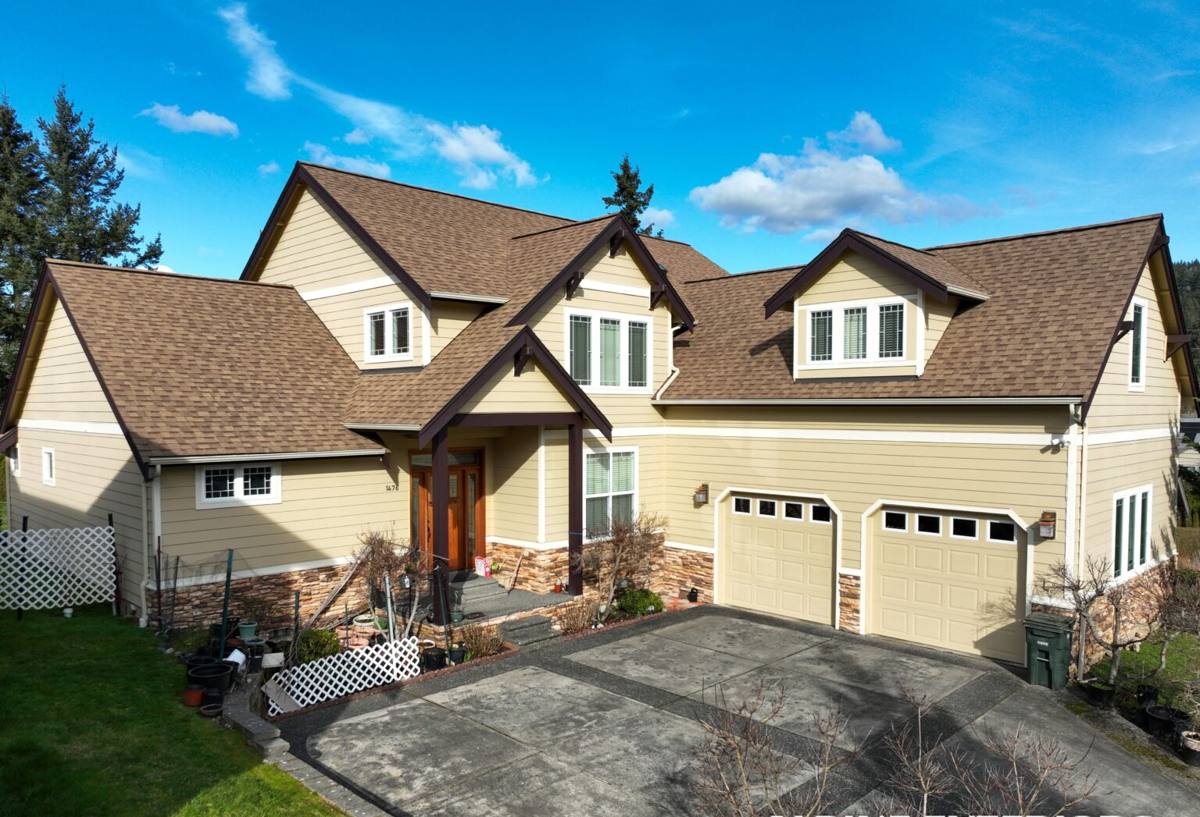
What Lynden's Climate Actually Does to a Deck
Moisture That Doesn't Leave
Driving rain in this part of Whatcom County rarely falls straight down. Wind pushes it sideways into ledger connections, under railings, and into any gap where end grain is exposed. Combined with cooler temperatures and less direct sun than homeowners moving from drier climates expect, water sits on deck surfaces and in structural connections longer than it would in most of the country. That extended dwell time is what drives rot, fastener corrosion, and warping — not any single storm, but the cumulative effect of one damp season after another.
Moss and Algae Buildup
Shaded decks, north-facing yards, and properties near mature trees or hedgerows are especially prone to moss and algae growth on deck boards, stair treads, and railings. Beyond the cosmetic issue, moss holds moisture against the wood surface and creates a genuinely slick, unsafe walking surface on stairs and ramps. Deck material choice and board spacing both affect how much moss takes hold and how easy it is to keep off.
Salt Air, Even This Far Inland
Lynden is inland relative to Semiahmoo and Blaine, but Whatcom County's marine air still moves salt-laden moisture across the county on prevailing winds. Over years, that accelerates corrosion on lower-grade fasteners, hinges, and metal railing hardware. It's a slower effect than what a waterfront deck experiences, but it's real, and it's one more reason we don't cut corners on hardware grade just because a project isn't within sight of the water.
What a Correctly Built Lynden Deck Requires
Framing and Ledger Attachment
The ledger board — where the deck attaches to the house — is the single most common failure point on decks in wet climates, and it's almost always hidden from view until something goes wrong. Proper flashing at this connection, correct fastener spacing, and a ledger that's held slightly off the house band board for drainage all matter more here than they would in a dry climate. We treat this connection as the backbone of the whole structure, because it is.
Fasteners and Hardware
Standard hot-dip galvanized or uncoated fasteners corrode faster than most homeowners expect once they're exposed to years of coastal Whatcom County moisture. We use stainless steel or high-grade coated fasteners rated for the specific decking material, along with hardware sized for the actual structural load rather than the minimum that passes inspection.
Airflow Underneath the Deck
A deck built low to the ground with poor ventilation underneath traps moisture against the joists and the underside of the decking, which is exactly where rot starts and where it's hardest to spot early. Adequate clearance, and in some cases venting or grading adjustments underneath the structure, keep air moving so wood can actually dry out between rain events instead of staying wet all season.
Drainage at Grade
Where a deck meets the yard matters as much as how it's built. If the ground beneath and around a deck doesn't shed water away from the footings and posts, moisture pools right where the structure is most vulnerable. We look at existing grading and drainage patterns on the property before we ever set a post, not after water starts pooling.
Decking Material Options for This Climate
There's no single "best" decking material for every Lynden home — it depends on budget, how much shade the deck sits in, and how much upkeep the homeowner actually wants to do. Here's how the common options compare under this region's conditions.
| Material | How It Handles Moisture & Moss | Maintenance | Typical Lifespan Here |
|---|---|---|---|
| Pressure-treated wood | Resists rot when properly sealed; moss still grows on shaded surfaces | Annual cleaning and re-sealing recommended | 15–20 years with upkeep |
| Cedar | Naturally moisture- and insect-resistant; still needs sealing against driving rain | Periodic staining/sealing to maintain appearance and protection | 15–25 years with upkeep |
| Composite decking | Doesn't rot, but moss and algae can grow on the surface film if not cleaned | Occasional washing; no sealing or staining needed | 25–30+ years, manufacturer-dependent |
| PVC decking | Fully moisture-resistant; low moss adhesion when kept clean | Occasional washing | 25–30+ years, manufacturer-dependent |
We're upfront about trade-offs rather than pushing one product line. Composite and PVC cost more upfront but cut down dramatically on the sealing and staining cycle that a lot of Lynden homeowners get behind on during the wetter months. Wood costs less initially and can look great, but it only performs as well as the maintenance schedule behind it — and in a climate this damp, that schedule matters more than it would somewhere drier.
Our Deck Building Process for Lynden Homes
- On-site assessment. We walk the property, look at sun exposure, existing drainage, tree cover, and how the space will actually be used before recommending anything.
- Material and layout discussion. We go over decking material trade-offs, railing options, and layout with the homeowner's budget and maintenance tolerance in mind — no pressure toward the most expensive option.
- Permitting and structural planning. We handle the permitting process required for Whatcom County and design the framing to the load and span requirements for the specific deck size and use.
- Site preparation and grading check. Before framing starts, we confirm the ground underneath and around the deck footprint will actually drain away from the structure.
- Framing with climate-appropriate hardware. Ledger flashing, joist hangers, and fasteners are selected for this region's moisture and salt exposure, not generic minimums.
- Decking installation. Board spacing, fastening method, and stair/railing details are set to shed water and resist moss buildup as much as the chosen material allows.
- Final walkthrough. We go over basic care — cleaning frequency, what moss buildup looks like early, and what a homeowner should watch for each season.
Maintenance That Actually Matters in This Climate
Every deck material benefits from some level of upkeep here, but the intensity differs a lot by material. This isn't about babying a deck — it's about a handful of habits that prevent the moisture and moss problems this region is known for.
- Sweep off leaves, needles, and debris regularly, especially in fall — trapped organic material holds moisture against the surface and feeds moss growth.
- Wash the deck surface at least once or twice a year to remove early moss and algae growth before it gets established, especially on shaded sections and stairs.
- Check and re-seal wood decking on the manufacturer or installer's recommended schedule — don't wait until boards look visibly gray or dry.
- Keep gutters and downspouts near the deck clear so runoff isn't dumping extra water onto or under the structure.
- Inspect railing posts and stair connections yearly for looseness, which can signal fastener corrosion or wood softening underneath.
- Trim back overhanging branches and nearby shrubs to improve airflow and sun exposure across the deck surface.
Common Problems We See on Existing Lynden Decks
A lot of our deck work in this area isn't new builds — it's repair or rebuild work on decks that were never built with this climate in mind. The most frequent issues we run into are soft or rotting boards near the ledger connection, corroded fasteners on decks that used standard hardware instead of coastal-grade materials, moss-slick stairs that have become a real fall hazard, and framing that was undersized or under-vented from the start. In most cases, these problems trace back to decisions made during original construction — not something the homeowner did wrong. When we're called in for a repair, we look at whether the underlying structure is sound enough to build on or whether a rebuild is the more honest recommendation.
Why Hiring a Crew That Already Works in Lynden Matters
Deck building isn't a one-size-fits-all trade. A crew that mostly works in drier inland climates may not think twice about ledger flashing detail or fastener grade, because in their normal working conditions, those shortcuts don't show up as failures for years. In Whatcom County's climate, they show up fast — usually as soft framing, corroded hardware, or a moss-covered surface within the first few seasons.
Semiahmoo Exterior Company builds and repairs decks throughout Whatcom County, including Lynden, and we size every material and hardware decision to what this specific climate does to a structure over time. That's not a sales pitch — it's the difference between a deck that needs real attention in five years and one that's still solid in twenty.
Get an Honest Look at Your Deck Project
Whether you're planning a new deck for a Lynden home or dealing with an existing one that's showing its age, we're happy to take a look and give you a straightforward assessment — no pressure, no upsell. Fill out the form below for a free estimate, and we'll walk you through what your specific property, sun exposure, and budget actually call for.