 Semiahmoo Exterior
 Decks in Bellingham Face a Different Set of Problems
Bellingham sits in a part of Whatcom County where the weather doesn't do a deck any favors. You're close enough to Semiahmoo Bay and the greater Puget Sound to get a steady dose of salt-laden air, and the rain here isn't the occasional downpour — it's a long, driving, sideways-blowing kind of wet that lasts for months at a stretch. Add in a moss season that can run from fall through spring, and you've got a structure that's under attack year-round, not just during a few storms.
A deck built the way it might be built in a drier inland climate will show problems here faster than most homeowners expect: soft spots, rust streaks around fasteners, slick green growth on the boards, and a general look of premature aging. None of that is inevitable. It's a function of what materials were used, how the frame was fastened together, and whether the person building it actually accounted for this climate instead of just following a generic plan.
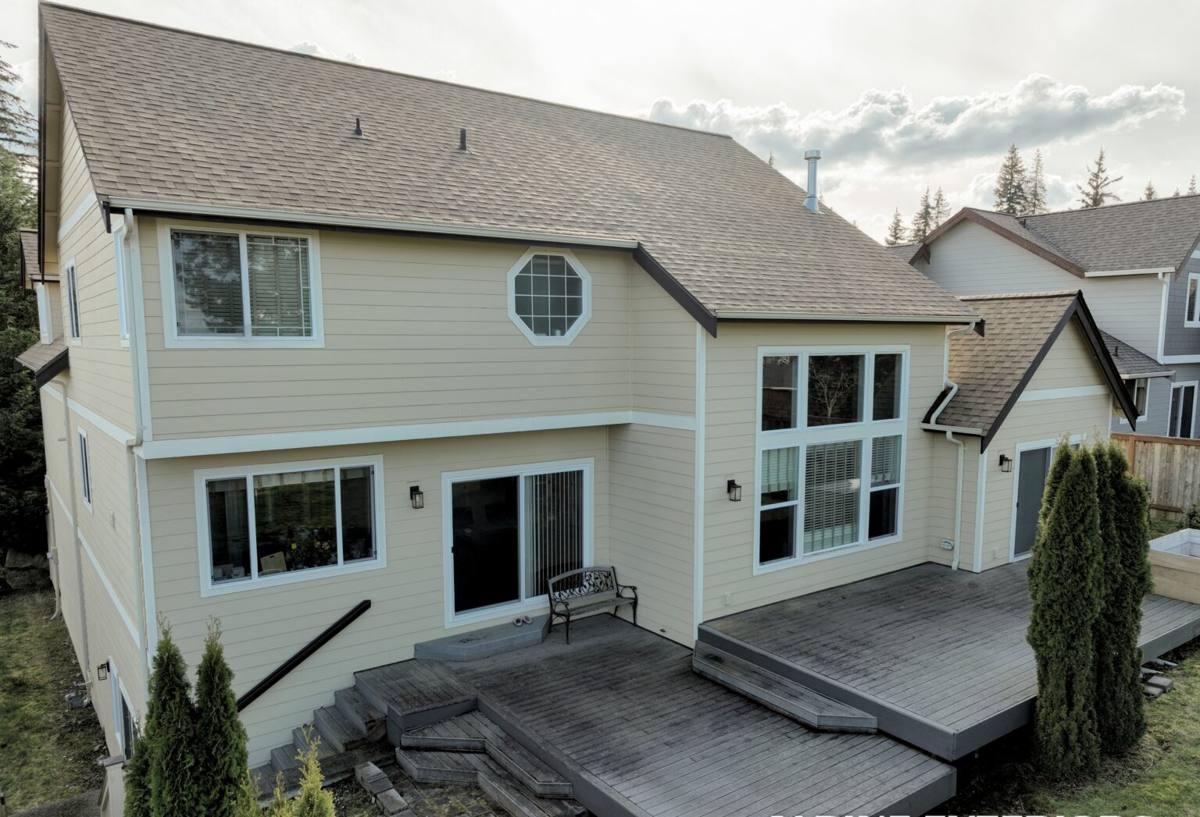
What Salt Air and Rain Actually Do to a Deck Over Time
It helps to understand the failure modes before talking about how to prevent them.
Corrosion
Standard zinc-coated fasteners and connectors hold up fine in a lot of the country. Close to marine air, that coating breaks down faster, and once it does, the steel underneath starts to rust. Rusting fasteners don't just look bad — they lose holding strength, and a corroded connector at a ledger board or a stair stringer is a structural problem, not a cosmetic one.
Moisture Intrusion
Driving rain finds every gap. Where a deck attaches to the house — the ledger board — is the single most common place decks fail, because water gets behind the flashing (or behind a missing flashing) and rots the house rim joist from the outside in, often long before anyone notices from inside.
Moss and Organic Growth
Moss needs shade, moisture, and something to hold onto. A deck with tight board spacing, poor airflow underneath, and overhanging trees is close to ideal for it. Beyond looking bad, a mossy deck surface is genuinely slippery and holds moisture against the wood or composite surface longer than it should.
UV and Weathering
Bellingham doesn't get the harsh UV of a desert climate, but wood surfaces still gray and check over time, and lower-grade composite boards can fade unevenly, especially where they get partial sun through trees.
Choosing the Right Decking Material for This Climate
There's no single "best" decking material — there's a best material for your budget, your maintenance appetite, and how exposed your deck is to weather. Here's how the common options actually compare in a marine, high-rainfall climate like ours.
| Material | Upfront Cost | Maintenance | Moisture/Salt Air Performance | Realistic Lifespan |
|---|---|---|---|---|
| Pressure-treated wood | Lowest | Annual cleaning, periodic sealing | Decent if sealed regularly; end grain and fastener points are weak spots | 10-15 years |
| Cedar | Moderate | Regular sealing/staining to maintain color and protect surface | Naturally rot-resistant but still needs upkeep in wet climates | 15-20 years |
| Composite (capped) | Higher | Occasional washing, no sealing/staining | Very good — doesn't rot, resists moisture absorption | 25-30 years |
| PVC decking | Highest | Lowest — wash as needed | Excellent — fully synthetic, unaffected by rot or salt corrosion of the board itself | 30+ years |
Whatever the surface material, the fasteners, joists, and connectors underneath matter just as much — a beautiful composite deck built on corroding hardware is still a deck with a shortened lifespan.
Structure That Doesn't Fail: Framing, Fasteners, and Footings
The parts of a deck nobody sees are the parts that determine whether it's still solid in fifteen years.
Fasteners and Hardware
Given the salt air off Semiahmoo Bay and the broader Sound, we treat fastener selection as a real decision, not an afterthought. Hot-dip galvanized or stainless steel hardware costs more than standard coated fasteners, but in a marine-influenced climate the difference in corrosion resistance is significant — and replacing rusted-through hardware later means tearing into a finished deck.
Ledger Board Flashing
Where the deck ties into the house is the highest-risk point for water intrusion. Correct flashing — installed in the right layers, lapped the right direction — keeps driving rain from working its way behind the board and into your home's framing. This is one of the most commonly rushed details on a poorly built deck, and one of the most expensive to fix after the fact.
Footings
Footings need to be sized and set to local frost depth and soil conditions, not just poured to whatever looks adequate. Undersized or shallow footings show up years later as a deck that's started to shift, sag, or feel spongy at certain points — problems that are difficult to correct without significant rebuilding.
Drainage, Ventilation, and Moss Control
Given how long our wet season runs, how a deck manages water and airflow matters as much as the materials themselves.
- Board spacing set to allow water to drain through rather than pool on the surface
- Grading beneath the deck that moves water away from the house instead of trapping it underneath
- Adequate clearance and airflow under low decks so the underside can actually dry out between rain events
- Joist protection tape on top of framing members to shed water before it reaches the wood
- Keeping the deck surface clear of standing debris, which is what moss actually needs to take hold
None of these are expensive additions during a build — they're basic good practice. Skipping them is how a deck ends up needing moss treatment and re-sealing every single year instead of every few.
Railings, Stairs, and Code Requirements
Any elevated deck needs a guardrail system that's both code-compliant and genuinely safe, not just technically passable. General requirements you should expect on a Bellingham project include a guardrail height around 36-42 inches depending on use, baluster spacing tight enough that a small child can't pass through, and stair rise-and-run dimensions that meet current building code. Decks above a certain height or attached in certain ways typically require a permit through the City of Bellingham or Whatcom County building department, along with inspection at key stages of construction.
We handle the permit and inspection process as part of the job rather than leaving it to the homeowner to sort out. It's not a step worth skipping — an unpermitted deck can complicate a home sale later and, more importantly, skipping inspection means nobody with code knowledge ever verified the structure is actually safe.
Our Process for a Bellingham Deck Project
The steps are straightforward, but the details inside each one are where the quality actually comes from.
- Site visit and design. We look at sun exposure, drainage patterns, tree cover, and how the deck ties into your home before recommending materials and layout.
- Material and layout selection. We walk through the real trade-offs — cost, maintenance, and how each option holds up to our climate — so you're choosing with full information.
- Permitting. We prepare and submit what's needed through the local building department and schedule required inspections.
- Framing. Footings, ledger flashing, joists, and corrosion-resistant hardware go in first, since this is the structure everything else depends on.
- Decking, railing, and stairs. Surface material and railing system installed to code and to the design agreed on upfront.
- Final walkthrough. We go over the finished deck with you, including what maintenance it will actually need going forward.
Maintenance That Actually Protects Your Investment
A well-built deck in this climate still needs some seasonal attention. What that looks like depends on material, but the basics apply across the board:
- Sweep debris off the surface regularly, especially in fall when leaves and needles accumulate
- Rinse the surface periodically to discourage moss and algae before it establishes
- Check and re-seal wood decking on the schedule appropriate to that product — don't wait until it's visibly gray
- Inspect fasteners and connections annually for early signs of rust or loosening
- Keep gutters and downspouts near the deck clear so runoff isn't dumping extra water onto or under it
- Trim back overhanging branches to improve sun exposure and airflow across the surface
Why a Crew That Works Bellingham Regularly Makes a Difference
A deck contractor who mostly works drier, inland climates can still build something that looks right on the day it's finished. The difference shows up two or three winters later, in the fastener choices, the flashing details, and the drainage planning that either accounted for Whatcom County's rain and salt air or didn't. Working in this area regularly means knowing which materials and hardware actually hold up here, understanding the local permit process, and building in the moisture and ventilation details from the start instead of retrofitting them after a problem shows up.
If you're planning a new deck or replacing one that's showing its age, we're happy to take a look and talk through honest options for your property. Reach out for a free, no-pressure estimate — there's a form below to get started.