 Semiahmoo Exterior
 Board & Batten in a Whatcom County Climate
Board and batten has been a Pacific Northwest farmhouse staple for a long time, and it's easy to see why homeowners in Ferndale keep asking for it: the vertical lines read as clean and modern on a new build, and warm and traditional on an older one. But the look is only half the story. Out here, siding also has to be a weather system — and Ferndale sits close enough to Semiahmoo Bay and the Strait of Georgia that salt-laden air, wind-driven rain, and long stretches of damp, low-light winter are just part of the deal. Any vertical siding profile lives or dies on how well it's flashed, fastened, and finished for those conditions, not on how good it looks in dry weather.
This page is specifically about board and batten siding for Ferndale properties — what the local climate demands from the material and the installation, and why we only do this work in James Hardie fiber cement.
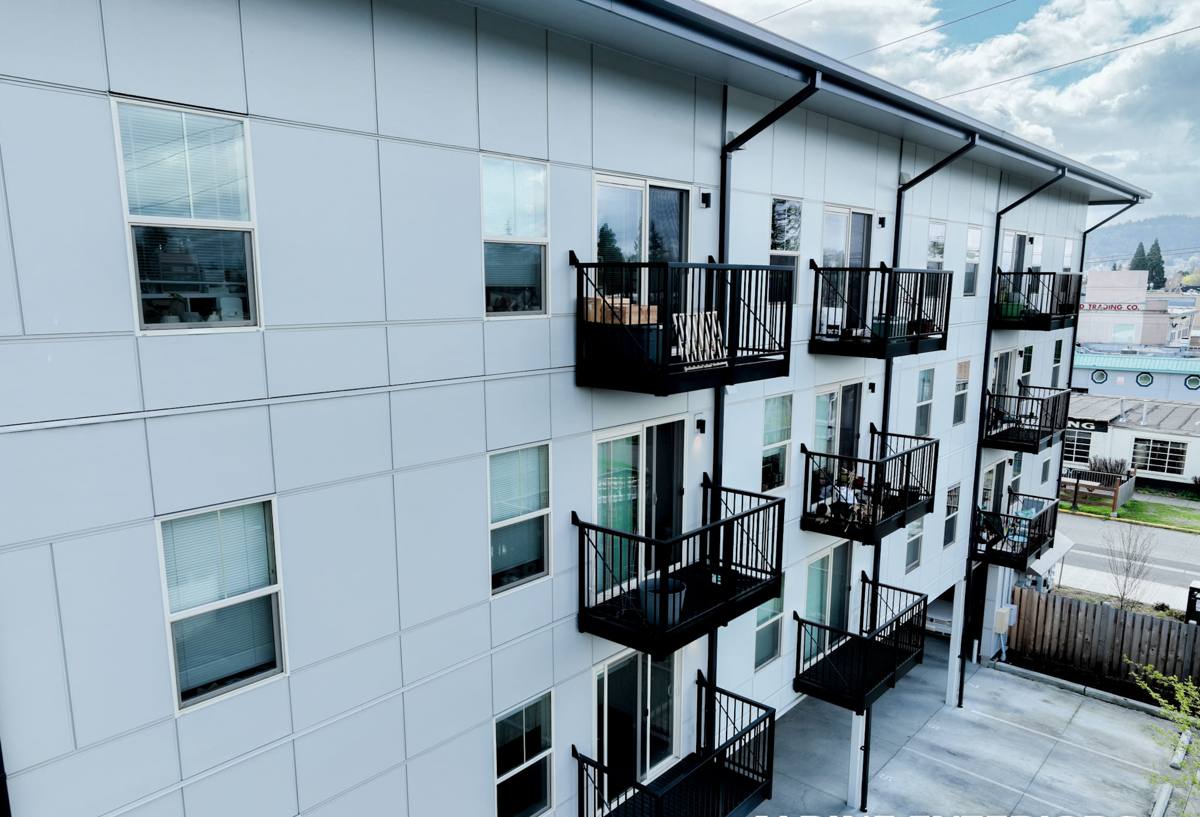
What the Local Climate Does to Vertical Siding
Salt Air
Proximity to the bay means airborne salt settles on exterior surfaces more than it would further inland. Salt accelerates corrosion on exposed fasteners and metal trim, and it can degrade paint and caulk faster than a typical inland application. Board and batten has more linear trim and more fastener exposure per square foot than lap siding, so material choice and fastener spec matter more here, not less.
Driving Rain
Storms off the water tend to arrive with wind, which pushes rain sideways into wall assemblies instead of just down them. Board and batten's vertical battens create seams running the full height of the wall — every one of those seams is a potential water path if it isn't lapped, flashed, and fastened correctly. This is the single biggest reason board and batten failures happen: not bad material, but a batten pattern installed like it's decorative trim instead of a water-shedding system.
Moss and Prolonged Dampness
Whatcom County's moss season is long. Moss and algae hold moisture against a wall surface for extended periods, and on the wrong substrate that constant dampness leads to swelling, delamination, or rot at the base of boards and battens where they meet trim, corners, and the foundation line. A siding product that doesn't absorb and hold water the way wood-based products can is a real advantage here, not a marketing point.
The James Hardie Board & Batten System
We install board and batten using James Hardie's fiber cement panel products, engineered specifically for the Pacific Northwest through the HZ5 climate line. Fiber cement is cement, sand, and cellulose fiber — it doesn't absorb water the way wood or wood-composite products do, it won't rot, and it's non-combustible. For a coastal Whatcom County home, that combination directly addresses the three climate stresses above: it holds up to sustained damp exposure, it doesn't feed the moss and mildew cycle the way organic materials can, and it takes a factory-applied ColorPlus finish that's formulated to resist fading and hold up under salt exposure far better than field-applied paint.
ColorPlus finish matters more on a board and batten job than on most other profiles, because the vertical battens create dozens of extra edges and end cuts. Factory finish means consistent color and baked-on adhesion across every piece; field-painted product depends entirely on how well someone primes and coats every cut edge on site, which is exactly the kind of detail that gets rushed on a lesser install.
What a Correct Board & Batten Installation Involves
Water Management Behind the Battens
The panel behind the battens needs a drainage plane — a weather-resistant barrier and, ideally, a rainscreen gap — so any moisture that does get past the surface has somewhere to go besides into the wall. This is invisible once the job is done, which is exactly why it's the detail worth asking a contractor about before hiring them.
Flashing at Every Penetration
Windows, doors, hose bibs, light fixtures, and vents all interrupt the wall plane, and each one needs proper head flashing and kick-out flashing where it meets a batten line. Skipping or shortcutting flashing at penetrations is the most common cause of the "small leak that became a big rot problem" story on any vertical siding job, in any region.
Fastening and Batten Spacing
James Hardie specifies fastener type, placement, and spacing for its board and batten assemblies, and following that spec — not a generalized "siding nail" approach — is what keeps the panel performing over decades rather than years. Battens also need consistent reveal spacing over the base panel so the wall drains and dries evenly.
Caulking and Sealant Joints
Every horizontal joint and trim intersection needs the right sealant, applied correctly, not just enough to look finished. Undersized or wrong-type caulk is a slow leak waiting to happen, especially somewhere that gets as much driving rain as Ferndale.
Board & Batten Material Comparison for This Climate
| Material | Moisture Behavior | Coastal/Salt Air Durability | Finish | Typical Lifespan Locally |
|---|---|---|---|---|
| James Hardie Fiber Cement (HZ5) | Does not absorb/swell; engineered for wet climates | Strong — non-combustible, corrosion-resistant fastener specs | Factory ColorPlus, fade- and chip-resistant | 30+ years with correct install |
| Primed Wood/Spruce Board & Batten | Absorbs water; prone to swelling, cupping, rot at joints | Moderate; needs frequent repainting and sealing | Field-applied, inconsistent on cut edges | 10-20 years, heavy maintenance |
| Cedar Board & Batten | Natural resistance to rot but still absorbs moisture | Moderate; needs regular oiling/staining to hold up near salt air | Field-applied stain or finish | 15-25 years with diligent upkeep |
| Vinyl Board & Batten | Doesn't absorb water but traps moisture behind panel if not vented properly | Can become brittle/faded under UV and salt exposure over time | Color molded through, but limited palette and can fade | 15-25 years, variable |
We only install the first row of that table. The others aren't bad products in every application, but for a coastal Whatcom County wall taking on salt air and driving rain year-round, we've standardized on the one that's engineered for exactly this exposure.
Our Process for a Ferndale Board & Batten Project
Assessment
We start by looking at the existing wall assembly, not just the surface siding — checking for trapped moisture, rot at trim and corners, and whether the sheathing underneath is sound before anything new goes up.
Prep and Water Barrier
Any damaged sheathing gets addressed first. We install the weather-resistant barrier and drainage plane before a single piece of Hardie panel goes on, because that layer is what protects the wall for the next several decades, not just the next few years.
Panel and Batten Installation
Base panels go up first, followed by battens set to correct spacing and fastened to manufacturer spec, with flashing integrated at every window, door, and penetration as we go — not added afterward as a patch.
Finish and Walkthrough
We finish trim, seal joints, clean the site, and walk the job with the homeowner so everything is visible and understood before we consider it done.
Signs Your Current Siding Is Telling You Something
- Soft, spongy, or visibly swollen boards, especially near the bottom courses or around trim
- Persistent moss or dark streaking that comes back within weeks of cleaning
- Paint that's peeling, bubbling, or needs recoating far more often than it used to
- Visible gaps or cupping at batten and board joints
- Rust staining below fasteners or trim, especially on wall faces facing the water
- Interior signs like musty smells, peeling interior paint, or soft drywall near exterior walls
Any one of these is worth a look before it becomes a structural repair instead of a siding job.
Why Hiring a Crew That Already Works in Ferndale Matters
Board and batten performance in this area comes down to details that only show up when a crew has actually installed and later re-inspected work on wind-and-salt-exposed walls near the bay: how much rainscreen gap actually holds up locally, which flashing details fail first under driving rain from the water side of a house, and how much UV and salt exposure a given wall face really sees over a Whatcom County winter. A crew that's only worked drier, inland jobs is learning those lessons on your house. A crew that already works this specific stretch of coastline has already learned them somewhere else.
Warranty and What It Actually Covers
James Hardie backs its siding products with a strong, transferable limited warranty on the material itself, and ColorPlus finishes carry their own separate finish warranty. Warranty coverage is tied to installation being done to manufacturer specification — which is a direct, practical reason correct flashing, fastening, and batten spacing aren't optional details, they're what keeps the warranty valid if something ever does go wrong.
If you're weighing board and batten for a Ferndale property, we're glad to come look at the specific walls in question, talk through what the exposure on each side of the house actually calls for, and give you a straightforward, no-pressure estimate — just fill out the form below.