 Semiahmoo Exterior
 Why Bellingham Siding Takes a Different Kind of Beating
Bellingham sits close enough to the Salish Sea that salt-laden air is a daily fact of life for the siding on your home, not an occasional nuisance. Add Whatcom County's long stretch of driving, wind-pushed rain each fall and winter, and a moss season that can run from October well into spring on shaded or north-facing walls, and you have three separate stresses working on your exterior at the same time. Salt air accelerates corrosion on fasteners and metal trim. Driving rain finds its way sideways into laps, seams, and butt joints that a calmer climate would never test. Moss and algae hold moisture directly against the wall assembly for weeks at a stretch, which is exactly the condition that rots wood-based siding and lets water intrusion go undetected behind a wall.
None of this means Bellingham homes need exotic materials. It means the material and the installation both have to be matched to what this climate actually does over a 20- or 30-year span, not just how a product looks on the day it goes up.
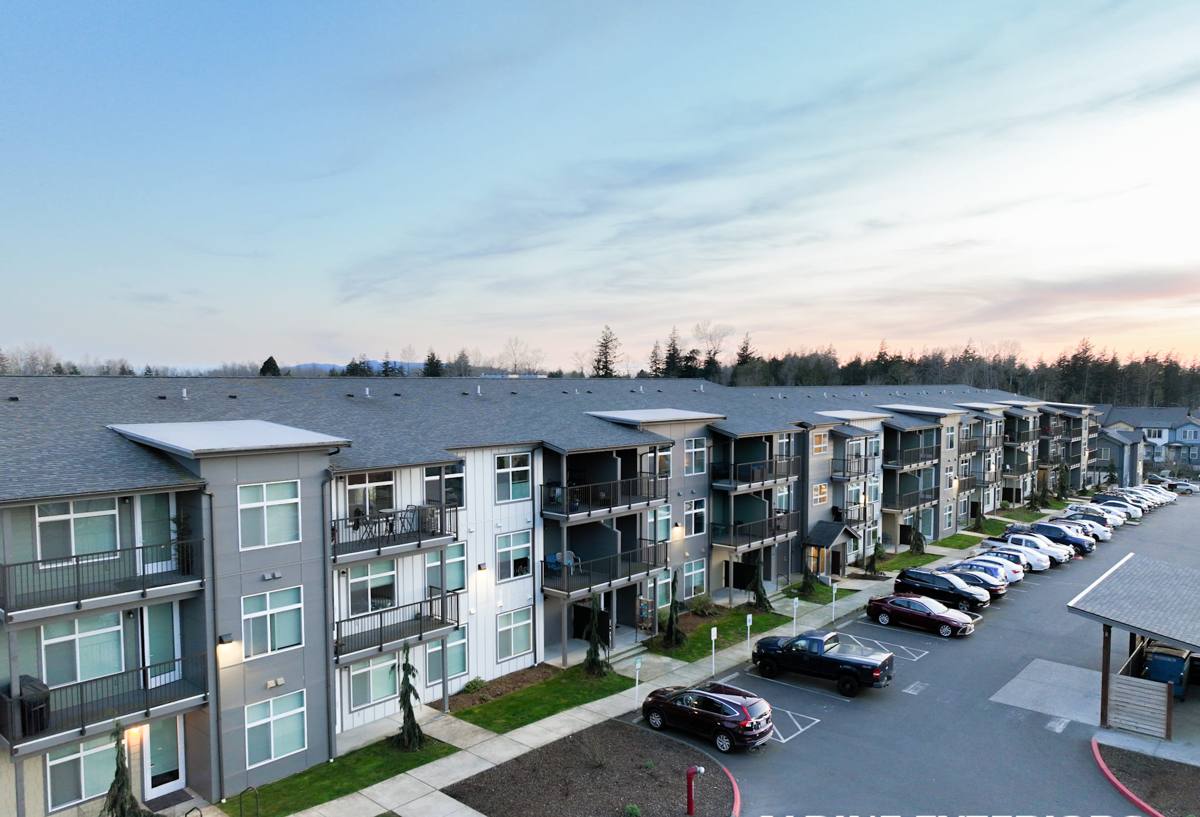
What James Hardie Fiber Cement Gets Right for This Climate
We install James Hardie fiber cement siding exclusively, and in a climate like Bellingham's, the reasons are practical rather than promotional. Fiber cement doesn't expand and contract with humidity swings the way wood-based products do, which matters when a wall is damp more often than it's dry. It's non-combustible, which counts for something during dry summer spells and wildfire smoke seasons that have become more common in Western Washington. And the factory-applied ColorPlus finish is baked on under controlled conditions, so it resists the fading, chalking, and mildew staining that a field-applied paint job struggles with under constant moisture exposure.
The HZ5 Engineering Detail
James Hardie engineers its products by climate zone under what it calls the HardieZone system. Whatcom County falls into the HZ5 zone — built for regions with freeze-thaw cycles and sustained wet weather rather than the hot, humid, termite-prone conditions the HZ10 line is engineered for. That distinction matters more than most homeowners realize: siding built for the wrong climate zone can perform worse than something rated correctly, even if the two products look identical on a sample board.
What a Correct Installation Actually Involves
Fiber cement siding is only as good as the details behind it. James Hardie publishes specific installation requirements, and in a wet, salt-exposed climate, following them isn't optional — it's the difference between a wall system that sheds water and one that traps it.
- Minimum clearances from grade, roof lines, decks, and patios so splash-back and standing water never sit against the bottom edge of the siding
- A weather-resistive barrier installed and lapped correctly behind every panel, not just tacked up as an afterthought
- Properly integrated flashing at every window head, door head, deck ledger, and roof-to-wall intersection
- Corrosion-resistant fasteners, driven at the spacing and depth James Hardie specifies — not whatever a nail gun happens to be set to
- Factory-primed cut edges sealed before installation, since exposed raw edges are where moisture gets a foothold
- Caulking applied only where Hardie's details call for it, so the assembly can still drain and dry where it's designed to
Where Installations Go Wrong
The most common failure we see isn't a bad material — it's a rushed or unfamiliar install. Siding set too tight to grade wicks moisture straight up from the ground. Missing kick-out flashing where a roof meets a wall sends a steady trickle of water directly into the sheathing, often for years before anyone notices a soft spot inside. Over-caulking every joint traps moisture that the assembly needed to shed. Each of these mistakes looks fine on installation day and turns into a expensive repair three, five, or ten winters later — which is exactly the timeline Bellingham's rain season is built to expose.
Why a Crew That Already Works Bellingham Matters
Siding installation isn't identical from one region to the next, and it isn't identical within Whatcom County either. A crew that already works Bellingham knows which lots sit under heavy conifer cover and hold moss and shade longer into the season, which streets catch the worst of the wind-driven rain off the water, and which older homes in the area are more likely to be hiding moisture damage behind original siding that was never flashed correctly to begin with. That local pattern recognition shows up as fewer surprises during tear-off, a more accurate estimate up front, and a finished wall built for the specific way weather actually hits your particular property — not a generic install pulled from a manual written for a drier climate.
Our Process, Start to Finish
- On-site inspection. We look at the existing siding, trim, flashing, and any visible signs of moisture damage before quoting anything.
- Tear-off and sheathing check. Once the old siding is off, we inspect the sheathing and framing underneath — this is the one point in the project where hidden rot or rot-prone areas can actually be found and fixed.
- Weather barrier and flashing. A new weather-resistive barrier goes on correctly lapped, with flashing integrated at every penetration, window, door, and roof-wall intersection before a single piece of siding goes up.
- Hardie installation to spec. Panels or planks go up following James Hardie's published fastening, clearance, and joint details — not shortcuts.
- Trim, caulking, and finish work. Caulking is applied only where it belongs, and factory-cut edges are sealed.
- Final walk-through. We go over the finished job with you directly, not just from a truck window.
Comparing Siding Options in a Salt-Air, High-Rain Climate
Homeowners researching a siding replacement in Bellingham usually run across the same handful of options. Here's an honest comparison based on how each performs under this specific climate — not a marketing sheet.
| Material | Moisture Behavior | Salt Air Durability | Maintenance Burden | Typical Lifespan |
|---|---|---|---|---|
| James Hardie fiber cement | Dimensionally stable; engineered flashing details manage water well | Strong; factory finish resists salt-driven fading and staining | Low — periodic rinse and caulk check | 30+ years with correct install |
| Vinyl siding | Can warp or buckle with temperature swings; seams are a weak point | Fasteners and trim pieces corrode faster | Low, but limited repair options once damaged | 20-30 years, shorter near salt exposure |
| LP SmartSide (engineered wood) | Wood-based; more sensitive to sustained moisture and moss cover | Moderate; finish and edge sealing are critical | Moderate — edge and seam inspection matters | Variable, install-quality dependent |
| Cedar | Absorbs and releases moisture constantly; prone to moss and rot in shaded, wet areas | Moderate to low without diligent upkeep | High — refinishing, sealing, and moss treatment on a recurring schedule | Highly variable; shortened by neglect |
This is why our company standardized on one product rather than offering all of them: the trade-offs on the alternatives above are real, and we'd rather put our name behind installations we can stand behind for decades than sell whichever material a homeowner saw advertised.
Living With Hardie Siding Through a Bellingham Winter and Moss Season
Fiber cement is low-maintenance compared to the alternatives, but "low-maintenance" doesn't mean "no maintenance" in this climate. A short annual routine keeps a correctly installed Hardie system performing the way it's designed to for its full service life.
- Rinse salt residue and road grime off the siding once or twice a year, especially on sides facing prevailing wind and water
- Keep gutters and downspouts clear so overflow doesn't create constant splash-back against the lower courses
- Trim back vegetation and tree limbs that shade the wall and hold humid air against it — this is the single biggest factor in moss and algae growth
- Inspect caulking annually at trim, window, and door joints, and have any cracked or missing sections resealed
- Wash off any moss or algae film using a soft-wash method appropriate for painted fiber cement, rather than high-pressure blasting that can damage the finish
Colors, Finish, and What's Actually Backed by Warranty
James Hardie's ColorPlus finish comes factory-baked in a range of colors engineered to hold up under UV exposure and moisture — a meaningful advantage over field-applied paint that has to cure and perform in Bellingham's damp, low-sun-exposure conditions. The substrate itself carries a long, transferable non-prorated limited warranty, and the ColorPlus finish carries its own separate coverage.
What's worth understanding before you sign with any contractor: that warranty assumes the product was installed to James Hardie's specifications. Improper clearances, missing flashing, or caulking in the wrong places can void coverage regardless of how good the material itself is. That's the real argument for hiring a crew that installs Hardie correctly and consistently, rather than treating it as just another siding option among several.
If you're weighing a siding replacement in Bellingham and want a straight answer about what your home actually needs, we're happy to walk the property with you and put together a free, no-pressure estimate — no obligation, just an honest look at what correct James Hardie installation would involve for your specific home.