 Semiahmoo Exterior
 Windows Built for Lynden's Weather, Not Just the Showroom
Lynden sits inland from the water but still lives under the same wet, gray weather pattern that defines Whatcom County for most of the year. Long stretches of low-pressure systems push rain sideways against west- and south-facing walls, humidity stays high enough to keep moss and algae active for months at a time, and the freeze-thaw swings of a Pacific Northwest winter stress every seam in a window frame. A window that looks fine in a dry-climate installation video can fail quietly here, and by the time you see the damage on drywall or trim, water has usually been getting behind the frame for a while.
Window installation done right for this area isn't a different product line — it's the same quality windows installed with the flashing, sealing, and drainage details that actually matter when the weather is this consistently wet. That's the difference we focus on for every Lynden home we work on.
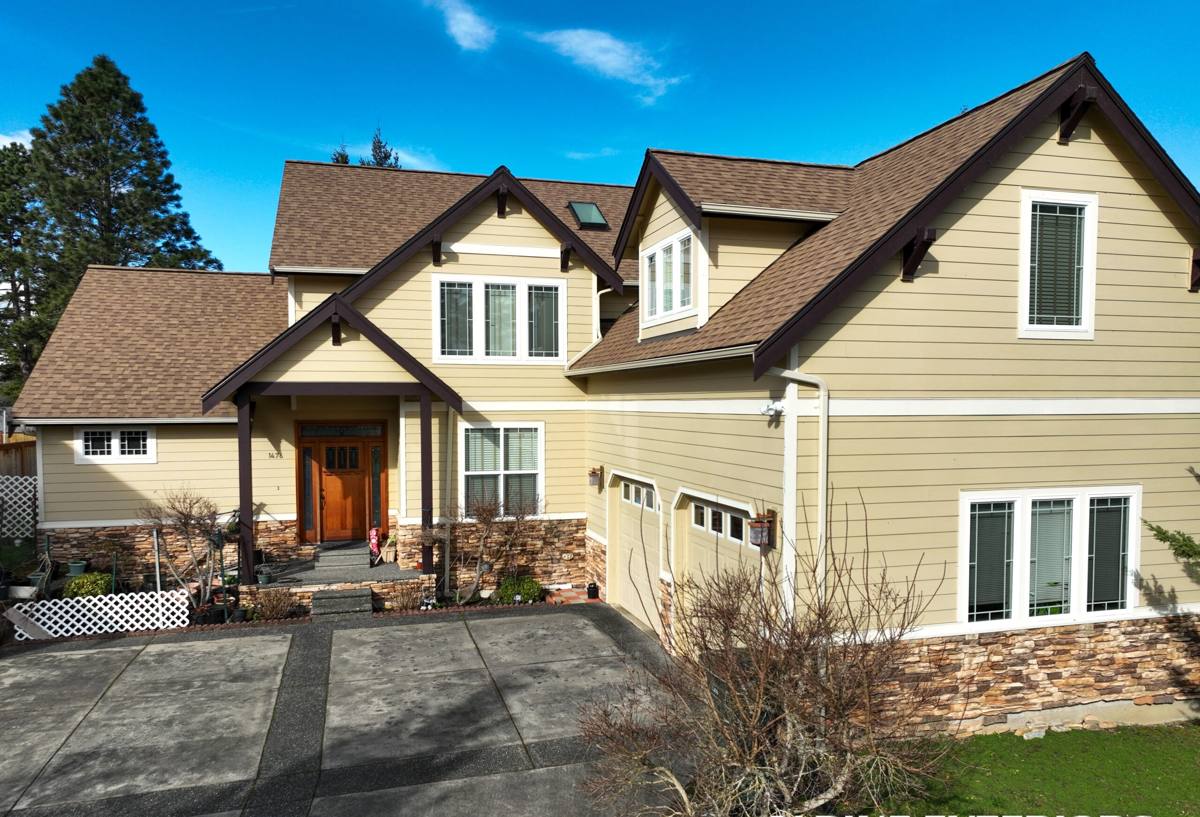
What This Climate Does to Windows Over Time
Whatcom County's marine-influenced climate is mild on temperature but hard on materials in other ways. A few things we see repeatedly on older or improperly installed windows in this region:
- Driving rain intrusion — wind-blown rain finds gaps in poorly flashed sills and works its way into the wall cavity, not just the window frame itself.
- Moss and algae growth — shaded or north-facing window trim stays damp long enough for organic growth to take hold, which holds moisture against wood trim and paint.
- Wood rot at sills and corners — the classic failure point on older wood-frame windows, especially where caulk was used as the primary seal instead of proper flashing.
- Seal failure in double-pane glass — constant humidity swings accelerate the breakdown of the gas seal between panes, showing up as fogging or condensation between the glass layers.
- Condensation on interior glass — a sign of poor insulation or ventilation as much as the window itself, but a bad window installation makes it worse.
None of this means windows in Lynden need to be replaced constantly. It means the installation details — flashing sequence, sill pan, sealant selection, and drainage path — have to be right the first time, because this climate doesn't forgive shortcuts the way a drier region might.
Signs a Lynden Home Needs New Windows or a Reinstall
Homeowners usually call us for one of two reasons: comfort or damage. Watch for these signs before either one turns into a bigger repair:
- Drafts or cold spots near the window frame, even with the window fully latched
- Visible moss, dark staining, or soft wood at the sill or bottom corners of the frame
- Fogging or a permanent haze between panes of glass (a failed insulated glass unit)
- Windows that are hard to open, close, or lock — often a sign the frame has shifted
- Paint bubbling or peeling on interior or exterior trim around the window
- Rising heating bills without another clear explanation
Any one of these can be a minor fix. Several at once, especially on the same wall, usually points to a flashing or drainage problem behind the trim — worth a real inspection rather than a caulk-and-hope patch.
What a Correct Window Installation Actually Involves
The window unit itself gets most of the attention in sales conversations, but the installation is what determines whether that window performs for twenty years or leaks in three. Our process on every job includes:
Removal and Opening Inspection
Once the old window is out, we inspect the rough opening for rot, soft framing, or existing water damage before anything new goes in. Covering up a problem behind a new window guarantees you'll be dealing with it again later, just hidden.
Sill Pan and Flashing
A sloped sill pan gives any water that gets past the window a way out instead of a place to collect. Flashing tape gets layered in the correct shingle-lap order — housewrap over the top flange, flashing over the sides, and the sill pan draining out and over the wall's water-resistive barrier below it. This is the single most important step for a wet climate installation, and it's also the step most often skipped by rushed crews.
Air Sealing and Insulation
The gap between the window frame and rough opening gets sealed with low-expansion foam or backer rod and sealant — enough to stop air and moisture movement without bowing the frame out of square.
Level, Plumb, and Square
A window installed slightly out of square will bind, won't seal at the corners, and will wear its hardware unevenly. We shim and check this on every unit, not just the first one on the truck.
Exterior Trim and Sealant
Exterior caulk is the last line of defense, not the first — it seals the trim, it doesn't replace proper flashing underneath. We use exterior-rated sealant matched to the trim material and check it as part of routine maintenance visits.
Window Material and Style Comparison
There's no single "best" window material — the right choice depends on your home's exposure, your maintenance preference, and your budget. Here's how the common options compare for a home in this climate:
| Material | Moisture Performance | Maintenance | Typical Lifespan |
|---|---|---|---|
| Vinyl | Good — won't rot, minimal seams for water to enter | Low — occasional cleaning | 20-30 years |
| Fiberglass | Very good — dimensionally stable, resists warping | Low | 30-40 years |
| Wood (clad exterior) | Fair — depends heavily on install quality and finish upkeep | Higher — exterior finish and caulk need periodic attention | 20-30 years with upkeep |
| Aluminum | Fair — prone to condensation without thermal breaks | Low | 20-30 years |
For most Lynden homes, we lean toward vinyl or fiberglass on wall areas that take the brunt of the weather, since both hold up to sustained moisture exposure without the ongoing finish maintenance that wood-clad windows require. Wood-clad windows still have a place where the look matters and the homeowner is comfortable keeping up with the finish — we'll give you an honest read on which makes sense for your specific walls, not a one-size answer.
Our Installation Process
- On-site assessment — we measure openings, check existing flashing and framing condition, and talk through material and style options for your home.
- Written estimate — clear pricing broken out by window, with no surprise add-ons once work starts.
- Scheduling around weather — we plan install days to avoid opening a wall to active rain whenever possible; if weather turns mid-job, openings get temporarily protected.
- Removal and inspection — old units come out, rough openings get checked and repaired if needed before new windows go in.
- Installation — sill pan, flashing, air sealing, and precise leveling as described above.
- Interior and exterior trim — finished out to match your home, with sealant applied and inspected.
- Walkthrough — we test operation and locks on every window before we call the job done.
What Affects the Cost of a Window Installation
| Factor | Why It Matters |
|---|---|
| Number and size of windows | Larger units and full-home replacements cost more per window than a single small swap due to material and labor scale |
| Material (vinyl, fiberglass, wood-clad) | Fiberglass and wood-clad typically run higher upfront than vinyl |
| Condition of the rough opening | Rot repair or reframing adds labor and material beyond the window itself |
| Access and home height | Second-story or hard-to-access windows take more time and equipment |
| Glass package | Low-E coatings, gas fills, and impact-rated glass all add cost but improve performance |
We're not going to quote a number here without seeing the job — every home is different, and anyone giving you a firm price over the phone without an inspection is guessing. What we will say honestly: full-home window replacement is a real investment, and a straightforward single-window swap is much less involved than a multi-window job with rot repair. A written, itemized estimate from an actual walkthrough is the only way to know where your project lands.
Why a Crew That Already Works Lynden Makes a Difference
A window installer who works across Whatcom County regularly already knows what this climate does to a wall over ten or twenty years — which sill details fail first, which exposures need extra attention, and how to sequence a job around a weather window instead of hoping it doesn't rain mid-install. That local familiarity shows up in small decisions on the job site that a crew unfamiliar with the region might not think to make.
It also matters for follow-up. If a seal needs a look two years down the road, or you want a second opinion on a spot that seems to be collecting moisture, it helps to call a contractor who's still local, still reachable, and still stands behind work they did in your neighborhood.
Simple Maintenance That Extends Window Life
New windows installed correctly need very little upkeep, but a small amount of attention goes a long way in this climate:
- Rinse pollen, moss spores, and grime off glass and frames a couple times a year
- Check exterior caulk lines annually for cracking or gaps, especially after winter
- Keep gutters clear so overflow isn't running down onto window trim
- Trim back vegetation that keeps trim shaded and damp
- Operate locks and hardware periodically so they don't seize up from disuse
If you're weighing new windows, a repair, or just want an honest opinion on what's going on with a window that's giving you trouble, we're glad to take a look. Reach out for a free, no-pressure estimate using the form below.