 Semiahmoo Exterior
 Why Lynden Homes Need Windows Built for This Climate
Lynden sits inland from the water, but it still lives inside Whatcom County's marine weather pattern — long stretches of low cloud, driving rain that comes in sideways during winter storms, and stretches of damp, still air that let moss and algae take hold on anything that stays wet too long. Homes here don't deal with hurricane-force wind the way some coastal towns do, but they deal with something arguably harder on windows: months of sustained moisture exposure with very little drying time in between. That's a different problem than a hot, dry climate, and it calls for different choices in frame material, glazing, and installation detail.
A window that's a great fit for a dry inland climate can be the wrong choice here if it wasn't designed with this kind of moisture cycle in mind. Seals that are marginal, flashing that's an afterthought, or a frame material that wicks moisture will show their weaknesses in Lynden faster than they would somewhere drier. That's the lens we bring to every custom window job in this area — not just "does it look good and fit the opening," but "will this hold up through another ten wet winters."
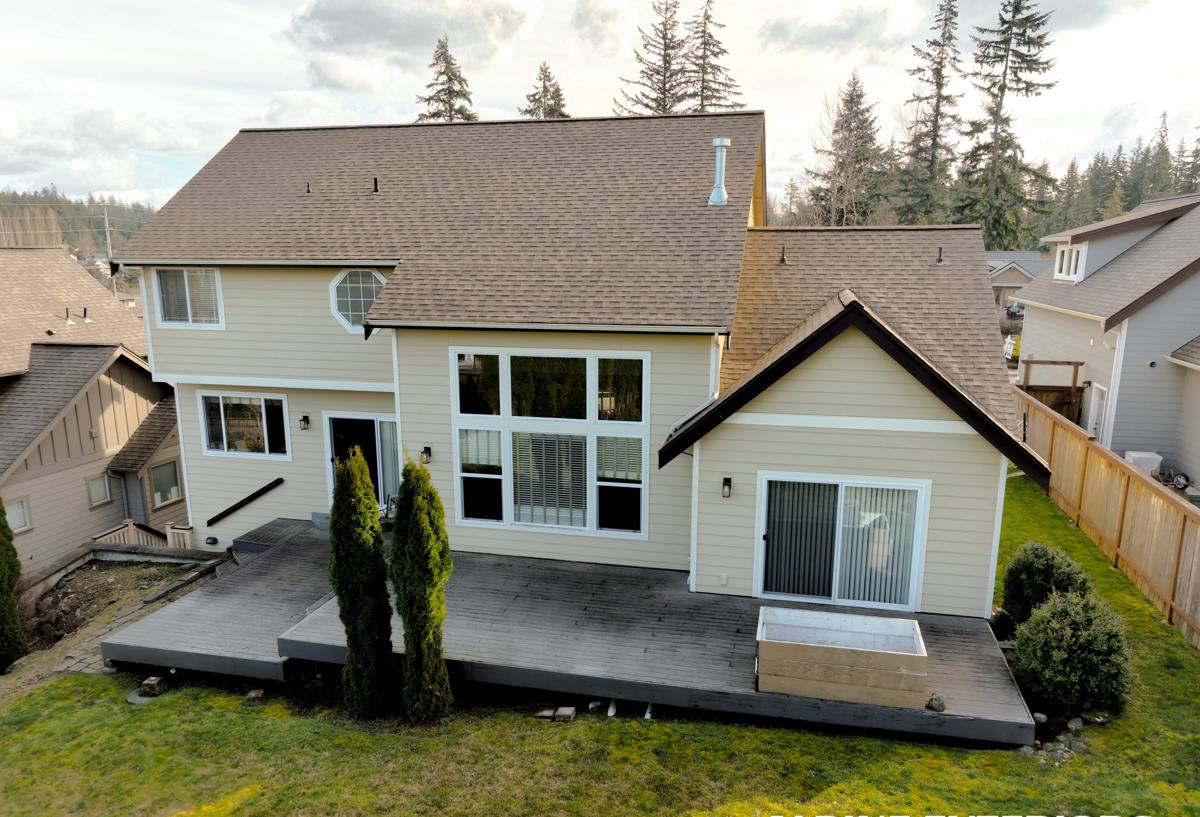
What "Custom" Actually Means for a Window Job
"Custom windows" gets used loosely in this trade. For us it means the window is specified and built to match the actual opening, the actual wall assembly, and the actual use of that room — not pulled off a shelf in a standard size and forced to fit. That distinction matters most on older Lynden farmhouses and remodeled homes with openings that were never quite standard to begin with, and on additions or renovations where a stock size just won't work.
Measuring and Fit
Custom work starts with an accurate measurement of the rough opening, not the old window. Older homes settle, openings go slightly out of square, and trim details vary from wall to wall even in the same house. We measure each opening individually rather than assuming they match, because a window that's built to a slightly-off measurement will need shims, extra caulk, or compromises in the flashing to make up the difference — and every one of those compromises is a future leak point.
Frame Materials and Local Trade-offs
There's no single "best" window material — there's a best material for this climate and this specific application. Here's how the common options typically perform in a wet, moss-prone marine climate like Whatcom County's:
| Material | Moisture Performance | Maintenance | Typical Trade-off |
|---|---|---|---|
| Vinyl | Good — won't rot, low water absorption | Low; occasional cleaning | Limited color/profile options on some lines |
| Fiberglass | Excellent — very stable, resists warping | Low | Higher upfront cost |
| Wood (clad exterior) | Good if properly clad and detailed | Moderate to high on any exposed wood | Interior warmth, but exterior wood needs vigilance |
| Aluminum | Poor thermal performance, conducts cold | Low corrosion risk when properly finished | Condensation risk in this climate without thermal breaks |
We're honest with Lynden homeowners about this: an all-wood exterior window looks beautiful, but in a climate that stays damp for months at a stretch, exposed exterior wood is a maintenance commitment, not a one-time purchase. If the look matters to you, wood-interior/clad-exterior units give you that warmth inside without putting bare wood in the weather. That's a judgment call every homeowner should make with full information, not a sales pitch.
Signs Your Current Windows Are Losing the Battle
Most homeowners don't replace windows because one day is dramatically different from the last — it's a slow accumulation of small signs. Worth paying attention to:
- Fogging or a permanent haze between double-pane glass (the seal has failed and the gas fill is gone)
- Visible moss or dark streaking on the sill or lower frame that keeps coming back after cleaning
- Soft or discolored wood trim around the window, especially at the bottom corners
- Noticeable draft or cold spot near the frame on a windy day
- Difficulty opening, closing, or latching — often a sign the frame has racked slightly out of square
- Paint that keeps failing on the exterior trim around one window faster than the rest of the house
Any one of these on its own isn't an emergency. Several of them together, especially moss regrowth and soft trim, usually mean water is getting past the exterior seal and the frame is absorbing more moisture than it can shed between storms.
What a Correct Installation Involves
The window unit itself is maybe half the job. The other half — the part that actually determines whether it performs for the next 20 years — is the installation detail: flashing, sealant, and how the new window ties into the existing wall assembly. There are two general approaches, and which one applies depends on the condition of the existing frame and sheathing.
| Approach | When It's Used | What It Involves |
|---|---|---|
| Full-frame replacement | Existing frame is damaged, rotted, or out of square | Removes window and existing frame down to the rough opening; new flashing tape and sill pan installed; new frame set and sealed |
| Insert (pocket) replacement | Existing frame is sound, square, and dry | New window unit installed inside the existing frame; faster and less invasive, but only appropriate if the old frame has no hidden damage |
The risk with insert replacement is that it can hide a problem instead of fixing it — if there's already moisture damage behind the old frame, sealing a new window inside it doesn't solve that, it just closes the access to see it. Part of our job is telling you honestly which category your windows fall into, even when the faster option would be easier to sell.
Our Process From Estimate to Final Walkthrough
We keep the process straightforward and try not to waste your time with unnecessary steps:
- On-site assessment — we look at each opening individually, check the condition of the existing frame and sheathing, and note anything unusual about the wall assembly.
- Product and material discussion — we talk through frame material, glazing options, and any trade-offs specific to your home's exposure (sun side, rain-facing walls, sheltered vs. exposed openings).
- Written estimate — a clear scope of work, so you know exactly what's included before anything starts.
- Removal and prep — old units removed, opening inspected for hidden damage before anything new goes in.
- Flashing and installation — proper sill pan and flashing sequence, window set level and square, sealed per manufacturer and industry standard.
- Interior and exterior finish work — trim, caulking, and touch-up so the job looks finished, not just functional.
- Final walkthrough — we check operation on every window with you before we consider the job done.
Cost Factors Worth Understanding
We don't publish flat prices because window jobs vary too much to make a single number honest. What we can tell you is what actually moves the cost, so you're not guessing:
| Factor | Why It Matters |
|---|---|
| Frame material | Vinyl, fiberglass, and clad-wood carry different material costs and lead times |
| Full-frame vs. insert installation | Full-frame takes more labor and materials but is sometimes the only correct option |
| Number and size of openings | Larger or custom-shaped openings require more precise fabrication |
| Existing damage | Rot or hidden moisture damage found during removal adds repair scope |
| Glazing options | Double vs. triple pane, low-E coatings, and gas fills affect both cost and performance |
We'll walk you through which of these apply to your project during the estimate, so the final number makes sense rather than feeling arbitrary.
Moss, Moisture, and Long-Term Maintenance
A well-installed window in this region isn't maintenance-free, but it should be low-maintenance. Once the job is done, a few habits go a long way toward protecting the investment through Whatcom County's long wet season:
- Clear debris and moss from sills and tracks a couple of times a year, especially before the rainy season sets in
- Keep gutters and downspouts clear so roof runoff isn't sheeting directly down onto window heads
- Check exterior caulking annually for cracking or separation, particularly on sun-exposed sides where it dries out faster
- Trim back vegetation that's holding moisture or shade directly against a window opening
None of this is complicated, but skipping it is exactly how a good installation slowly turns into a problem installation. A properly flashed, properly sealed window will forgive a missed year of maintenance. It won't forgive five.
Why a Crew That Already Works Lynden Matters
Window installation done wrong doesn't usually fail on day one — it fails two or three winters in, after enough wet seasons have found the weak point in the flashing or the seal. That's exactly why local experience matters more here than in a drier climate: a crew that's used to Whatcom County's rain patterns knows to treat flashing and sill pan detail as non-negotiable, not optional, because they've seen what happens when it's skipped. We work this area regularly, which means we're not guessing about how these homes and this weather interact — we're applying what we already know holds up.
Questions to Ask Before You Hire
Whoever you choose for a window project, a few questions will tell you a lot about how seriously they take the installation detail, not just the product:
- Will you use full-frame or insert replacement, and why for my specific windows?
- What flashing and sill pan system do you use, and is it visible in the written scope?
- What's covered under warranty — the product, the labor, or both — and for how long?
- Do you inspect for hidden rot or damage before installing, and what happens if you find it?
- Can I see the manufacturer specifications for the window units you're proposing?
If you'd like straight answers to those questions for your own home, we're happy to come take a look. Reach out for a free, no-pressure estimate using the form below — we'll assess your windows honestly and tell you what we'd actually recommend, not just what's easiest to sell.