 Semiahmoo Exterior
 Bellingham's Roofs Work Harder Than Most
A roof in Bellingham isn't just shedding rain — it's fighting a combination of moisture, salt-laden air off the Salish Sea, and long stretches of shade and dampness that most inland roofs never deal with. Whatcom County's marine climate means mild temperatures year-round, but that mildness is deceptive. It's the steady, months-long wet season that does the real damage, not a single big storm. Roofs here are almost never dry long enough to fully shed moss spores, algae, or the fine grit that salt air leaves behind on metal fasteners and flashing.
We work this area regularly out of Semiahmoo, and the pattern is consistent: roofs that were installed correctly for a drier climate, or installed by a crew unfamiliar with this specific stretch of coastline, tend to fail early in the same predictable spots — north-facing slopes, valleys, and anywhere ventilation was an afterthought. A correct roof replacement in Bellingham accounts for all of that from the start, not as an upsell after the fact.
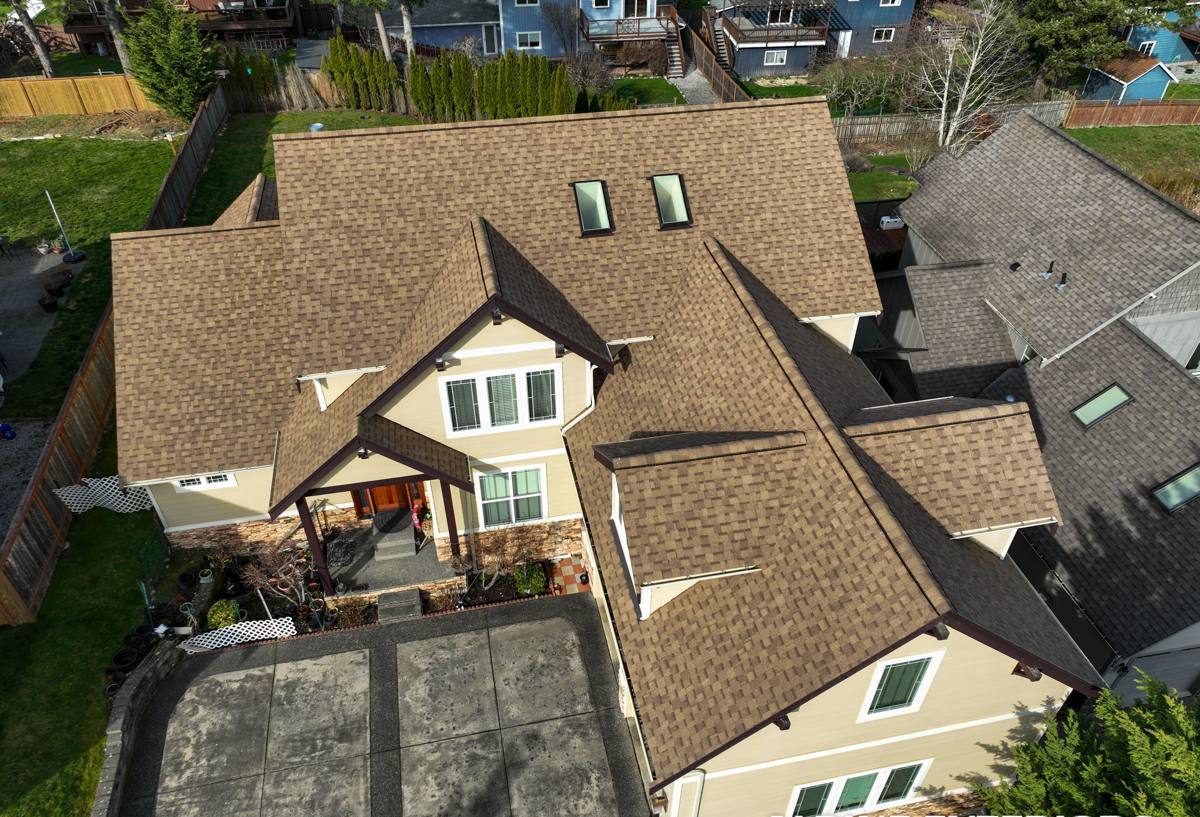
What Bellingham's Climate Actually Does to a Roof
Salt Air and Metal Fatigue
Homes closer to the water pick up airborne salt that settles on exposed metal — flashing, fasteners, vent caps, gutters. Over years, that accelerates corrosion on lower-grade materials and can eat through unprotected steel fasteners well before the shingles themselves wear out. It's a slow process, which is exactly why it gets missed until a leak shows up around a chimney or vent pipe.
Driving Rain and Wind-Driven Water
Pacific storms here don't just drop rain straight down — wind pushes it sideways, up under shingle tabs, and into any gap in flashing or underlayment that wouldn't matter in a calmer climate. Roof details that are "good enough" in low-wind regions — minimal ice-and-water shield, light-duty flashing, short overlaps — are where Bellingham roofs actually leak.
Moss, Algae, and a Long Wet Season
Whatcom County's tree cover and extended damp months give moss and algae a long runway to establish themselves, especially on shaded, north-facing roof planes. Once moss takes hold, it holds moisture against the roofing material, works its way under shingle edges, and lifts them — which is when small leaks start. Algae staining is mostly cosmetic, but the moss underneath it is a structural concern if it's left unaddressed for years.
What a Correct Roof Replacement Involves Here
A roof replacement done right for this climate isn't just "new shingles on the old deck." It's a system, and every layer matters:
- Deck inspection and repair — any soft, delaminated, or water-stained plywood gets replaced before anything new goes down. Covering a compromised deck just hides the problem.
- Ice-and-water shield at vulnerable points — eaves, valleys, and around penetrations get a self-adhering waterproof membrane, not just standard felt, because that's where wind-driven rain finds its way in.
- Synthetic underlayment across the full roof for a tougher, more consistent moisture barrier than old-style felt, which sags and tears with repeated wetting and drying.
- Balanced attic ventilation — intake at the eaves, exhaust at the ridge — so moisture from inside the house doesn't condense against the roof deck from underneath. This is one of the most overlooked steps and one of the biggest causes of early roof failure in this region.
- Corrosion-resistant flashing and fasteners around chimneys, skylights, vent pipes, and wall intersections, sized and lapped for wind-driven rain rather than straight-down rain.
- Proper shingle nailing and exposure for the wind conditions this stretch of coastline actually sees, not just manufacturer minimums.
Skip any one of these and the roof will likely still look fine for a few years — the failures from cutting corners here show up slowly, which is exactly why they're easy for a rushed or out-of-town crew to skip past.
Choosing the Right Material for This Climate
There's no single "best" roofing material for every home — it depends on budget, roof pitch, tree cover, and how the house sits relative to wind and sun exposure. Here's how the common options actually perform in Bellingham and Whatcom County conditions:
| Material | Moss/Moisture Resistance | Wind-Driven Rain Performance | Typical Lifespan Here | Maintenance Reality |
|---|---|---|---|---|
| Architectural asphalt shingle | Good with proper ventilation; algae-resistant granule options help on shaded planes | Strong when installed with correct nailing and underlayment | 20–30 years | Periodic moss removal on shaded slopes; most homeowner-friendly option |
| Standing seam metal | Excellent — moss has little to grip and water sheds fast | Very strong; few horizontal laps for wind to exploit | 40–50+ years | Low; occasional fastener and sealant checks at penetrations |
| Cedar shake | Requires consistent upkeep — moisture retention is its biggest weakness in this climate | Adequate when installed and maintained correctly | 20–30 years with upkeep | Highest maintenance burden; needs regular treatment and moss control to avoid premature rot |
| Synthetic/composite shingle | Good; engineered to resist moisture absorption better than wood | Strong | 30–50 years | Low to moderate |
For most Bellingham homes, we point people toward architectural asphalt or metal, largely because both handle this region's moss and moisture cycle with the least ongoing work. Cedar shake can look great and holds up fine when a homeowner commits to regular maintenance, but we're upfront that it's a higher-upkeep product in a climate that doesn't give wood much of a chance to dry out between rain events — that's a maintenance trade-off worth knowing before you commit, not a reason to rule it out.
Signs Your Bellingham Roof May Need Replacing, Not Repairing
Not every issue means a full replacement — plenty of leaks are fixable with targeted repair. But certain signs point toward the roof being past the point where patching makes financial sense:
- Shingles that are curling, cracking, or missing granules in patches rather than isolated spots
- Heavy moss growth returning within a season or two of cleaning, especially on north-facing planes
- Visible sagging anywhere along the roofline, which can indicate deck or structural issues underneath
- Daylight visible through the roof deck from inside the attic
- Water stains on interior ceilings or in the attic that reappear after rain
- A roof that's 20+ years old (asphalt) and has never had ventilation upgraded
- Multiple past repairs in different spots — a pattern that usually means the underlying system, not just the surface, has failed
Our Process, Start to Finish
Estimate and Inspection
We walk the roof (weather permitting) and the attic, not just eyeball it from the ground. Ventilation, deck condition, and flashing details all get checked before we quote anything, so the estimate reflects what your roof actually needs rather than a generic package.
Material Selection
We'll walk through the trade-offs above in plain terms — cost, lifespan, and how each option handles moss and wind-driven rain on your specific roof exposure — and let you decide with real information, not a sales pitch toward whatever's most profitable for us.
Tear-Off and Deck Repair
Full tear-off to the deck on replacement jobs, with any damaged sheathing replaced and documented before it's covered. We don't install new roofing over a deck we haven't verified.
Installation
Underlayment, ice-and-water shield, flashing, ventilation components, then the roofing material itself, installed to the nailing pattern and exposure the manufacturer specifies for wind zones like ours — not the fastest pattern that still passes a quick look.
Cleanup and Final Walkthrough
Magnetic sweep for nails, full site cleanup, and a walkthrough so you can see the finished work and ask questions before we call it done.
Why a Local Semiahmoo Crew Matters for This Job
Roofing crews who don't regularly work the Whatcom County coastline tend to build to a generic standard — fine for drier, calmer regions, but under-built for what this area's rain and salt air actually do over time. A crew that works Bellingham and the surrounding Semiahmoo area regularly knows which roof orientations grow moss fastest, which older flashing details tend to fail first, and where wind-driven rain actually gets into a roof versus where it just looks like it might.
That local familiarity also matters for permitting and timing. Whatcom County and City of Bellingham permitting requirements apply to most full roof replacements, and scheduling around the region's wetter months takes real local knowledge of weather patterns — not guesswork. A crew based nearby can also respond faster if something needs attention after the job is done, rather than being a one-time visit from out of town.
Permits, Timing, and Working Around Bellingham's Weather
Roof replacement is possible year-round here, but scheduling matters. We plan tear-offs around forecasted dry windows and never leave a deck exposed longer than necessary — in a climate this wet, an exposed deck overnight is a real risk, not just an inconvenience. Depending on the scope of work and your specific property, a permit may be required; we handle that coordination as part of the job rather than leaving it for the homeowner to sort out.
Get a Straight Answer About Your Roof
If your roof is showing moss, granule loss, or you just haven't had it looked at in a while, it's worth getting an honest read on where it actually stands before deciding between repair and replacement. We offer free, no-pressure estimates for Bellingham and the surrounding Whatcom County area — use the form below to get started.