 Semiahmoo Exterior
 Why Ferndale Roofs Need to Be Built for This Climate, Not a Catalog
Ferndale sits close enough to the water that homes here deal with a different mix of punishment than roofs even twenty miles inland. Salt-laden air off the Strait works its way into fastener heads and cut edges. Driving rain, pushed sideways by wind off the water, tests every lap and flashing detail a roof has. And the long, damp moss season that stretches through most of the fall, winter, and spring means anything that holds moisture against a roof surface for months at a time is a liability. A metal roof installed correctly can shrug off all three of these. A metal roof installed to a generic national spec, without accounting for what Whatcom County actually throws at a house, will show problems within a few years — usually at the fasteners, the flashings, or wherever moss and debris have been allowed to sit.
This page is about metal roofing specifically for Ferndale homes, not a general overview of the product. If you're comparing options or trying to understand what a correct job looks like before you get quotes, this is written for you.
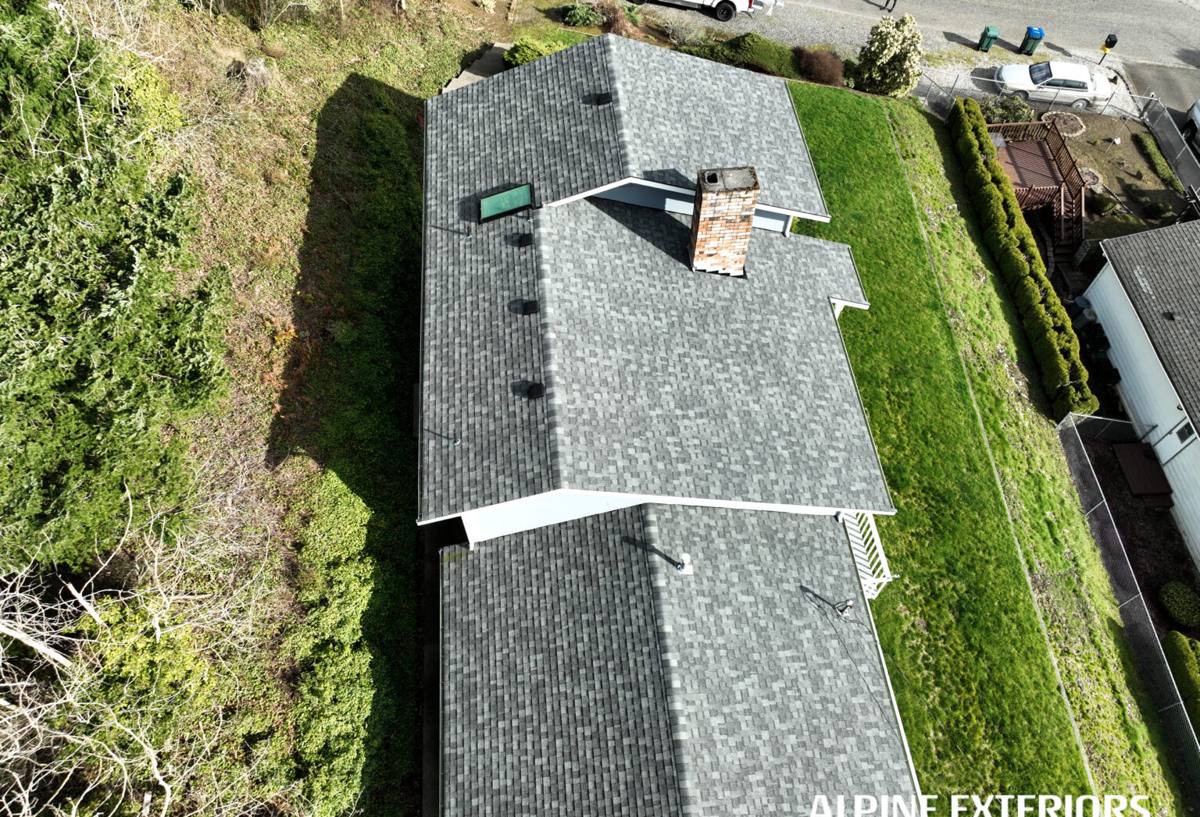
What Salt Air, Rain, and Moss Actually Do to a Roof
Salt Air
Airborne salt is corrosive to raw or poorly coated metal, and it's especially hard on fasteners and cut edges where protective coatings have been compromised. Over time, unprotected steel exposed to salt air will develop surface rust that spreads from the outside in. This is a coating and fastener-selection issue more than anything else — it's why the specific metal and fastener package matters more here than it would for a roof going up somewhere landlocked.
Driving Rain
Wind-driven rain doesn't just fall on a roof, it gets pushed up and under laps, around penetrations, and into any gap that a calmer climate could get away with. Roofs in this area need attention to underlayment, lap direction relative to prevailing wind, and flashing at every valley, wall intersection, and penetration — not just at the obvious spots.
Moss
Moss thrives in shaded, damp conditions and Ferndale has plenty of both for a good part of the year. On roofing materials that give moss something to grip — rough surfaces, exposed fasteners, debris-catching laps — moss can hold moisture against the roof deck long after a storm has passed. Metal roofing, particularly standing seam with a smooth panel surface, gives moss far less to hold onto than shingles or wood shakes. It's not moss-proof on its own — a roof shaded by overhanging trees and never cleaned will still grow moss in the seams and around fasteners — but it's a much harder surface for moss to establish on, and easier to keep clear.
Metal Roofing Profiles: What Actually Fits This Climate
Not all metal roofing is the same product wearing different colors. The profile and fastening method matter as much as the metal itself when you're dealing with wind-driven rain and salt exposure.
| Profile | How It's Fastened | Best Fit For | Trade-Off |
|---|---|---|---|
| Standing Seam | Concealed clips, no exposed fasteners on the field | Full roofs in high-exposure, coastal-influenced areas | Higher material and labor cost |
| Exposed Fastener (5V, corrugated) | Screws through the panel face with gasketed washers | Outbuildings, budget-conscious full roofs | Fasteners are a long-term maintenance item and a common leak point if not re-checked |
| Metal Shingles/Shakes | Interlocking panels, largely concealed fasteners | Homes wanting a traditional look with metal's durability | More seams and details than standing seam, more places for moisture to test |
For most Ferndale homes exposed to open wind and salt air, we lean toward standing seam because it has no exposed fastener heads for salt air and moisture to work on over time. Exposed-fastener panels aren't a bad product, but they come with a maintenance commitment — the gasketed washers on those screws degrade with age and UV exposure and need to be checked periodically, which is a harder sell on a roof you don't want to think about for 30 years.
What a Correct Installation Actually Involves
The metal panel itself is the part homeowners see. The parts that determine whether the roof performs for decades are mostly underneath it.
Deck Inspection and Prep
Before anything goes down, the roof deck needs to be sound — no soft spots, no rot from a prior roof that let moisture through. On a re-roof, this is where problems from years of a failing roof surface show up, and it's not something you can responsibly skip to save a day of labor.
Underlayment
Given how much wind-driven rain this area sees, underlayment choice matters. A synthetic, high-temperature underlayment rated for metal roofing gives a secondary water barrier if wind ever pushes moisture past the panel laps — which it will, eventually, on any roof, metal or otherwise.
Flashing Details
Valleys, chimneys, wall intersections, and any roof penetration are where most roof leaks actually originate — not the open field of the roof. Correct flashing means custom-formed metal at each of these details, not a generic trim piece caulked into place. Caulk is a backup, not a strategy.
Fastening and Panel Attachment
On standing seam, concealed clips allow the panel to expand and contract with temperature changes without stressing the fasteners — this matters through the swings between a cold, wet winter and a warmer summer. On exposed-fastener panels, correct screw spacing and torque (not overdriven, not underdriven) is what keeps those gaskets sealing properly for their expected life.
Ventilation
A roof that doesn't breathe traps moisture in the attic space, which works against everything the metal roof is doing on the outside. Proper intake and exhaust ventilation is part of a correct install, not an optional add-on.
Our Process on a Ferndale Metal Roof Project
- On-site assessment — we look at the existing roof, deck condition, ventilation, and how the house sits relative to wind and shade before recommending a profile or fastening method.
- Written proposal — a clear scope covering material, underlayment, flashing plan, and ventilation, so you know what you're paying for before work starts.
- Tear-off and deck check — old roofing comes off, the deck gets inspected, and any needed repairs are addressed before anything new goes down.
- Underlayment and flashing installation — the water-management layer goes in first and gets done right, since it's the hardest part to fix once panels are on.
- Panel installation — panels are run, seamed or fastened per the profile, with attention to lap direction against prevailing wind.
- Final walk-through — we go over the finished roof with you, including what maintenance (if any) the profile you chose will need going forward.
Why a Crew That Already Works Ferndale Matters
Roofing crews that split time across very different regions don't always adjust their approach for local conditions — a flashing detail that's fine in a dry climate isn't automatically fine here. A crew that regularly works Whatcom County's coastal-influenced neighborhoods already knows to spec fasteners and coatings for salt exposure, to plan lap direction for the wind patterns this area actually sees, and to build in the ventilation and moisture management that a long moss season demands. That's not a marketing point — it's the difference between a roof that needs attention in five years and one that doesn't.
It also matters for response time. If a windstorm knocks a flashing loose or a tree limb comes down on a section of panel, a local crew can get out to look at it quickly instead of scheduling it in behind travel time from somewhere else.
Cost Factors on a Ferndale Metal Roof
Metal roofing costs more upfront than asphalt shingles, generally by a meaningful margin, but it's also a longer-life product. Rather than quote a number that won't fit every roof, here's what actually moves the price on a project like this:
| Factor | Why It Matters |
|---|---|
| Profile chosen | Standing seam runs higher in labor and material than exposed-fastener panel |
| Roof complexity | More valleys, dormers, and penetrations mean more custom flashing work |
| Deck condition | Rot or soft decking found during tear-off adds repair scope |
| Existing roof removal | Tear-off of old shingles or a prior metal roof adds labor and disposal cost |
| Ventilation upgrades | Adding or correcting intake/exhaust venting if the current setup is inadequate |
| Coating/gauge selection | Heavier gauge steel and marine-grade coatings cost more but hold up better to salt air |
We walk through these factors on-site so the proposal reflects your actual roof, not a generic per-square-foot estimate.
What to Check Before Hiring Anyone for Metal Roofing Here
- Do they specify a fastener and coating package suited to coastal-influenced air, or a generic national spec?
- Do they detail flashing at valleys and penetrations in writing, not just "flash as needed"?
- Do they inspect and address deck condition before installing, rather than roofing over problems?
- Do they include ventilation in the scope, not just the panels?
- Can they explain the maintenance (if any) your chosen profile will need over its life?
- Are they licensed and insured for roofing work in Washington, and willing to put warranty terms in writing?
Maintenance: What a Metal Roof Actually Needs Here
Metal roofing is lower-maintenance than most alternatives, but "low" isn't "none," especially in a climate that grows moss year-round. A periodic check — clearing debris from valleys, confirming gutters aren't backing water up under the eave edge, and a visual check of flashing and any exposed fasteners — goes a long way toward getting the full lifespan out of the roof. We're glad to talk through a simple maintenance routine specific to your roof's layout and exposure when we finish a project.
If you're weighing a metal roof for a Ferndale home and want a straight answer about what your specific roof needs, we're happy to take a look and put together a free, no-pressure estimate — use the form below to get started.