 Semiahmoo Exterior
 Siding Repair Built for Lynden's Climate
Lynden sits inland from the Whatcom County coastline, but that doesn't spare it from the weather that defines this corner of Washington. The same marine air that rolls off the Salish Sea reaches well past the water, and it brings the same long, wet winters, the same driving rain on exposed walls, and the same moss season that can run from fall clean through spring. Siding here isn't just a cosmetic surface — it's the barrier standing between that weather and the framing, sheathing, and insulation underneath it. When siding fails, it rarely fails all at once. It fails at the seams, at the corners, and in the shaded spots where moisture never quite dries out, and it usually takes a while before anyone notices.
This page is about one thing specifically: repairing siding on homes in the Lynden area. Not a general overview of siding, not a sales pitch for full replacement — a straight explanation of what goes wrong here, what a repair actually needs to accomplish, and how we approach the work when a homeowner calls us out to fix a section of wall rather than re-side the whole house.
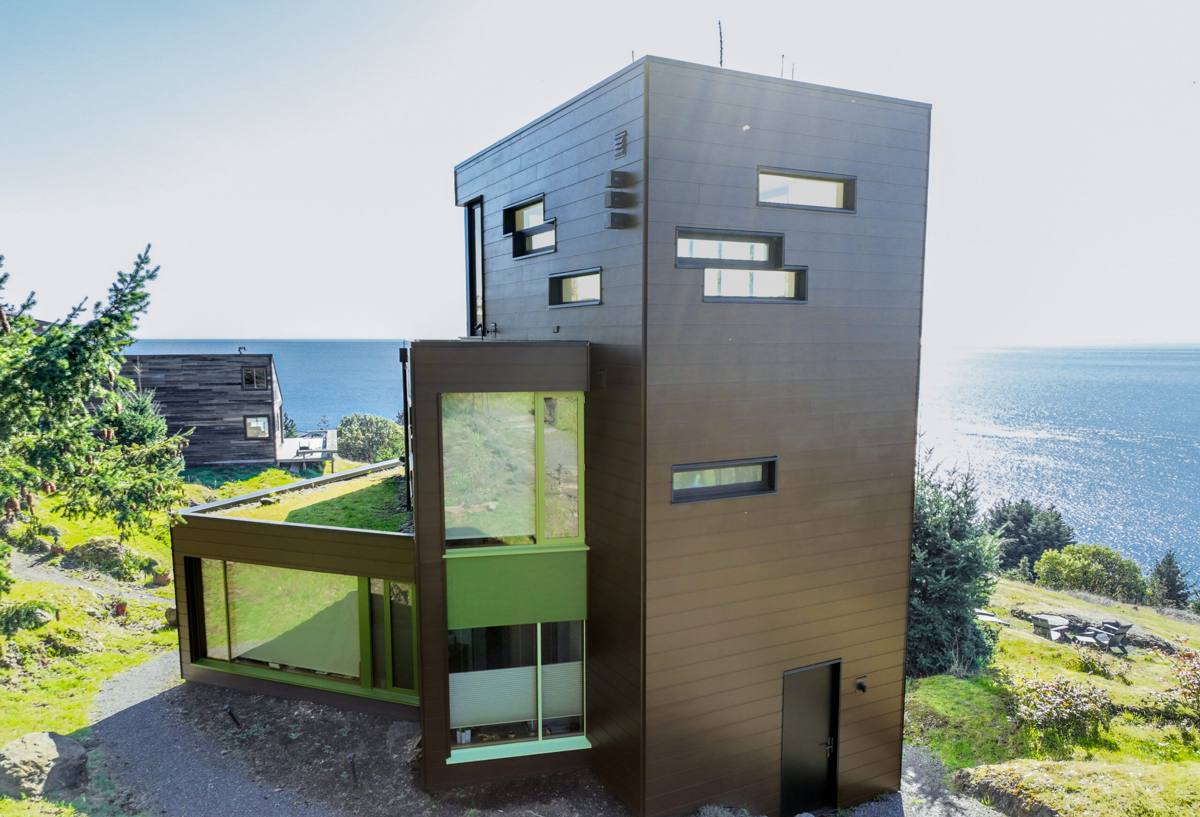
What Whatcom County Weather Does to Siding Over Time
Driving Rain and Wind-Driven Moisture
Storms in this part of Washington rarely come straight down. Wind pushes rain sideways into walls, and it finds every gap in caulking, every lifted seam, and every spot where flashing was skipped or installed short. Once water gets behind siding, it doesn't evaporate quickly in our climate — the air stays damp for months at a time, so trapped moisture has a long window to do damage before anyone sees a stain or a soft spot.
A Long Moss and Algae Season
Shaded, north-facing walls and anything tucked under overhangs or tree cover stay damp longer than sun-exposed walls, and that's exactly where moss and algae take hold. Beyond the green staining, moss holds moisture against the siding surface for extended periods, which accelerates rot in wood-based products and breaks down caulk and paint faster than it would on a drier wall.
Marine Air and Slow Material Fatigue
Salt-bearing air doesn't just affect homes directly on the water. It travels inland and slowly works on exposed fasteners, trim, and any siding material that wasn't engineered to handle a wet marine climate. Over years, that shows up as corroding nail heads, chalking paint, and siding that looks tired well before its expected lifespan is up.
Common Siding Repair Issues We See in Lynden Homes
Lynden has a mix of siding on its housing stock — vinyl, older wood and cedar, LP-style engineered wood, and some fiber cement of varying quality and age. The failure points differ by material, but the patterns are consistent:
- Vinyl siding: panels that have buckled, warped, or cracked from temperature swings, and seams that have pulled apart and now let wind-driven rain behind the wall.
- Wood and cedar siding: soft or crumbling boards at butt joints and lower courses, paint failure that exposed bare wood to repeated wetting, and rot that has spread into adjacent boards.
- Engineered wood siding (LP-style): swelling and delamination at edges and seams where moisture got in, especially where caulking wasn't maintained.
- Older or lower-grade fiber cement: caulk failure at joints, cracked or chipped boards from impact, and nail pops where fasteners weren't set to spec.
- All materials: moss and algae buildup on shaded walls, and staining below window sills and roof lines where water sheds and lingers.
Signs It's Time to Call for a Repair Inspection
Most siding problems are easier and cheaper to fix the earlier they're caught. Watch for:
- Soft, spongy, or crumbling spots when you press on the siding surface
- Visible cracking, warping, or buckling in individual boards or panels
- Paint that's peeling, bubbling, or chalking heavily in one area
- Persistent moss or dark staining that comes back soon after cleaning
- Gaps or separation at seams, corners, or trim joints
- Musty smell or discoloration on interior walls that back up to exterior siding
- Nail heads that have popped, backed out, or rusted through the finish
What a Correct Siding Repair Actually Involves
Diagnosing the Moisture Source First
The most common mistake in siding repair is patching the visible damage without figuring out how water got in to begin with. A cracked board is a symptom; the actual problem might be a missing kick-out flashing, a caulk joint that failed years ago, or a grade issue pushing splashback onto the wall. We look at the whole assembly — flashing, house wrap, trim, and drainage — before we cut into anything, because a repair that ignores the cause will fail again in the same spot.
Cutting Back to Solid Material
Damaged siding, and often the sheathing or framing behind it, needs to be opened up until we're back to dry, sound material — not just far enough to cover the obvious problem. Repairing over hidden rot or trapped moisture is how small problems turn into structural ones.
Flashing and Water Management
Every repair is an opportunity to correct water management that was wrong the first time. That means proper flashing at horizontal joints, correct lap sequencing so water sheds outward rather than behind the wall, and sealing details that match manufacturer specifications rather than relying on caulk alone to do the job.
Matching Existing Siding
When only a section of wall needs repair, matching the existing material matters for both appearance and performance. For homes already sided in James Hardie, we can match ColorPlus finishes and profiles closely so the repair doesn't stand out. For other materials, we're upfront about what can and can't be matched, and when it makes more sense to replace an entire wall or elevation instead of patching a visibly different section.
Repair or Replace? How We Help You Decide
Not every siding problem calls for full replacement, and not every repair is worth doing if the underlying material is near the end of its life. Here's how we think through it with homeowners:
| Factor | Leans Toward Repair | Leans Toward Replacement |
|---|---|---|
| Extent of damage | Isolated to one wall or a few boards | Spread across multiple elevations |
| Underlying material age | Still within expected service life | Original siding is decades old or already failing elsewhere |
| Moisture behind the wall | Localized, source identified and fixable | Widespread rot in sheathing or framing |
| Material match available | Yes, close visual match possible | No — patch would look mismatched long-term |
| Cost over time | Repair cost is a fraction of replacement | Repeated repairs are approaching replacement cost |
We'll always give you our honest read on which side of that table your home falls on — we don't have an incentive to push replacement when a solid repair will genuinely hold up.
Our Repair Process
- On-site inspection: we look at the damaged area and the surrounding wall assembly, not just the spot you called about.
- Written scope and estimate: what we're repairing, why, and what it will take to do it correctly — no vague line items.
- Repair work: removing damaged material back to solid substrate, correcting flashing and water management, and installing matched or appropriate replacement siding.
- Cleanup and finish check: paint or ColorPlus match, caulk lines, and a final walk-through with the homeowner.
- Follow-up: we stand behind the work and want to hear from you if anything looks off after the next stretch of weather.
Why We Rebuild Repaired Sections in James Hardie
When a repair involves replacing more than a board or two, we install James Hardie fiber cement rather than matching in vinyl, LP-style engineered wood, or bare wood — even if that's what's already on the house. It's a straightforward professional standard: Hardie's fiber cement doesn't absorb water the way wood-based products do, it isn't fuel for embers or wildfire drift the way some siding materials can be, and its factory-applied ColorPlus finish is built to hold up under exactly the kind of driving rain and marine air this area sees, backed by a real transferable warranty. On a full-wall or larger repair, that's a better long-term outcome for the homeowner than reintroducing a material we know will need attention again in a few years. For smaller, isolated patches on existing non-Hardie siding, we'll still do the honest repair — we just won't misrepresent it as a permanent fix if the underlying material is on its way out.
Why Hiring a Crew That Already Works in Lynden Matters
Siding repair looks straightforward until you're the one holding the crowbar and finding rot three feet past where the stain was visible. A crew that regularly works in Lynden and the surrounding Whatcom County area has already seen how the local housing stock was built, which siding materials and installation shortcuts show up most often, and how this area's rain and moss season actually behaves against different wall orientations — not textbook weather, the real pattern you get here. That translates into faster, more accurate diagnosis on-site, fewer surprises once the wall is opened up, and repair work that's sized to what the house actually needs rather than a generic fix.
If you're seeing soft spots, persistent moss, cracked boards, or staining on your siding, we're glad to take a look and give you a straight answer on what's going on and what it will take to fix it right. Reach out for a free, no-pressure estimate — the form below gets you started.