 Semiahmoo Exterior
 Why Board & Batten Suits Lynden Homes
Board and batten has deep roots in Whatcom County's farmhouse and barn architecture, and that heritage shows in how many Lynden homes are built and renovated today. The vertical lines read as clean, tall, and distinctly Pacific Northwest — a look that pairs naturally with the working landscape around it. But the reason we get called out to install it isn't just the style. Done correctly, board and batten is one of the more forgiving siding profiles for shedding water off a wall, which matters more here than in drier parts of the country.
Lynden sits inland from the Semiahmoo area, but it still lives inside Whatcom County's marine-influenced weather system. Long stretches of driving rain, low winter sun angles that keep shaded walls damp for days, and a marine layer that rolls in off the Salish Sea all add up to siding that stays wet longer than homeowners expect. That combination is exactly what turns a good-looking siding job into a moss-streaked, moisture-damaged one within a few years if it isn't detailed correctly.
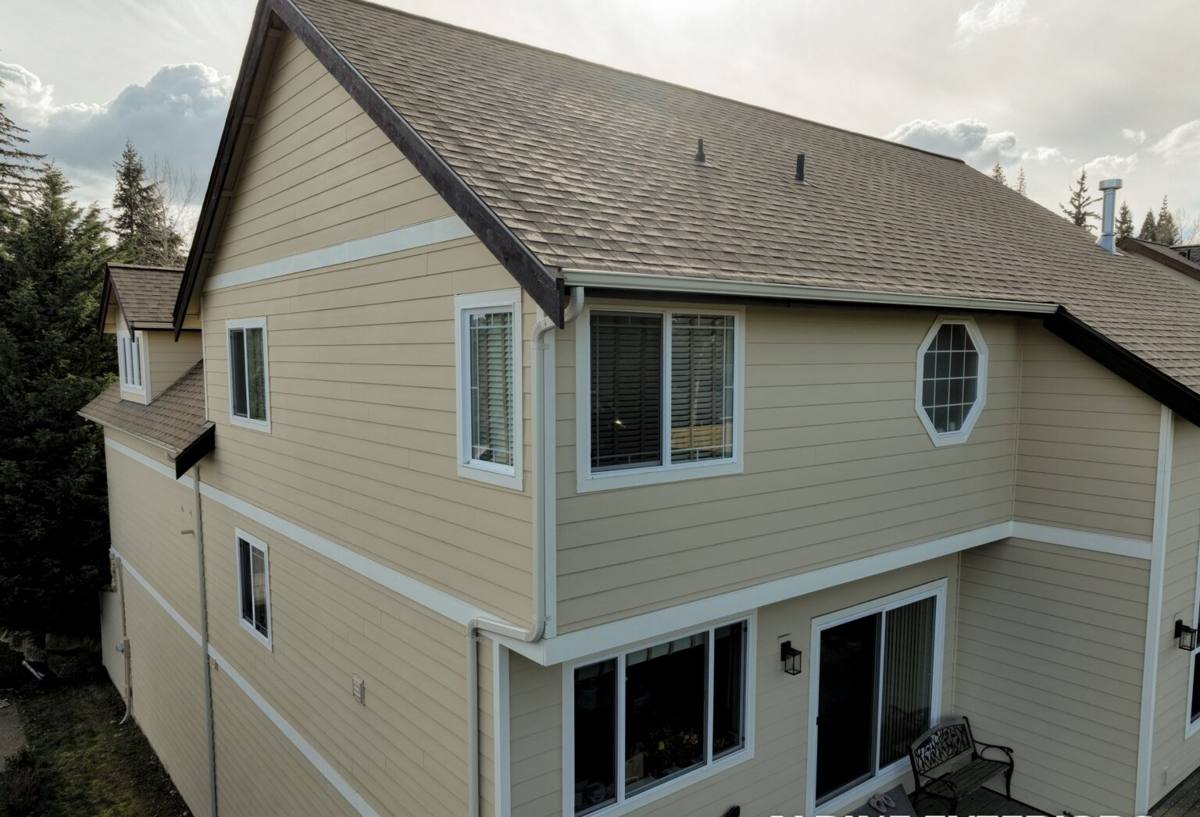
What Lynden's Climate Actually Does to Siding
Three regional factors show up again and again when we inspect siding failures on homes in and around Lynden:
- Driving rain: Wind-driven rain doesn't just run down a wall, it pushes sideways and finds any gap, seam, or under-detailed flashing point.
- Extended moss season: Cooler, wetter months stretch long here, and shaded or north-facing walls can stay damp for much of the year, giving moss and algae plenty of time to establish.
- Marine-influenced humidity: Even away from open water, the air carries more moisture and, at times, a trace of salt, which accelerates wear on fasteners, caulk joints, and unprotected wood.
None of that means siding fails on a schedule. It means siding fails where the installation cut corners — an unflashed seam, a batten nailed too tight to the panel below it, a bottom edge sitting too close to grade. Board and batten has more vertical seams and more fastening points than lap siding, so the margin for error is smaller. That's the part of the job that separates a siding crew that just fastens boards to a wall from one that actually builds a drainage system.
Board & Batten Done Right: The System Behind the Look
Vertical Panels and Battens
A correct board and batten assembly is two layers working together, not one decorative layer. Wide vertical panels go up first, and narrower battens are installed over the seams between them — both to hide the joint and to give the wall its signature rhythm of shadow lines. The batten spacing and reveal have to be planned before the first panel goes up, not adjusted on the fly, or the pattern drifts visibly across a long wall.
The Drainage Plane and Flashing
Everything under the visible siding matters more than the siding itself. A correctly built wall assembly includes a weather-resistive barrier behind the panels, flashing at every horizontal joint and window or door head, kick-out flashing where roof lines meet siding, and a gap at the bottom edge so water can't wick up into the panel from grade or a deck surface. In a climate with Lynden's rainfall, we also push for a rainscreen gap — a thin furring space behind the siding — so any moisture that does get past the cladding can drain and dry instead of sitting against the wall sheathing.
Fastening and Joints
Board and batten needs a fastening pattern that allows the panel to expand and contract without splitting or popping fasteners, and it needs joints sealed with the right sealant in the right places — not caulked everywhere out of habit, which can trap moisture instead of releasing it. This is the detail work that either gets learned by doing it on real Whatcom County walls or gets skipped because it's slower and less visible once the wall is painted.
Why We Only Install James Hardie for This Style
Board and batten is available in vinyl, engineered wood, and fiber cement, and we've made the decision to install it in James Hardie fiber cement only. Vinyl board and batten looks the part from a distance but is a thin, flexible material that shows waviness on long vertical runs and doesn't hold paint or color the way a factory finish does. Engineered wood products can perform well when kept dry, but board and batten's extra seams and joints are exactly where engineered wood is most sensitive to sustained moisture exposure — a real liability in a climate that doesn't dry out quickly.
James Hardie fiber cement holds a crisp edge on the vertical panels and battens, doesn't warp or cup with repeated wetting and drying, and comes with a factory ColorPlus finish baked on rather than field-applied. That matters specifically for board and batten because there are more cut edges, more joints, and more places where a lesser material would need on-site painting and caulk maintenance to keep looking right. It's non-combustible, which matters given the wildfire smoke and dry-season risk that reaches even wet coastal counties, and it's backed by a strong transferable warranty when installed to Hardie's specifications — specifications we follow as a baseline, not a suggestion.
Our Board & Batten Installation Process
- On-site inspection: We evaluate the existing wall, sheathing condition, and any trouble spots — shaded sides, low-clearance areas near grade, and existing moss or moisture staining.
- Tear-off and sheathing check: Old siding comes off and the sheathing underneath is inspected and repaired before anything new goes on. Covering damaged sheathing is how small problems become expensive ones.
- Weather-resistive barrier and flashing: A new WRB goes on with correctly lapped and taped seams, followed by flashing at every window, door, and horizontal transition.
- Rainscreen furring (where appropriate): On walls with heavier rain exposure or shading, we install a drainage gap behind the panels rather than fastening directly to the WRB.
- Panel and batten installation: Vertical panels go up first with the specified fastening pattern, then battens are set over the seams to the layout planned before installation began.
- Trim, caulk, and touch-up: Factory-finished panels need minimal field caulking, applied only where the manufacturer specifies, using Hardie-compatible sealant.
- Final walkthrough: We check reveals, fastener lines, and flashing points before calling the job finished.
Board & Batten Cost Factors
Board and batten typically costs more than standard lap siding on the same wall because of the extra layer of battens and the additional layout and fastening time. What actually drives the price on a given Lynden home is less about the material itself and more about these factors:
| Factor | Why It Affects the Job |
|---|---|
| Wall height and complexity | Tall vertical runs and multiple gables mean more precise layout to keep batten spacing consistent |
| Existing sheathing condition | Rot or damage found during tear-off adds repair scope before new siding can go on |
| Rainscreen inclusion | Adding a drainage gap behind the panels is extra labor but reduces long-term moisture risk on shaded or exposed walls |
| Flashing detail count | More windows, roof intersections, and trim transitions mean more flashing points that must be done correctly |
| Color and trim package | Factory ColorPlus finishes and matching Hardie trim battens cost more upfront but eliminate field-painting labor |
Choosing a Board & Batten Contractor in Lynden
Board and batten hides mistakes well for the first year or two — the boards look straight, the paint looks fresh — and then the moisture problems show up where the details were skipped. Before hiring anyone for this style of siding, ask:
- Will they show you the flashing and drainage plan before panels go up, not just the finished look?
- Do they install a rainscreen gap on shaded or heavily exposed walls, or fasten directly to the barrier every time regardless of exposure?
- Can they explain their batten layout plan before the first board is cut?
- Are they installing manufacturer-specified fasteners and sealants, or whatever's on the truck?
- Do they have experience with board and batten specifically, not just lap siding with a batten added on top?
- Does their warranty cover workmanship, or only pass along the material manufacturer's warranty?
A crew that already works in Lynden and the surrounding Whatcom County area has seen how the local rain and shade patterns actually play out on real walls over multiple seasons — not just how a spec sheet says the product should perform.
Living With Board & Batten in a Moss-Prone Climate
Even a correctly installed wall benefits from basic upkeep in this climate. Keep gutters clear so overflow doesn't run down the siding face, trim back vegetation and tree cover that keeps walls shaded and slow to dry, and rinse visible moss or algae buildup on north-facing walls before it spreads. A ColorPlus factory finish resists mildew and holds color far better than field-applied paint, but no finish eliminates the need to keep water moving off and away from the wall. If you notice soft spots, staining, or boards that feel damp near the base, that's worth a look before it becomes a larger repair.
If you're planning a board and batten project in Lynden, we're happy to walk your home, point out any problem areas on your existing siding, and give you a straightforward, no-pressure estimate for doing the job right the first time.